 Guatemala
  México
  Perú
Perú  Costa Rica
  USA
USA 30 Years in Commercial Greenhouse Supply: What We've Learned From Growers
Since 1995 REGASA has supplied structures, drip irrigation and growing systems across Latin America and the United States. What three decades taught us.
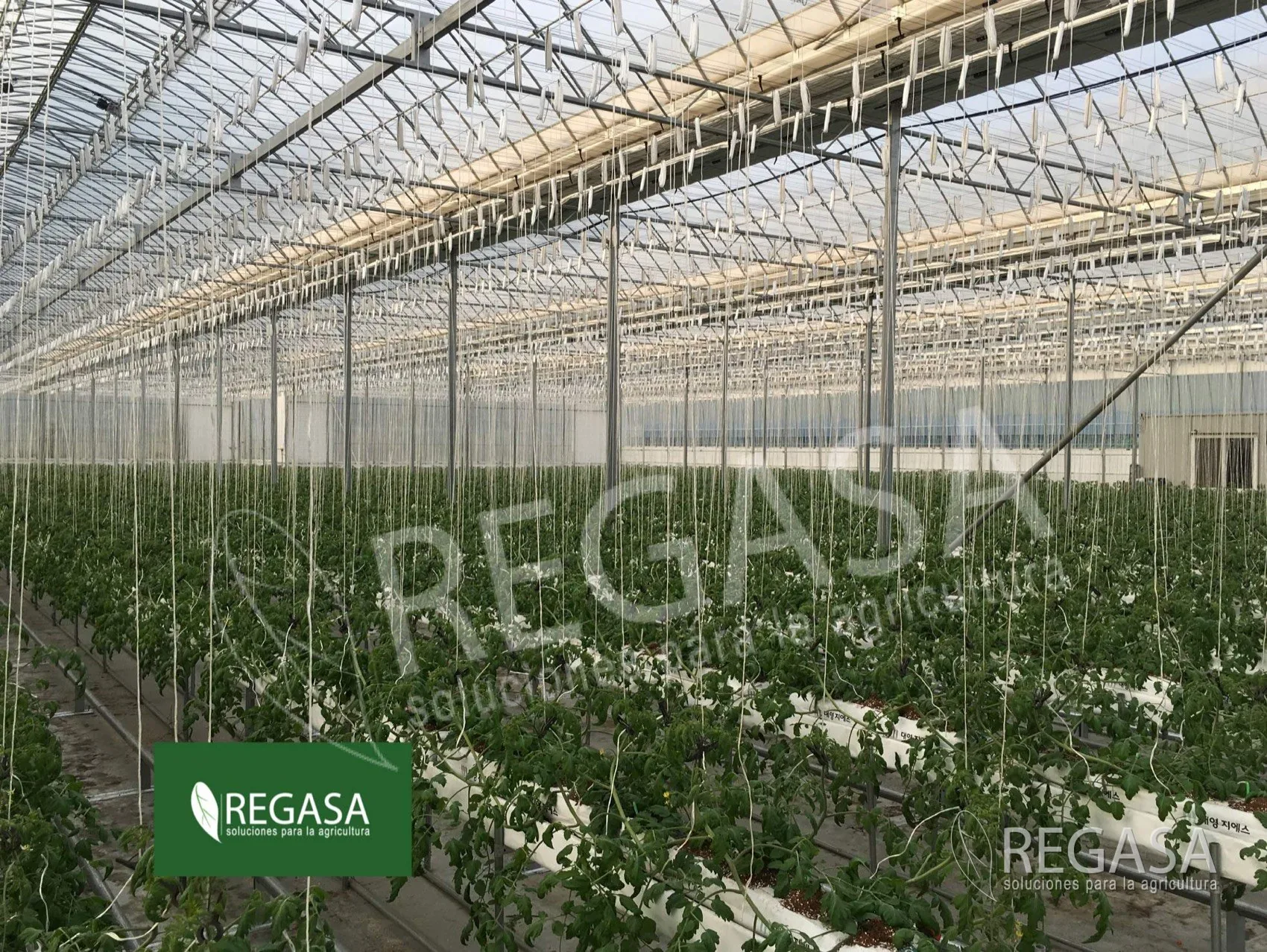
We started REGASA in 1995. That was before most of the greenhouse industry’s current technology existed in its current form. No LED lighting, no sophisticated automated climate control, no precision fertigation systems driven by crop sensors. Just structures, covering materials, drip systems, and growers who were trying to produce more reliably and at higher quality than the open field allowed.
Thirty years of working with growers across Guatemala, Mexico, Peru, Costa Rica, and more recently the United States has taught us things that aren’t in the agronomic textbooks. Some of them are observations about what works. Some of them are patterns we’ve seen fail repeatedly. All of them are things we bring to every conversation with a new grower.
The Growers Who Succeed Think About the Market First
The growers who build successful greenhouse operations almost always start with the market question, not the production question.
What are buyers in my area willing to pay a premium for? Who are those buyers and what do they need from a supplier? Can I supply them consistently enough to build a real relationship?
These questions are more important than choosing between poly film and polycarbonate, or deciding whether to go with NFT or raft hydroponics. The most technically sophisticated production system in the world produces a loss if the product goes to a market that doesn’t reward the investment.
The growers who struggle are frequently the ones who built first and then went looking for buyers. It’s a harder sequence.
Ventilation Is Almost Always Underspecified
We’ve seen this pattern more times than we can count. A grower designs a greenhouse with a ventilation system that looks reasonable on paper. Then summer comes. The interior temperature climbs past what the crop can handle, and the grower is suddenly looking at shade cloth and cooling upgrades that should have been part of the original design.
Ventilation is the single most commonly underspecified element in greenhouse design, and it’s especially common in warm climates. There’s a tendency to optimize for the average condition rather than the extreme one. But crops don’t struggle on average days. They struggle on the hottest days, when the ventilation system is running at full capacity and isn’t enough.
If you’re building in the South, the Southwest, or Florida, design your ventilation for the worst day of the year, not the typical day. The extra cost of a properly sized ventilation system is modest compared to losing a crop.
Simple Systems Outperform Complex Ones for Most Growers
There’s a category of equipment that looks great in a trade publication and performs beautifully when it’s properly maintained by a dedicated technician in a large commercial operation. That same equipment performs poorly when it’s being managed by a family farm with limited time for diagnostics and maintenance.
The best irrigation system for a grower who is also managing ten other things on the farm is the one that’s reliable, understandable, and easy to fix when something goes wrong. Not the most technically advanced one available.
We’ve seen expensive drip systems underperform basic tape systems because the grower didn’t have time to manage the complexity. And we’ve seen simple, well-maintained tape systems run for years without problems.
This isn’t an argument against technology. It’s an argument for matching the technology to the operation. Start with something you can manage and understand. Build complexity from that foundation as your operation and your team grow.
The First Season Is a Learning Season
No plan survives contact with actual production, and greenhouse production is no different. The first season in a new greenhouse, with a new crop, in a new system, is where you learn what your specific situation actually requires. The variables that show up in practice are never exactly the ones you anticipated.
Growers who expect the first season to be perfect are often disappointed. Growers who treat the first season as the most important classroom they’ll ever attend tend to do much better in the second and third seasons.
Take notes. Document what worked and what didn’t. When something goes wrong, understand why before you fix it, because the same underlying condition will express itself differently next season if you don’t address the root cause.
Water Quality Is Underestimated
Across all the regions we work in, water quality is one of the most consistently underestimated factors in irrigation system performance.
Growers will invest significantly in drip tape and filtration equipment, then use water from a source with high mineral content without accounting for the effect on emitter longevity, pH management, and plant nutrition. Or they’ll use surface water with significant biological load without the filtration that protects their emitters.
Test your water before you design your system. The results should inform your filter selection, your emitter choice, and your maintenance schedule. It’s a modest investment that prevents expensive problems.
The Relationship Is Part of the Product
This is something we’ve observed in every market we’ve worked in. The growers who build the strongest businesses aren’t always the ones with the most advanced production systems. They’re the ones who build the strongest relationships with their buyers.
Buyers for high-quality greenhouse produce, in restaurants, specialty grocery, and food service, are not interchangeable commodity buyers. They have quality standards, they have specific needs, and they’re looking for suppliers they can count on. When they find that supplier, they stay.
A grower who shows up consistently, delivers the quality they promised, and picks up the phone when something changes is the grower who keeps accounts for ten years. That reliability is worth more than a marginal improvement in yield.
What We Believe About This Work
We’ve been a family business since the beginning, and most of the growers we work with are family businesses too. The farmer who’s building a greenhouse to support a multigenerational farm operation has different needs and a different time horizon than an investor building for short-term returns.
We like working with growers who are in it for the long term. It changes the nature of the conversation. The goal isn’t just to sell a structure. It’s to help build something that works for years and gives that farm a real competitive advantage in their market.
If you’re working through a greenhouse project and want a partner who’s had these conversations many times before, reach out to our team. We’re glad to help you get it right from the start.
What we build
The products behind this article
Want this sized for your farm?
Tell us your crop, your acreage and your state. An advisor comes back with the structure that fits your climate, within one business day. No obligation.
Keep reading