
 Guatemala
  México
  Perú
Perú  Costa Rica
  USA
USA Seedling Plug Trays
Professional REGASA trays: from 32 to 512 cells, with the silver nano Silver Tray and the patented Fibroot that prunes the root on its own. You get uniform, strong seedlings with a solid plug that transplant without stress. Built for American growers: tomatoes, peppers, brassicas, onions and strawberry plugs, all in the standard 1020 footprint.
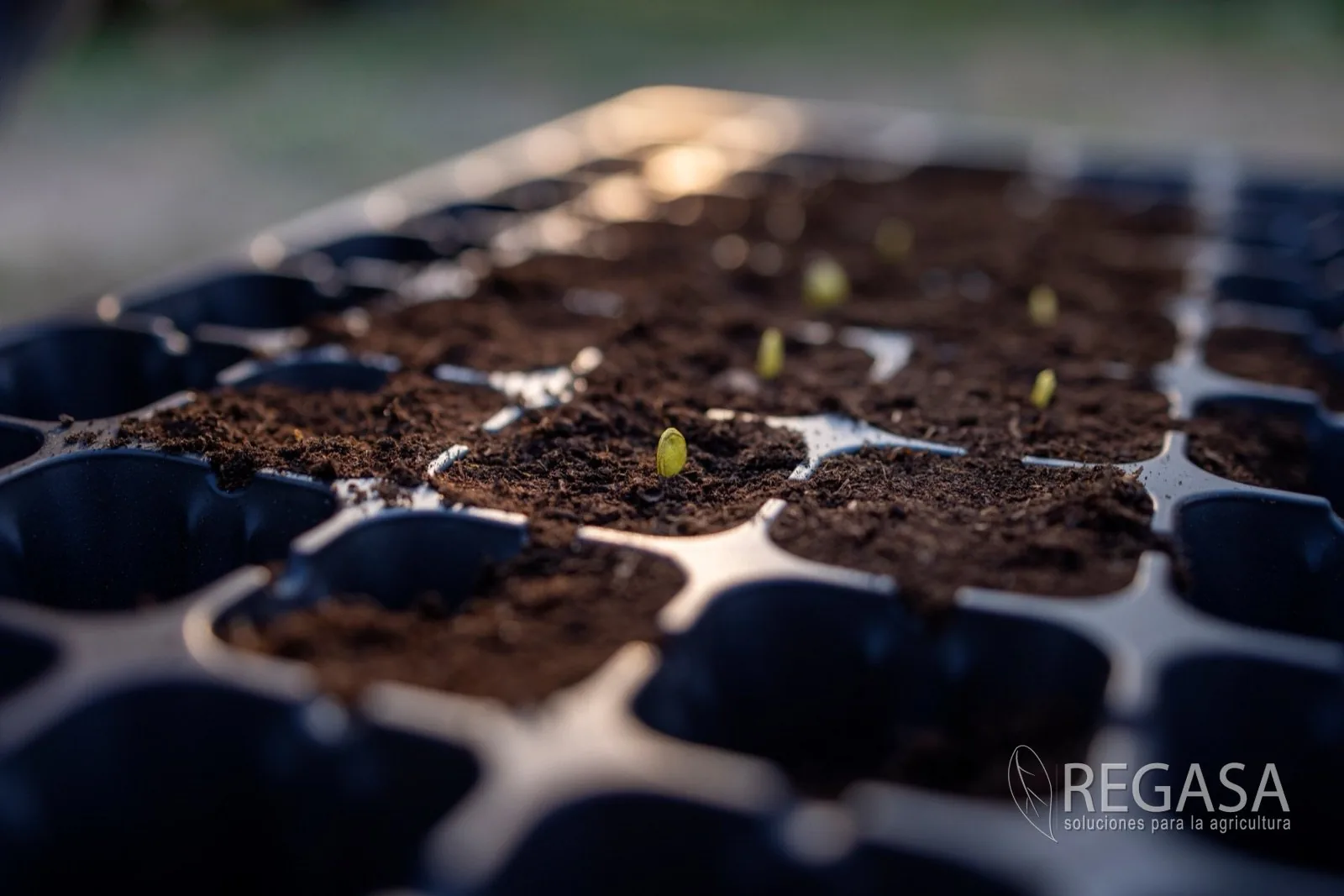
What is a seedling tray?
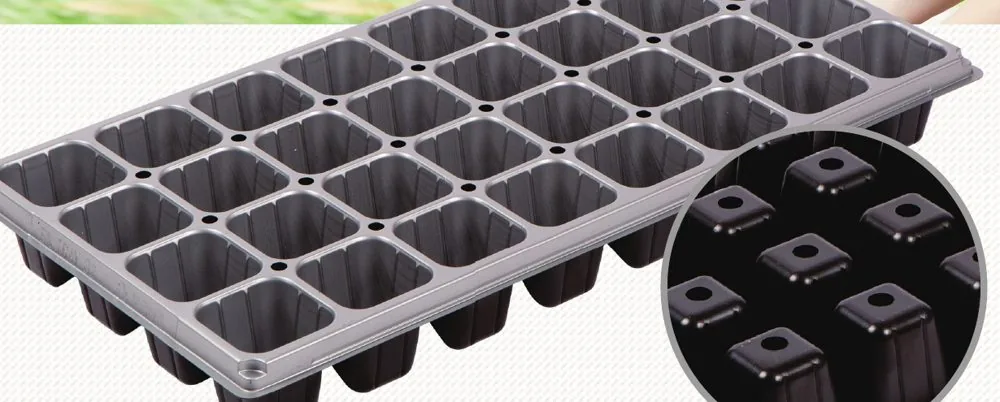
A seedling tray, also called a plug tray, propagation tray or speedling, is a rigid panel divided into individual cells. One seed with its media goes in each cell, so every seedling grows in its own space, with its own root, without tangling or competing with its neighbors.
Across the US, plug trays (or cell trays) are the backbone of commercial and market-garden transplant production. Tomatoes, peppers, brassicas, onions and lettuce all start stronger from a uniform plug, and the firm root plug transplants clean into the field, high tunnel or greenhouse. Every tray fits the standard 1020 footprint, and growers shop by cell count, 72, 128 or 200, so you can match the cell to the crop and to your succession planting.
The plug is the block of roots and media that forms in each cell. The root binds the soil, so the whole thing lifts out in one piece at transplant and the plant never suffers.
Versus sowing straight into the ground
- You make the most of seed, which keeps getting more expensive: one per cell, with almost no misses or waste.
- You raise thousands of seedlings in a small, controlled space.
- Each seedling comes out with its plug, the block of roots and media, ready to transplant without stress.
- You get ahead of the calendar: while the last batch is still in the field, the next one is already waiting in the nursery.
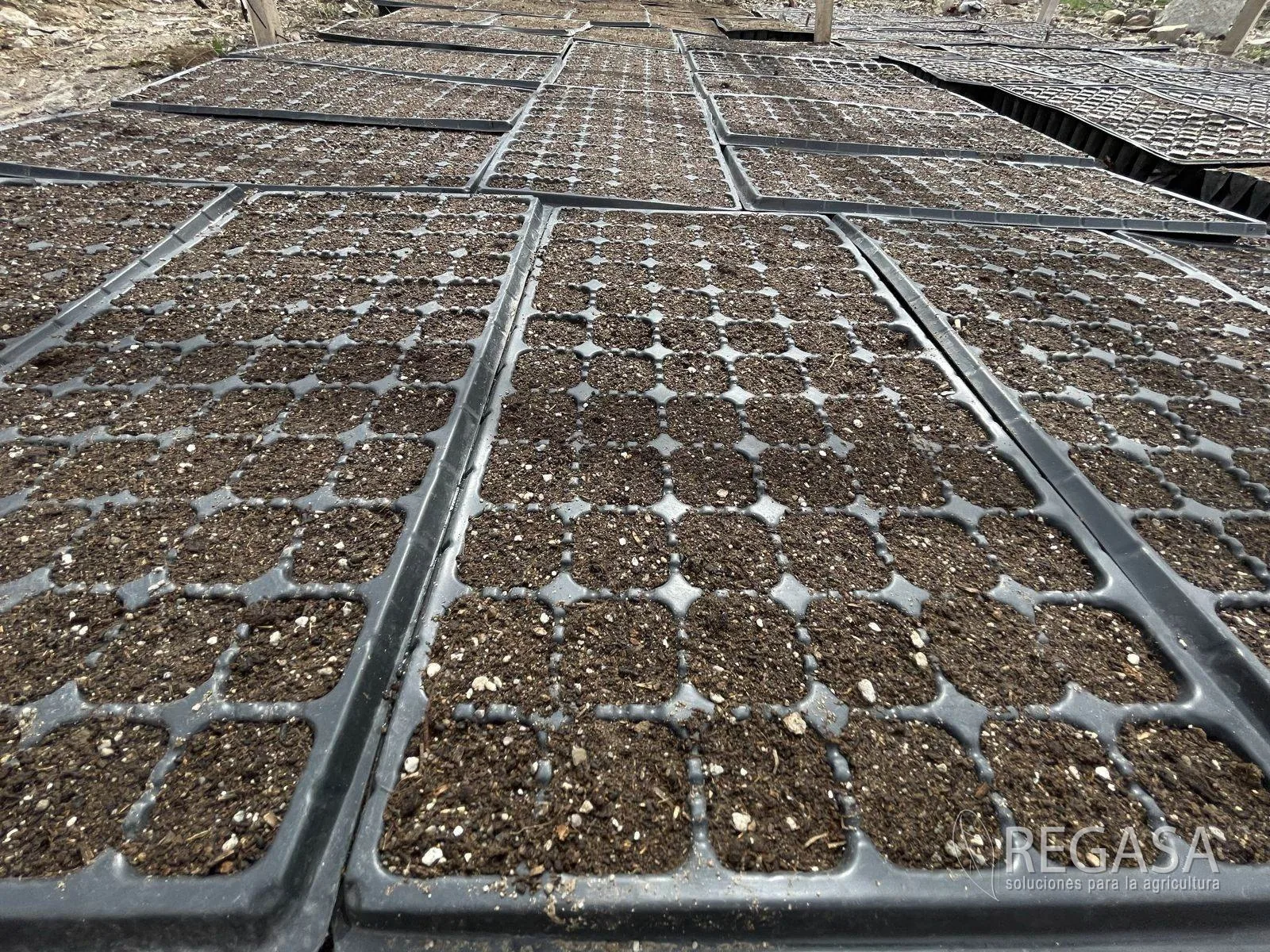
Why start your seedlings in trays
A good tray decides whether your nursery comes out even and strong or patchy. The cell shape builds a firm plug that lifts out whole at transplant time.
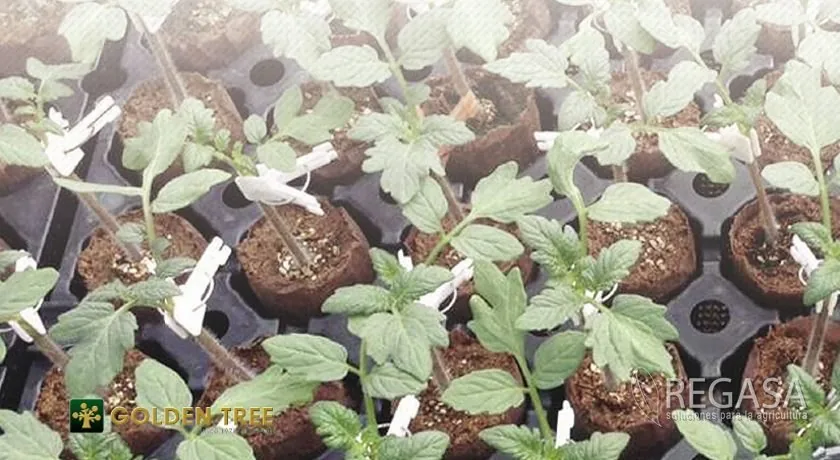
Uniform germination
Every cell gets the same media, water and light, so the seedlings come up at the same time and the same size.
Strong root plug
The cell guides the root into a firm plug that comes out whole, without hurting the plant.
Fast transplant
Seedlings pop out ready for the field or the media in less time and with better survival.
Wash and reuse
Tough material, easy to wash and sanitize for many seasons.
Trays that flex without cracking
Watch a REGASA tray bend under pressure and spring back to shape. Durable plastic that survives handling season after season.
Silver Tray, 99.9% silver nano
A tray coated with 99.9% pure silver nano. It works for the seedling: it steadies the temperature, makes better use of light and looks after plant health inside every cell.
Steady temperature all year
In summer the surface stays 9 to 13 °F cooler than a standard tray: the root suffers less, air humidity drops and there is less disease. In winter it holds more warmth near the plant and cuts cold damage.
Compact, sturdy seedlings
It bounces light onto the underside of the leaves, so photosynthesis climbs and the plant grows dense instead of stretching tall. No more leggy seedlings.
Fewer pests from the start
Early on it makes life hard for aphids, mites, flies and moths trying to settle on the leaf underside, and it slows bacteria from taking hold.
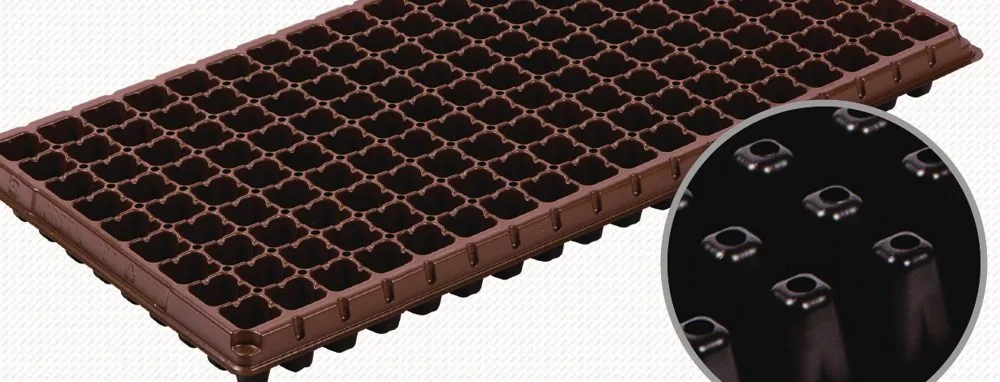
Fibroot Tray, it prunes the root on its own
A patented tray (Patent No. 98.18879) with its surface treated with a water soluble root regulant. It prunes the root tip naturally and aims for close to 100% establishment.
More rootlets, firmer plug
When the root meets the wall it stops stretching and pushes out more rootlets. You get a firm plug, easy to transplant by hand or by machine.
Up to 50% more yield
For crops that struggle at transplant or grow few rootlets, Fibroot raises yield by 20% to 50%.
Holds up under stress
It improves tolerance to drought, waterlogging, strong wind and water shortage after transplant.
You choose when to ship
It slows the seedling from aging. If the sale or planting gets delayed by weather, the seedling holds and your work is not lost.
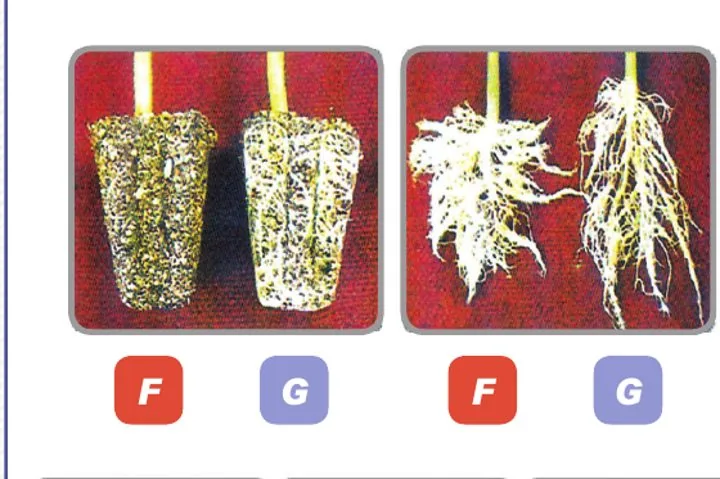
See the difference in the root
Fibroot (F) fills the plug with rootlets and holds the soil together. A standard tray (G) leaves a sparse, circling root that breaks apart at transplant.
F = Fibroot · G = standard tray
One thing: do not wet the Fibroot tray before use. The surface already comes treated with the water soluble regulant.
Pick your cell count (from 32 to 512)
More cells mean smaller plugs and more plants per tray. Fewer cells mean a bigger, sturdier transplant. We also get custom sizes and the paper pot format.
Same tray footprint: more cells means smaller plugs and more plants.
| Cells | Soil per cell | Best for |
|---|---|---|
| 32 | 115 a 150 cc | Cucurbits, grafting and large transplants that need vigor. |
| 50 | 53 a 140 cc | Tomato, pepper, eggplant and sturdy vegetable starts. |
| 72 | 34 a 70 cc | The most popular balance for field and shade house vegetables. |
| 105 a 128 | 17 a 30 cc | Brassicas, leafy greens and fast cycles at high density. |
| 162 a 200 | 10 a 15 cc | Onion, lettuce and small seed at high volume. |
| 288 a 512 | 2.5 a 8 cc | Top density: microgreens, leafy and high volume sowing. |
Which tray for your crop in the US
Cell counts in the standard 1020 format. Tell us your crop and volume and we will dial it in.
Formats we carry
Standard plug tray
The classic seedling tray, across the full cell range and in several cell shapes.
Silver Tray
The silver nano version for temperature, light and plant health.
Fibroot Tray
The patented version that prunes the root on its own for the best establishment.
Paper Pot
Paper pot plug from 32 to 210 cells, great for direct transplant and machine sowing.
Strawberry trays
Trays in 24, 30 and 40, plus a nursery tray made to raise strawberry runners.
Colors and accessories
Trays in white, yellow, red and green, plus floor mats, lids and tray carriers.
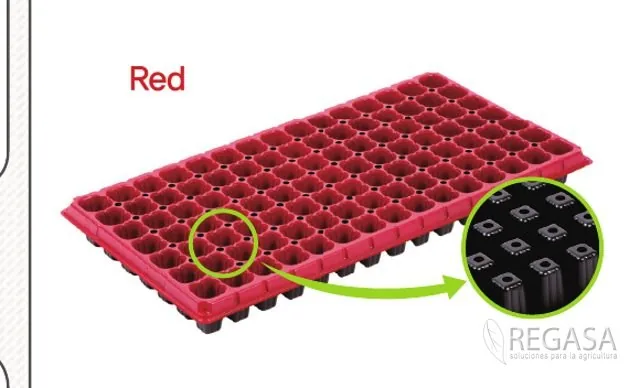
Trays also come in white, yellow, red and green for color-coding your crops or batches (seasonal item).
Frequently asked questions
Which cell count should I use for tomatoes and peppers?
The 72-cell tray is the most popular size for market gardeners: it builds a firm plug and a sturdy transplant for the field, high tunnel or greenhouse. Drop to 50-cell for grafted plants, or go to 128 for more plants per tray.
Are these standard 1020 trays?
Yes. Our plug trays fit the standard 1020 footprint (about 10 by 20 inches), so they work with common bottom trays, humidity domes and automated seeders.
Do you carry trays for strawberry plugs?
Yes. We carry dedicated strawberry trays for rooting runner tips into strong plugs for plasticulture production.
How many seedlings fit per tray?
Each cell grows one seedling, so a 200-cell tray gives 200 plants and a 288 gives 288. We carry 32 to 512 cells depending on your crop and volume.
Which cell count should I choose for my crop?
Fewer cells (32 to 72) for large, vigorous transplants like cucurbits, tomato or pepper. More cells (128 to 288) for leafy greens, onion and high-volume sowing.
What is the difference between Silver Tray and Fibroot?
The Silver Tray uses silver nano to manage temperature, light and plant health. The Fibroot air-prunes the root for a firmer plug and up to 50% more yield on transplant-sensitive crops.
Are the trays reusable?
Yes. They are made of tough material, easy to wash and sanitize so you can use them for many seasons.
Do I need to wet the Fibroot tray before use?
No. The Fibroot already comes treated with the water-soluble regulant, so do not wet it before sowing.
Need trays for your nursery?
Tell us what you grow, how much volume you handle and whether you want Silver or Fibroot. We will tell you the right cell count and how many trays to order.
Request a free quoteTwo minutes, three fields
Tell us what you grow and where
That is enough for an advisor to come back with something useful: the structure that fits your climate, what it involves, and what to plan for. No obligation.