
 Guatemala
  México
  Perú
Perú  Costa Rica
  USA
USA Plastic Mulch
Agricultural mulch film that controls weeds without herbicides, holds soil moisture and brings your crop to market earlier. Built for plasticulture beds and drip-irrigated rows.
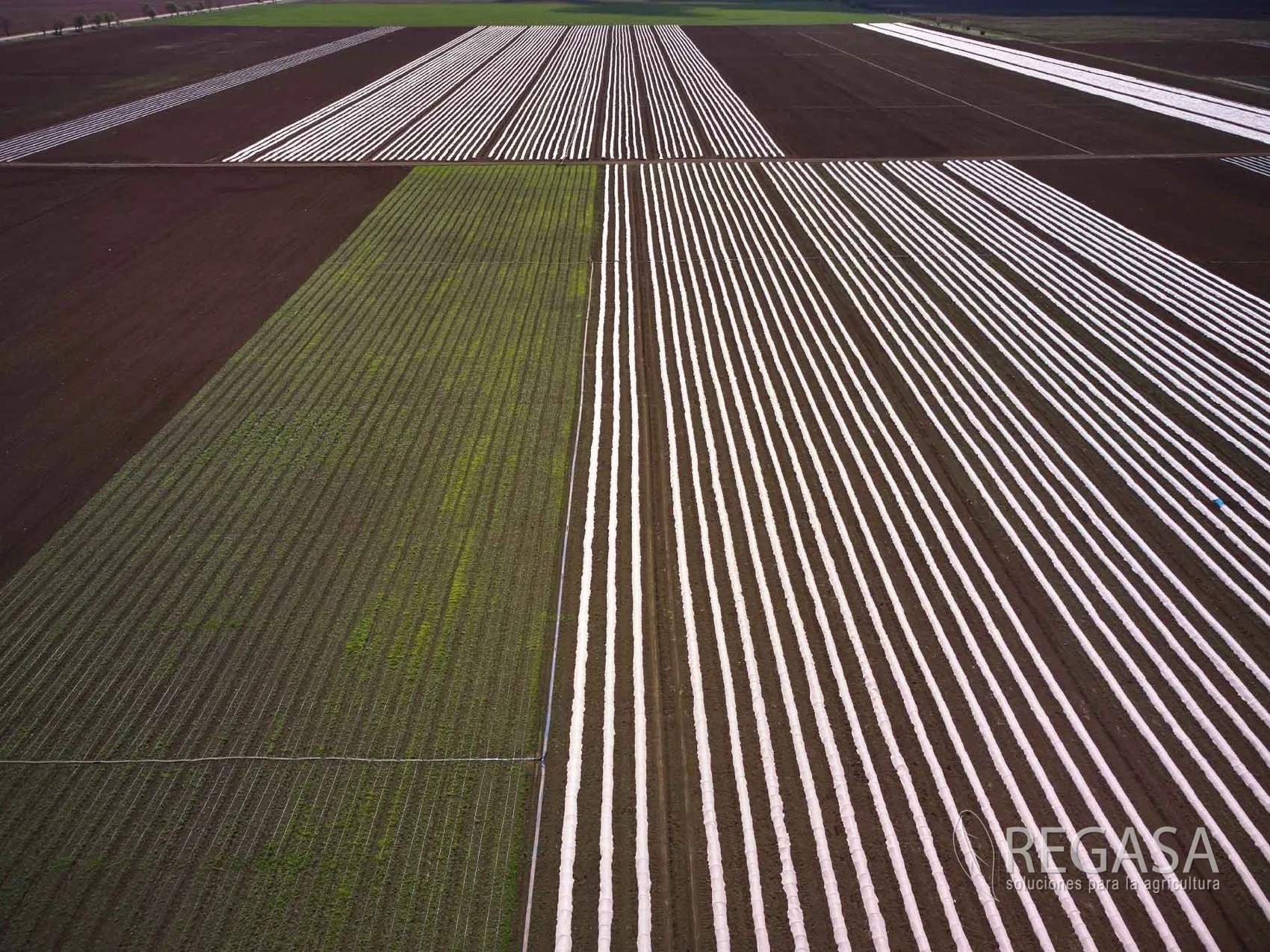
What is plastic mulch?
Plastic mulch is a film laid over the planting bed, covering the soil around the plants. It goes over the bed and a small hole is made for each plant to grow through. It is one of the foundations of modern horticulture, used across strawberry, tomato, pepper and melon.
By covering the soil, the film does four jobs at once: it blocks the light weeds need (less herbicide and hand-weeding), slows evaporation and holds moisture (ideal with drip underneath), tunes the root-zone temperature by the color of the film, and keeps the fruit off the bare soil (cleaner fruit, less rot).
The perfect pair: mulch + drip
Mulch works best with drip tape running underneath it. The film holds the moisture in while the drip delivers water and fertilizer straight to the root, so almost nothing evaporates. Together they give you the most efficient use of every drop, and a cleaner, higher-yield bed.
Why growers lay plastic mulch
Used across strawberries, tomatoes, peppers and melons, mulch film does four jobs at once and pays for itself in cleaner fruit and lower labor.
Weed control without herbicides
An opaque film blocks the light weeds need, so you cut back on spraying and hand-weeding all season.
Moisture retention
Slows evaporation and keeps soil moisture steady between irrigations, pairing perfectly with drip underneath.
Earlier, warmer harvests
Warms the root zone and brings crops to market sooner; film color fine-tunes soil temperature.
Cleaner fruit, higher yield
Fruit stays off bare soil: less rot and cleaner berries and tomatoes, with more marketable yield.
Choose the right film
Color and finish change how the film handles heat, light and wind. We help you match it to your crop, planting window and region.
Black
The workhorse. Maximum weed control and soil warming for cooler plantings.
Best for: Strawberries · Peppers · Cool-season beds
White-on-Black
White top reflects light and cools the root zone; black underside blocks weeds. Ideal for summer planting and hot climates.
Best for: Summer tomatoes · Hot-climate vegetables
Silver / Black
The silver top reflects light and repels aphids and whiteflies, lowering virus pressure; the black underside blocks weeds. Ideal where pest pressure is high.
Best for: Peppers · Tomatoes · Cucurbits under pest pressure
Clear / Perforated
Transmits the most heat for fast soil warming and early starts. Perforated options for direct planting.
Best for: Melons · Early starts · Soil solarization
Embossed
Diamond embossing lets the film expand and contract without loosening, so it lays tight and resists wind.
Best for: Windy fields · Long beds · Machine-laid
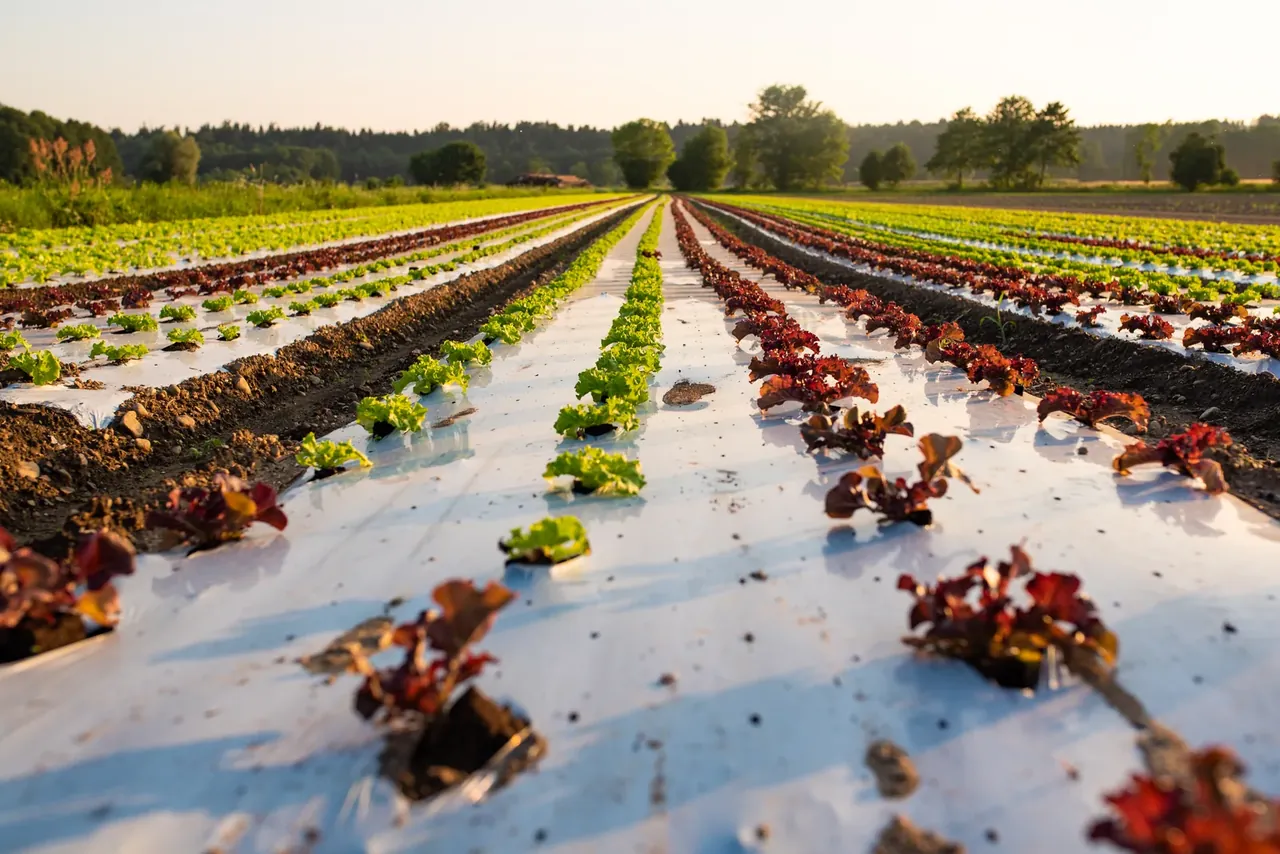
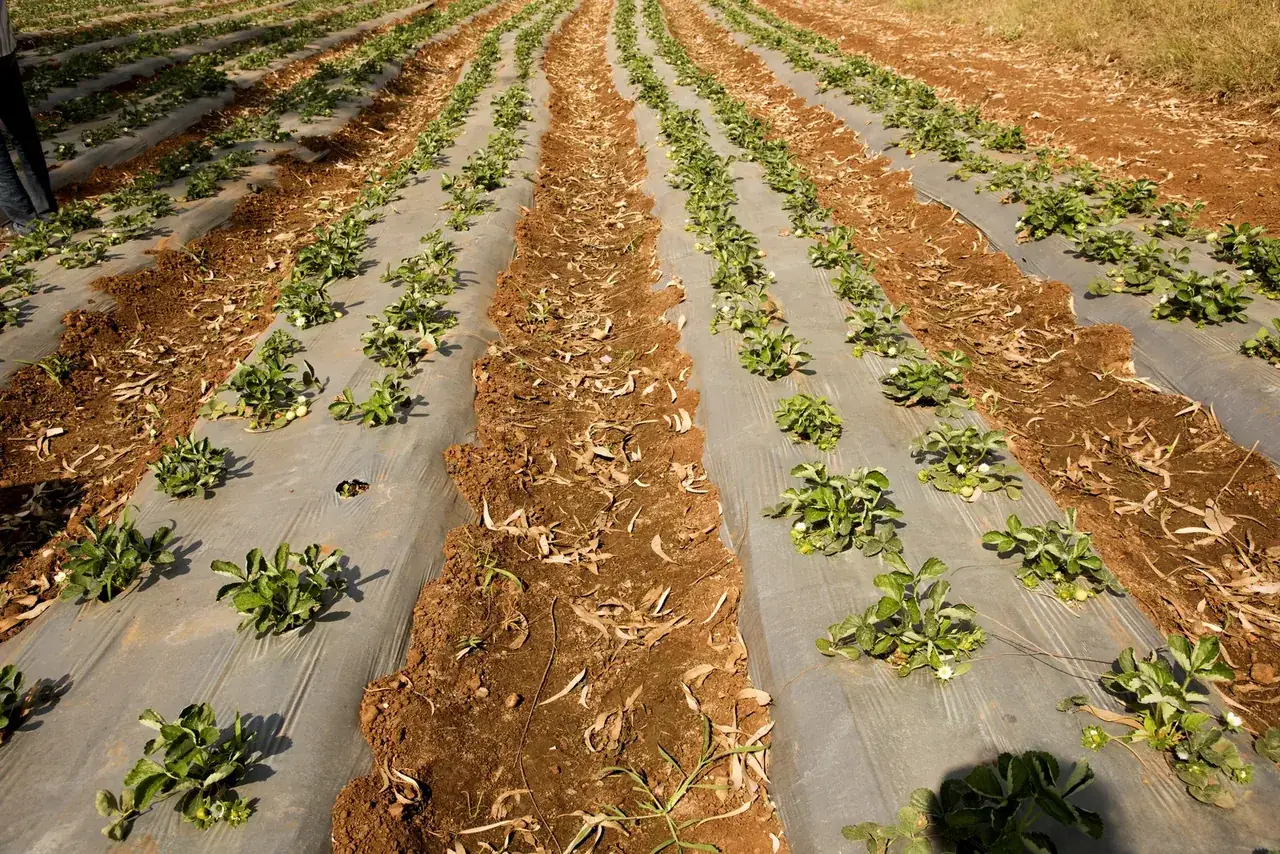
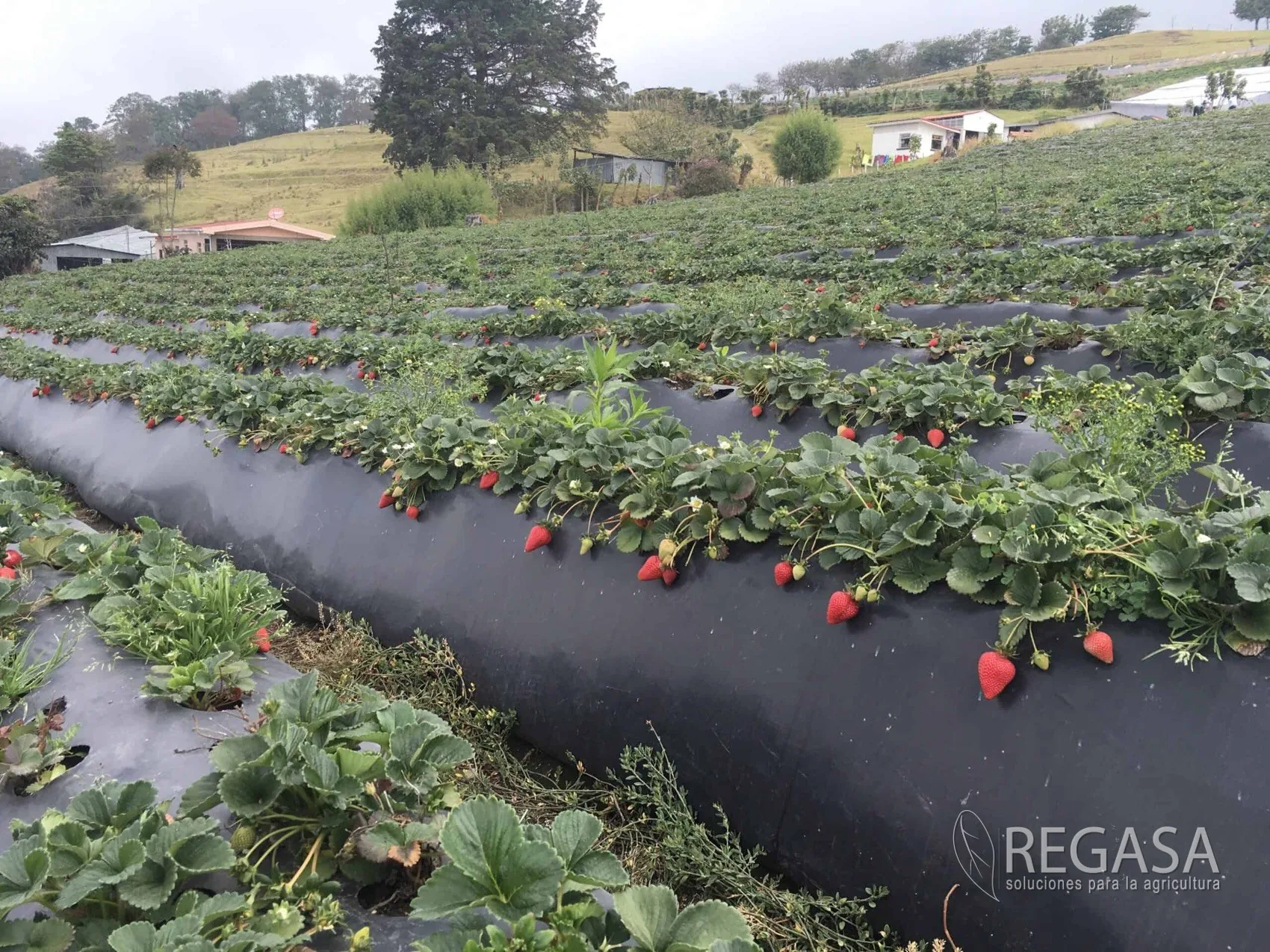
Mulch in the field
Frequently Asked Questions
What is agricultural plastic mulch?
How does it control weeds without herbicides?
Which mulch color is right for me?
Is it used together with drip irrigation?
What film thickness do I need?
Which crops is mulch used for?
How long does it last and what happens at the end of the season?
Do you help choose the right film?
Need mulch film for the season?
Tell us your crop, bed width and area and we'll spec the right film and gauge.
Request Free QuoteTwo minutes, three fields
Tell us what you grow and where
That is enough for an advisor to come back with something useful: the structure that fits your climate, what it involves, and what to plan for. No obligation.