
 Guatemala
  México
  Perú
Perú  Costa Rica
  USA
USA Agricultural Plastic Mulch: How to Choose the Right Film for Your Crop and Climate
Color, thickness and material change weed control, soil temperature, moisture and yield. How to pick the right plastic mulch for your crop.
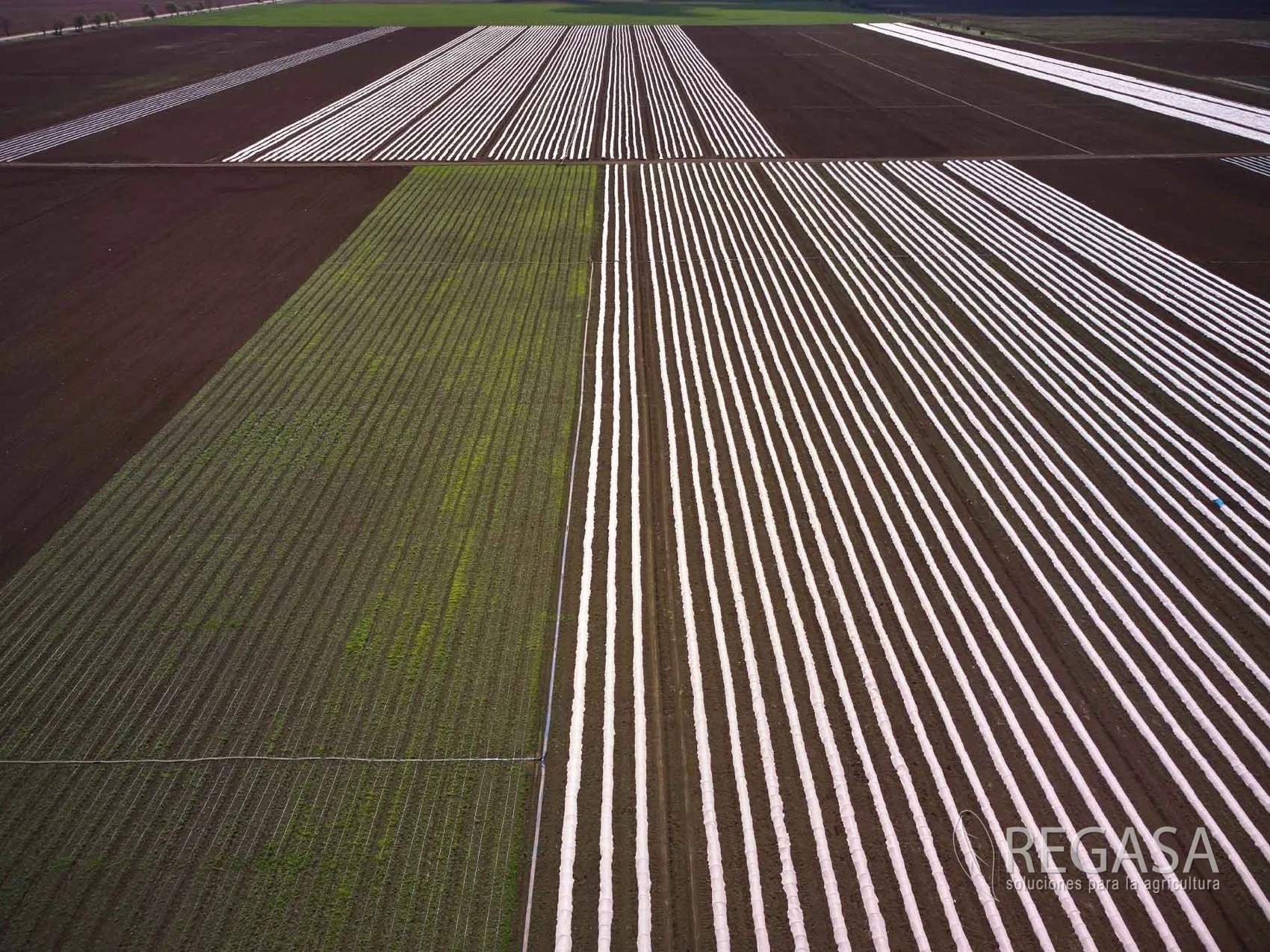
Plastic mulch doesn’t get the attention that irrigation systems or greenhouse structures get, but it should. When you put drip tape under plastic mulch in a vegetable or berry planting, you’ve done more for that crop’s water efficiency, weed management, and yield potential than almost anything else you could do at comparable cost.
The choice of which mulch to use, the color, thickness, and any specialty properties, has real effects on crop performance. Getting it wrong isn’t catastrophic, but getting it right adds measurable value season after season.
What Plastic Mulch Actually Does
The basic job of plastic mulch is to cover the bed between plants, which does several things at once.
Weed suppression is the most immediate benefit. Weeds can’t germinate without light, and plastic mulch eliminates light penetration to the soil surface between plants. For crops where hand weeding is expensive and herbicide options are limited, this alone justifies the investment.
Soil moisture retention is the second major benefit. The plastic surface prevents evaporation from the bed, which means the water you put in stays available to the crop longer. Combined with drip irrigation that puts water directly to the root zone, you’re keeping moisture where it’s needed with minimal loss.
Soil temperature modification is the third benefit, and this is where the color choice becomes important.
The Color Question
Different mulch colors affect soil temperature differently, and the right choice depends on your crop, your climate, and the time of year you’re planting.
Black mulch absorbs solar radiation and raises soil temperature. It’s the most widely used mulch color in the U.S. for vegetable production. Black mulch works well for warm-season crops planted in spring when the goal is warming cold soil faster. It’s the default choice for most growers who haven’t thought specifically about alternatives.
Silver or reflective mulch reflects solar radiation, which does two things: it keeps soil cooler and it confuses aphids. Reflective mulch reduces aphid landings on vegetables significantly, which matters for crops where aphid-vectored viruses (like mosaic viruses in cucurbits and peppers) are a management concern. In hot climates, reflective mulch prevents soil overheating during summer production.
White mulch reflects light and keeps soil temperatures moderate. It’s used for crops that prefer cooler root zones, including some lettuce and specialty greens in warmer climates.
Clear mulch heats soil the most aggressively of any color, because it lets solar radiation through to the soil surface. It’s used for soil solarization to kill pests and pathogens before planting, not typically for production mulching.
Red mulch was the subject of significant research in the 1990s and early 2000s, particularly for tomatoes. The theory is that the specific wavelength of red light reflected up to the underside of the plant canopy stimulates certain plant responses. Some trials showed yield responses. The effect is real but modest, and red mulch remains a specialty product rather than a mainstream choice.
For most vegetable and berry growers: black mulch in cool climates, silver mulch in hot climates or where aphid pressure is a significant concern.
Thickness and Durability
Agricultural plastic mulch is available in different thicknesses, measured in mils (thousandths of an inch). Standard mulch runs from about 0.75 mil to 1.5 mil for single-season applications. Heavier mulch at 2 to 3 mils is used for multi-season applications or in situations where physical durability matters.
Thicker mulch holds up better to mechanical laying equipment, UV exposure, and foot traffic during the season. Thinner mulch is cheaper per roll but tears more easily and may not last the full season in challenging conditions.
For most annual vegetable and berry crops, standard 1.0 to 1.5 mil mulch is adequate. If you’re planning to overwinter the mulch and use it for a second season, invest in heavier material.
Biodegradable Mulch Options
Biodegradable plastic mulch has become more practical as the technology has improved. These films are designed to degrade in the soil after a season, eliminating the labor and cost of pulling and disposing of conventional plastic at the end of the season.
The tradeoff is that biodegradable mulch costs more than conventional plastic, and its performance under intense UV exposure or extreme temperatures can vary. In some climates and applications it performs well; in others it degrades before the season is over.
For operations where mulch removal is expensive or logistically difficult, biodegradable mulch is worth evaluating. For operations where conventional plastic removal is straightforward, the cost difference may not be justified.
Getting Drip Tape and Mulch Right Together
Plastic mulch and drip tape are designed to work together. The drip tape goes under the mulch, typically placed in the bed before the mulch is laid, either by hand or by a combination mulch layer and transplanter.
The emitter spacing in your drip tape should match the wetting pattern needed for your crop and soil type. The mulch holds the moisture in the bed where the drip tape delivers it, which is why the combination is so effective for water efficiency.
When you’re setting up for the first time, get the drip tape sizing, emitter spacing, and flow rate matched to your soil and crop before you commit to a season’s worth of material. Changes mid-season are possible but expensive.
Practical Considerations
Laying plastic mulch mechanically with a bed shaper and mulch layer is much faster than hand-laying. If you’re doing any significant acreage, the equipment investment or rental pays for itself quickly.
Punch holes for transplants at the correct spacing before or after laying, depending on your system. Pre-punched mulch is available but custom spacing usually requires punching on-site.
At the end of the season, mulch removal before it breaks down is cleaner than dealing with degraded plastic fragments in the field. Some operations use mulch reclaimers. Others pull it by hand. Either way, plan for the removal time in your season labor schedule.
If you’re setting up a drip tape and mulch system for the first time, or looking to improve what you have, our team can help you work through the right combination for your crops and conditions.
What we build
The products behind this article
Want this sized for your farm?
Tell us your crop, your acreage and your state. An advisor comes back with the structure that fits your climate, within one business day. No obligation.
Keep reading