
 Guatemala
  México
  Perú
Perú  Costa Rica
  USA
USA Growing Blueberries in High Tunnels: What U.S. Growers Need to Know
High tunnel blueberry production is growing fast in the U.S. What it takes, what the benefits actually are, and whether it fits your operation.
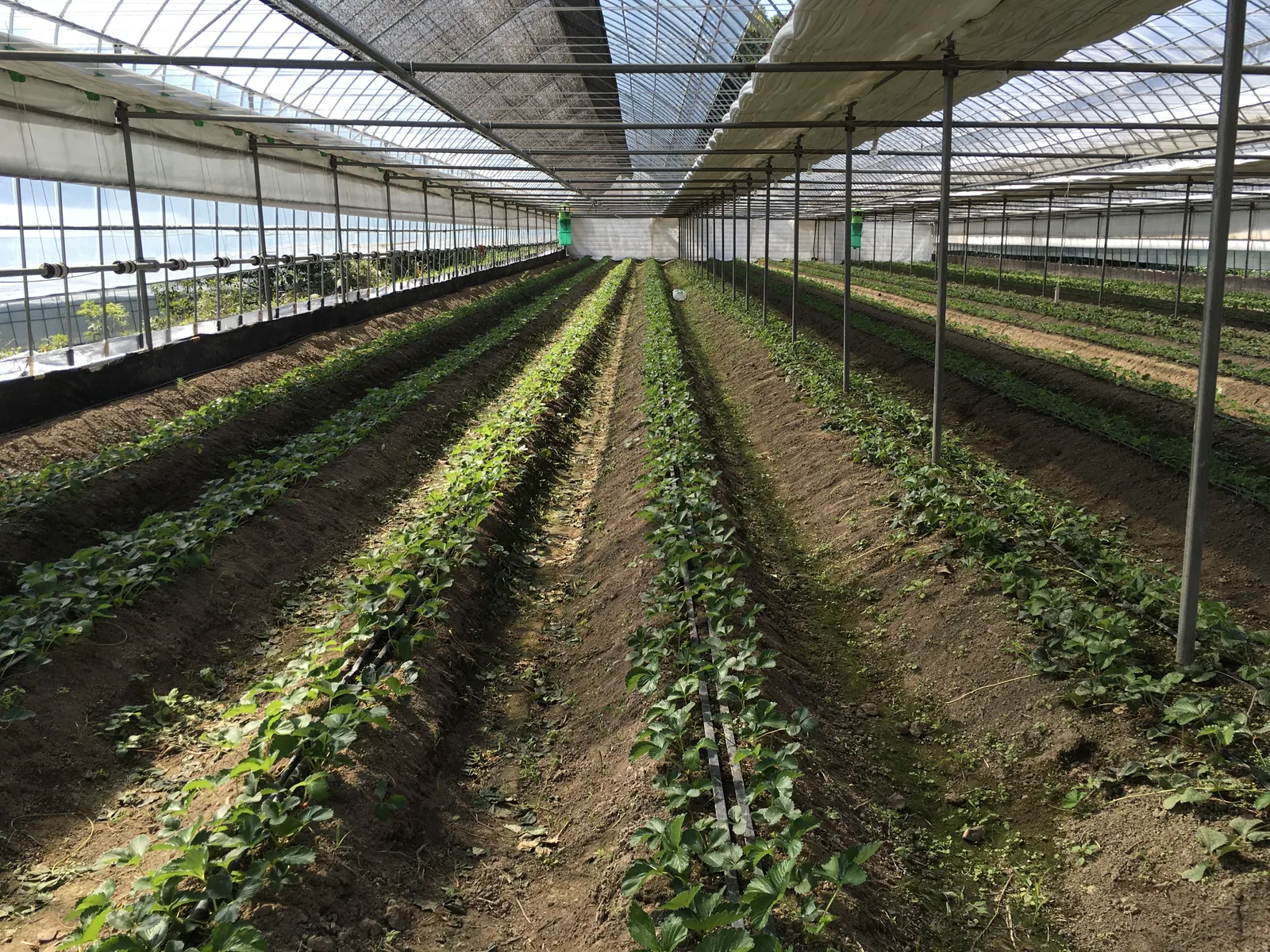
Blueberry production has changed significantly over the last ten years. What used to be a commodity crop for large operations in Michigan, Oregon, and Washington has become one of the most sought-after fruits in the country, with premium prices at farmers markets, grocery stores, and direct-to-consumer channels. That shift in market dynamics has made protected production a lot more interesting to a lot more growers.
High tunnel blueberries are not a new concept internationally. European producers, particularly in Spain and the Netherlands, have been growing blueberries under cover for over two decades. In the U.S., adoption has been slower, but the growers who have moved in this direction have generally been very satisfied with the results.
What Tunnels Actually Do for Blueberries
The most immediate benefit is harvest timing. Blueberries under a high tunnel ripen earlier than field-grown fruit in the same location, sometimes by three to five weeks depending on your variety and climate. In a market where early-season blueberries command significantly higher prices than peak-season fruit, this timing difference has a direct and measurable impact on revenue.
Rain exclusion is the second major benefit. Blueberries are sensitive to rain at the wrong moment. Rain on ripe or near-ripe fruit causes cracking, promotes mold, and reduces shelf life. For growers selling into premium markets, the visual perfection of the fruit matters enormously. High tunnel blueberries in wet climates are consistently better-looking and longer-lasting than field-grown fruit from the same harvest window.
The third benefit is season extension on the back end. A tunnel protects late-season blueberries from early fall frosts and rain events that would otherwise end the harvest. Depending on your location, you may be harvesting two to four weeks later than your uncovered blocks.
Which Varieties Work Best
Not every blueberry variety performs the same way under cover, and this is an area where getting advice from someone with hands-on experience matters.
Southern highbush varieties tend to respond very well to tunnel production because they’re already adapted to milder winters and earlier springs. The tunnel amplifies the early-season conditions these varieties are bred to take advantage of.
Northern highbush varieties in cold climates benefit from the frost protection and rain exclusion but see less dramatic early-season advancement since they require a longer cold period to break dormancy.
Work with your extension service or a knowledgeable consultant on variety selection before you decide on your planting plan. The right variety in the right structure in the right climate is a very different situation than the wrong combination of any of those three factors.
Structure Considerations for Blueberries
Blueberry plants are tall compared to most berry crops. Mature highbush plants can reach six feet or more, and you need working height in the tunnel for harvest and pruning. This affects your structure choice.
Single-bay tunnels with adequate ridge height are the most common approach. You want enough headroom to work comfortably and for air to circulate above the canopy. Overcrowded airspace increases disease pressure, which is worth thinking about early in the design phase.
Ventilation design matters more for blueberries than for some other crops because the plants are sensitive to high temperatures during flowering and fruit set. If your tunnel gets too hot at the wrong moment, you can damage fruit development even though the plants look perfectly healthy.
Irrigation Inside the Tunnel
Blueberries have specific water requirements that are worth understanding before you design your irrigation system. They’re shallow-rooted, sensitive to both drought and waterlogging, and prefer consistent moisture rather than wet-dry cycles.
Drip irrigation is the standard approach for tunnel blueberries. It delivers water precisely at the root zone, allows you to manage moisture levels tightly, and avoids wetting the foliage, which matters for disease management in a covered environment.
If you’re also managing pH through your irrigation (blueberries want acidic soil, typically in the 4.5 to 5.5 range), make sure your fertigation system is compatible with the acidifying materials you’re using.
The Transition from Field to Tunnel Production
If you’re already growing blueberries in the field and considering adding tunnels, the transition is manageable but does require some adjustment in how you think about crop management.
Pest and disease dynamics change under cover. Some field problems decrease because the tunnel keeps rain off the foliage. Others can intensify because of the more controlled environment. Spotted wing drosophila management, for example, is often more critical in a tunnel because the structure creates an environment the insects are attracted to. Work with your pest management advisor on a tunnel-specific program before you go in.
Pollination also requires attention. In a field, wild pollinators handle most of the work. In a closed or semi-closed tunnel, you may need to introduce managed colonies or open the tunnels during bloom to allow pollinator access. This is a detail that sometimes gets overlooked until the first season, when growers notice poor fruit set.
Is Tunnel Blueberry Production Right for Your Farm?
The honest answer depends on your market access and your current production situation.
If you’re selling blueberries at a price point where timing and quality matter, and you’re in a climate where rain during harvest is a recurring problem, the case for tunnels is strong. The early-season premium pricing and the quality improvement tend to work well together financially.
If you’re selling into wholesale channels where price is driven mostly by volume and your quality is already competitive, the calculation is different. The investment needs to translate to either higher prices or lower losses from weather damage to make sense.
The best conversation you can have before making this decision is with someone who has run tunnel blueberries in a climate similar to yours. If you’d like a recommendation on structure design or want to talk through whether your situation is a good fit, reach out to our team. We’re happy to work through it with you.
What we build
The products behind this article
Want this sized for your farm?
Tell us your crop, your acreage and your state. An advisor comes back with the structure that fits your climate, within one business day. No obligation.
Keep reading