
 Guatemala
  México
  Perú
Perú  Costa Rica
  USA
USA Commercial Greenhouse Farming in California: Crops, Structures, and What You Need to Know
California is the largest greenhouse market in the U.S. What makes the state unique for protected agriculture, and what to plan for before building.
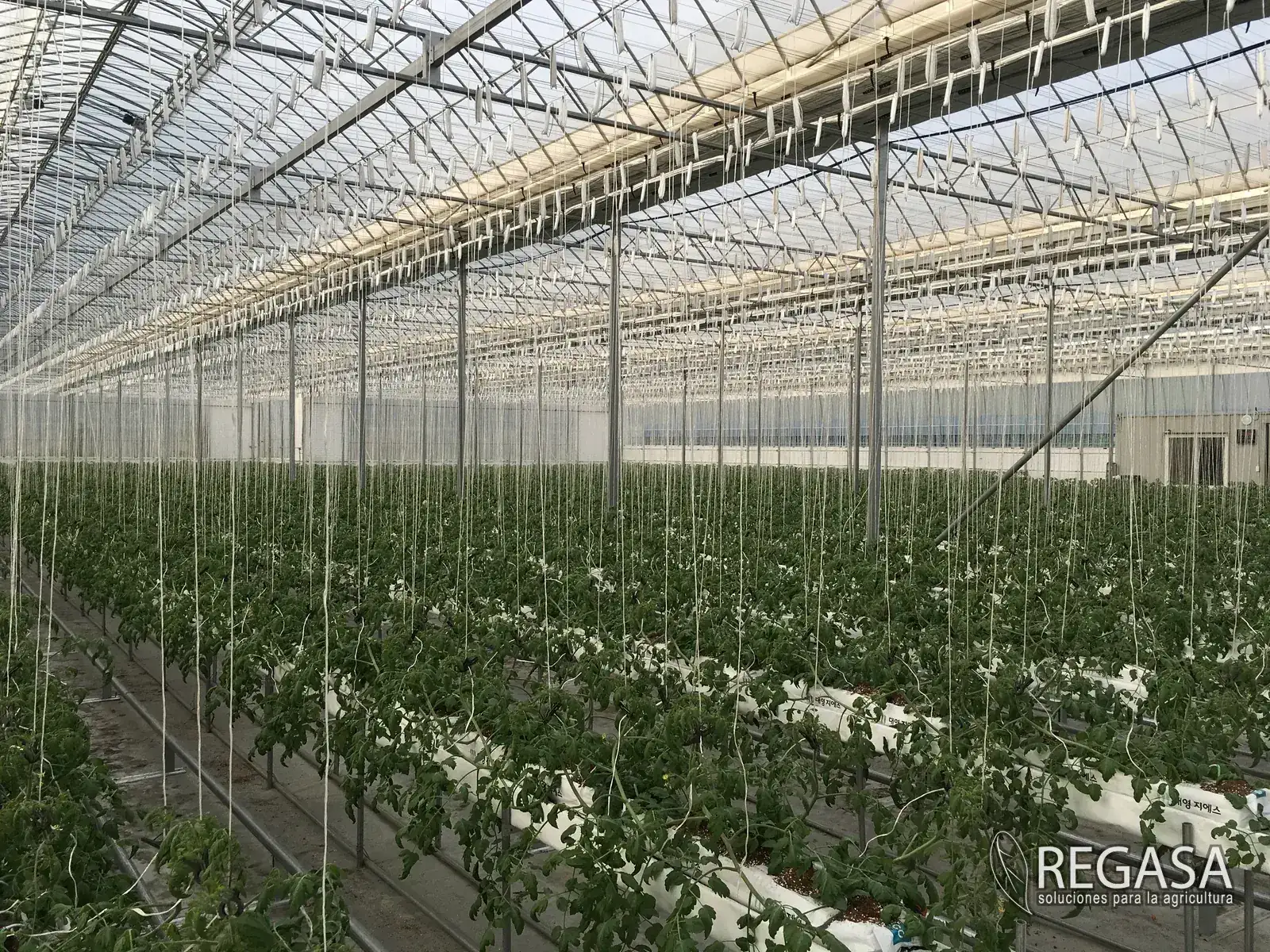
California produces more agricultural output than any other state in the country, and it has more greenhouse infrastructure than any other state as well. But calling the California greenhouse market a single market understates how different conditions can be from one growing region to the next.
The Salinas Valley, the Central Valley, the coastal production areas from Ventura to Santa Cruz, the Inland Empire, and the far north of the state all have distinct climates, water situations, market access patterns, and crop economics. What makes sense in one region doesn’t automatically make sense in another.
This is a look at what California greenhouse farming actually involves and what you need to think through before you build.
Looking for the numbers first? Our California greenhouse page has the frost-free window, wind rating and the crops that pay in the state.
Why California Growers Are Moving to Protected Agriculture
The reasons vary by region, but several themes come up consistently.
Water is the biggest driver for many operations. The Sustainable Groundwater Management Act (SGMA) has been changing the rules for agricultural water use in ways that are still playing out, but the direction is clear: water-intensive open-field production in certain parts of the state faces increasing restrictions. Greenhouse and tunnel production uses substantially less water than comparable open-field systems, and drip irrigation inside a covered structure is among the most water-efficient production methods available.
Labor costs and availability push growers toward more intensive, higher-value production. Greenhouse and tunnel crops that command premium prices can support the labor economics of California agriculture more sustainably than many field crops.
Climate extremes are also a factor. Even in a state known for good growing weather, the frequency of heat events, frost damage in valley locations, and coastal fog pressure creates production challenges that protected structures help manage.
The Climate Variation Problem
California has a range of climates that would be unusual if they existed in separate states, let alone within one.
The Central Valley is hot and dry in summer, cold in winter, and produces a huge percentage of the country’s fruits and vegetables. Greenhouse operations there face significant summer heat management challenges. Ventilation design for a Central Valley greenhouse needs to handle outdoor temperatures that regularly exceed 105°F.
The coastal production areas from Monterey County south through Ventura County have mild temperatures year-round, with natural fog in summer that limits solar radiation. Heating needs are minimal in most years. The challenge is often poor natural ventilation in low-wind coastal conditions.
The far north of the state, including areas of the Sacramento Valley and the mountain regions, has much colder winters and different crop economics than the major production areas.
Get specific climate data for your exact location before you design a structure. Average state conditions are not your conditions.
Water Management in a Greenhouse Context
California greenhouse operations need to plan their irrigation systems with water efficiency as a primary design criterion. Drip irrigation is the standard, and it’s genuinely as efficient as it’s advertised to be when it’s properly designed and maintained.
The combination of covered growing conditions and drip irrigation dramatically reduces evaporative water loss compared to field production. You’re not losing water to evaporation from soil that isn’t under the canopy. You’re not losing water to wind drift. Every liter of water going into the system is going to a root zone.
For operations in areas where groundwater use is being restricted or metered, greenhouse production with drip irrigation is one of the clearest paths to maintaining viable production with less water.
Crops That Work in California Greenhouses
The California market for premium produce is large, well-developed, and accustomed to paying for quality. That’s an advantage for greenhouse producers targeting fresh market channels.
Tomatoes are the anchor crop for many California greenhouse operations. The year-round demand from retail chains and food service, combined with the premium that greenhouse quality commands over standard field tomatoes, makes the economics work well.
Strawberries and berries under high tunnel or multi-bay tunnel structures are growing rapidly in the Watsonville and Salinas areas, where the mild coastal climate is ideal for berry production and the rain exclusion benefits of tunnel coverage are significant during the harvest window.
Leafy greens and herbs in more intensive controlled-environment systems serve the large restaurant and retail market in the Bay Area, Los Angeles, and San Diego with a local, fresh supply chain that can’t easily be served from the Central Valley or out-of-state production.
Cannabis production under greenhouse and tunnel structures has become significant in California. The specific regulatory environment for cannabis greenhouse production is distinct from food crop production, but the infrastructure requirements share a lot with conventional greenhouse operations.
Regulatory Considerations
California has more agricultural regulatory requirements than most states. Building permits for greenhouse structures, water rights documentation, labor law compliance, and in some counties, specific agricultural land use regulations, all need to be navigated before and during construction.
Working with a supplier who understands California’s permitting environment, or at minimum one who can connect you with local resources who do, will save you significant time and frustration. The structure itself is the straightforward part. Getting through the permitting process in some California counties takes longer than the actual installation.
Getting Started
If you’re considering a greenhouse or tunnel project in California, the most useful first steps are talking to other growers in your specific region who have done it and connecting with your county agricultural commissioner’s office about what permits and requirements apply to your project.
When you’re ready to think about the structure itself, reach out to our team. We’ve worked with growers in a range of climates and crop situations, and we’re glad to help you work through what makes sense for your specific location and production goals.
See the full breakdown for your state on the California greenhouse page, or browse all 50 states.
What we build
The products behind this article
Want this sized for your farm?
Tell us your crop, your acreage and your state. An advisor comes back with the structure that fits your climate, within one business day. No obligation.
Keep reading