
 Guatemala
  México
  Perú
Perú  Costa Rica
  USA
USA Drip Irrigation Tape Guide: R1 vs Q1 vs B1-PC, Which One to Choose?
Complete comparison of REGASA drip tapes R1, Q1 and B1-PC. Flow rates, crop recommendations and installation tips for American farmers.
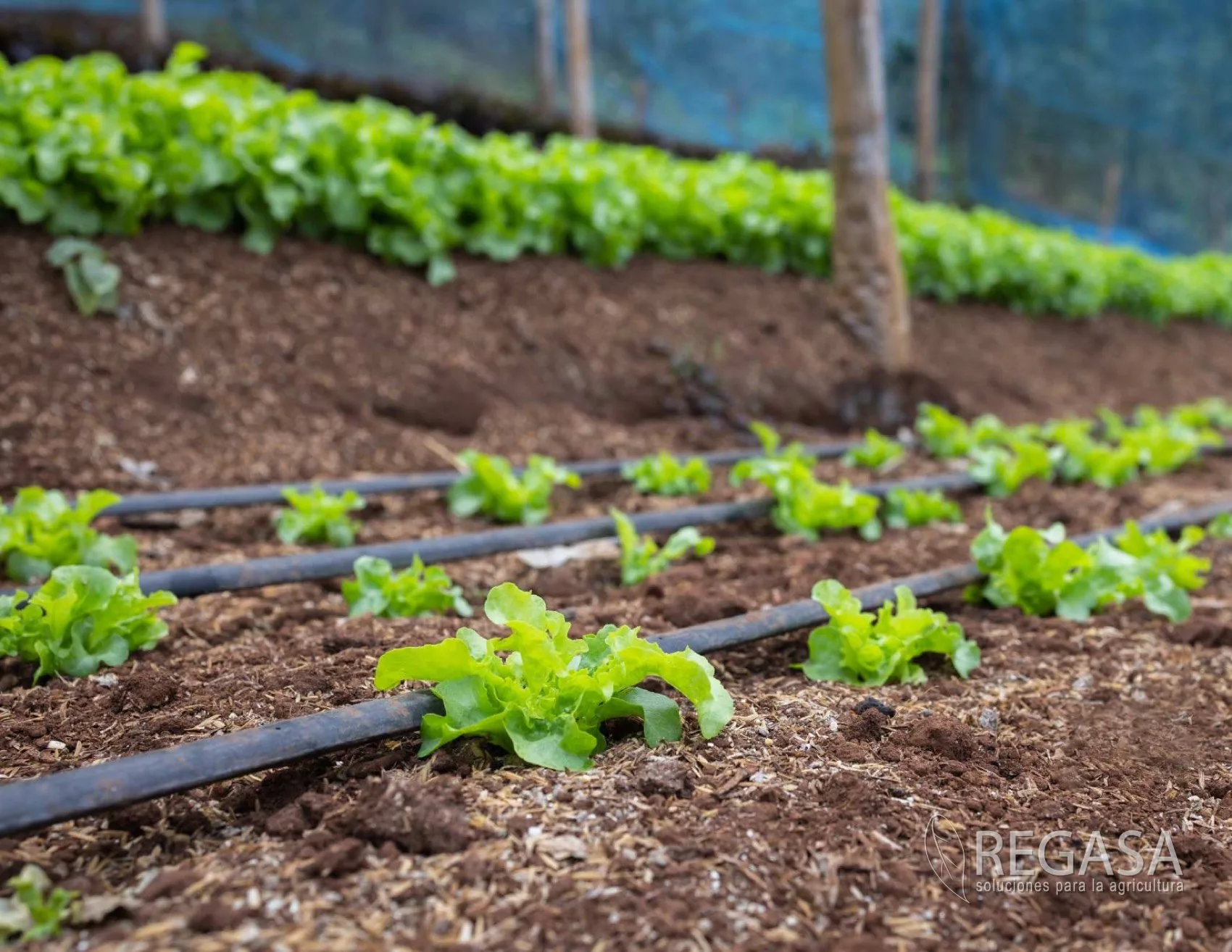
Choosing the right drip irrigation tape can make or break your crop season. With dozens of options on the market, it’s easy to get confused by technical specs. This guide breaks down REGASA’s three main drip tape models, R1, Q1, and B1-PC, and tells you exactly which one works best for your crop and conditions.
Why Drip Irrigation Tape?
Before diving into comparisons, let’s be clear about the benefits drip tape brings to American farmers:
- 50% less water compared to overhead sprinkler or flood irrigation
- Reduced disease pressure, no wet foliage means less fungal disease
- Precision fertigation, apply nutrients directly to the root zone
- Lower energy costs, operates at lower pressure than sprinklers
- Less weed growth, dry inter-row areas discourage weed germination
In water-scarce states like California, Arizona, Texas and New Mexico, drip irrigation is increasingly a regulatory requirement, not just a best practice.
REGASA Drip Tape Models Compared
R1, The Economical Workhorse
The R1 is REGASA’s entry-level, high-value drip tape. “Economic but highly effective”, that’s how we describe it.
Technical specifications:
- Dripper type: Integrated flat dripper
- Flow rates: 0.17 / 0.26 / 0.42 GPH (0.64 / 1.0 / 0.42 GPH)
- Dripper spacing: 4”, 6”, 8”, 12” (10, 15, 20, 12 in)
- Wall thickness: 5, 6, 8 mil
- Diameter: 5/8” (5/8 in)
Best for:
- Row crops: corn, soybeans, cotton
- Vegetables: lettuce, onions, carrots
- Single-season use
- Budget-conscious operations
- Flat to gently sloping terrain
Pros: Lowest cost per foot, reliable performance for 1-2 seasons Cons: Less pressure compensation than Q1 or B1-PC
Q1, The Performance Choice
The Q1 features integrated plane drippers for improved performance and better flow uniformity over longer runs and varied terrain.
Technical specifications:
- Dripper type: Integrated plane dripper (labyrinthed path)
- Flow rates: 0.21 / 0.31 / 0.42 / 0.52 / 1.0 GPH (0.8 / 1.2 / 1.6 / 2.0 / 1.0 GPH)
- Dripper spacing: 4”, 6”, 8”, 12”, 18”
- Wall thickness: 6, 8, 10 mil
- Diameter: 5/8” (5/8 in)
Best for:
- Tomatoes, peppers, cucumbers, melons
- Strawberries and row berries
- Orchards with drip irrigation
- Fields with moderate slope (up to 8%)
- Operations requiring 2-4 season tape lifespan
Pros: Better uniformity than R1, more flow rate options, longer run lengths Cons: Higher cost than R1
B1-PC, Pressure Compensating Precision
The B1-PC is for demanding applications where pressure variations are significant, hilly terrain, long runs, or crops requiring precise water delivery.
Technical specifications:
- Dripper type: Compact self-balancing pressure compensating dripper
- Flow rates: 0.31 / 0.42 / 0.52 / 0.89 GPH (1.2 / 1.6 / 2.0 / 0.9 GPH)
- Operating pressure range: 7-45 PSI (0.5-45 psi)
- Dripper spacing: 8”, 12”, 18”
- Wall thickness: 8, 10, 12 mil
Best for:
- Hilly terrain with elevation changes over 15 feet
- Orchards: avocado, citrus, stone fruits
- Premium crops requiring precise water delivery
- Long run lengths (up to 600+ feet)
- Vineyards and specialty crops
Pros: Consistent flow regardless of pressure variation, longest runs, multi-season durability Cons: Highest upfront cost
Quick Selection Guide
| Your situation | Recommended tape |
|---|---|
| Flat field, 1-season row crops | R1, 5-6 mil |
| Mixed terrain, vegetables | Q1, 6-8 mil |
| Hilly orchard or vineyard | B1-PC, 8-10 mil |
| Strawberries on raised beds | Q1, 6 mil |
| Cotton in Texas | R1, 8 mil |
| Tomatoes in California | Q1 or B1-PC |
| Avocado in California/Florida | B1-PC, 10 mil |
How to Calculate How Much Tape You Need
Basic formula:
Tape needed (feet) = Field area (sq ft) ÷ Row spacing (feet)Example: 10 acres of tomatoes at 5 ft row spacing:
- 10 acres × 43,560 sq ft/acre = 435,600 sq ft
- 435,600 ÷ 5 = 87,120 feet of tape
- In 4,000-foot rolls: 22 rolls
Add 10% for waste and connections: 25 rolls is your safe order quantity.
Filtration: Don’t Skip This Step
Every drip tape system requires proper filtration. Clogged drippers are the #1 cause of system failure and uneven irrigation.
Minimum filtration requirements:
- Sand/gravel media filter for surface water sources
- 120-mesh disc filter for well water
- Screen filter for clean municipal water
REGASA carries complete filtration equipment matched to your flow rate and water quality.
Installation Best Practices
- Flush lines before connecting tape, remove construction debris
- Check pressure at the beginning and end of the run (should be within 10%)
- Use end caps, open-ended tape causes massive water waste
- Bury or anchor tape to prevent wind movement and UV degradation
- Winterize by blowing out lines with compressed air before frost
Cost Comparison Over 5 Years
| Scenario | R1 (replace annually) | Q1 (replace every 3 years) | B1-PC (replace every 5 years) |
|---|---|---|---|
| Year 1 | $X | $1.4X | $2X |
| Year 3 | $3X | $1.4X | $2X |
| Year 5 | $5X | $2.8X | $2X |
Over 5 years, the B1-PC often costs less than the R1 when you factor in replacement labor costs.
Why REGASA for American Farmers
REGASA’s drip tapes are built with Metzerplas integrated drippers, trusted worldwide for clog resistance and flow uniformity. We import factory-direct to the US, eliminating middlemen and keeping prices competitive.
We ship to all 50 states. Minimum order: 1 pallet.
Ready to order or need a custom quote? Contact us and our irrigation specialists will recommend the right tape for your specific crop, terrain, and water source.
What we build
The products behind this article
Want this sized for your farm?
Tell us your crop, your acreage and your state. An advisor comes back with the structure that fits your climate, within one business day. No obligation.
Keep reading