
 Guatemala
  México
  Perú
Perú  Costa Rica
  USA
USA Freestanding vs. Gutter-Connected Greenhouses: How to Think About Scaling Up
At some point one greenhouse is not enough. Separate structures or a connected multi-bay system shapes your costs and your growth ceiling for years.
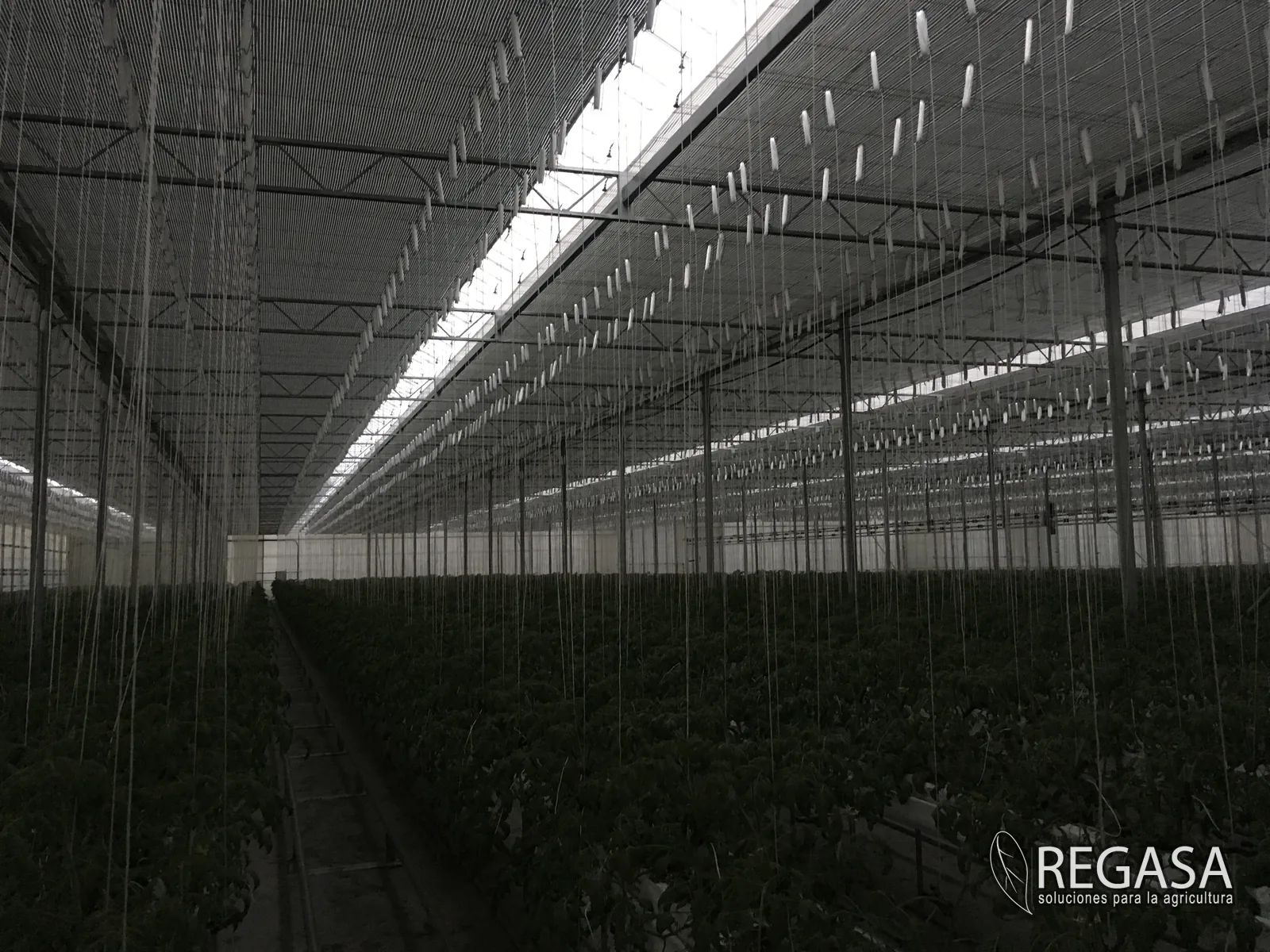
Most growers start with a single greenhouse. At some point, that greenhouse isn’t enough. Production is profitable, the market wants more, and the question becomes: do you build another separate structure, or do you expand into a gutter-connected multi-bay system?
This is a decision that has significant consequences for your operation’s layout, climate control capability, heating efficiency, and long-term scalability. It’s worth thinking through carefully before you commit to a design.
What Freestanding Structures Give You
A freestanding greenhouse is a self-contained structure with its own frame, covering, foundation, and environmental systems. You can have five freestanding greenhouses on a property and each one is independent.
The advantage of freestanding structures is flexibility. Each house can be managed independently. You can run different crops, different temperatures, or different production systems in each structure without them affecting each other. If one house has a pest problem, you can isolate it. If you want to retrofit one house with new equipment, you can do it without disrupting the others.
Freestanding structures are also easier to phase in over time. You build when you have capital, add the next structure when you’re ready, and each addition doesn’t require retrofitting the existing infrastructure.
The limitation of freestanding structures becomes apparent at scale. Each structure needs its own heating system, its own ventilation equipment, its own roof and sidewall covering. Maintenance and operating costs per square foot are higher than in a connected system, because you’re maintaining multiple independent envelopes rather than one shared space.
Moving through multiple separate greenhouses to manage production is also less efficient than operating in a single connected space. For large operations, the labor implications of a freestanding layout add up.
What Gutter-Connected Systems Give You
A gutter-connected greenhouse is made of multiple bays that share sidewalls and gutters. The interior is a single continuous production space. Instead of walking between separate structures, workers move through connected bays without leaving the controlled environment.
The heating efficiency of a gutter-connected system is noticeably better than equivalent freestanding structures. When bays share walls, heat doesn’t escape through those surfaces. The ratio of heated volume to exposed exterior surface is much more favorable than in a series of separate structures. For large operations in cold climates, this can be a significant operating cost difference.
Labor efficiency improves in a connected space. Equipment moves through the structure continuously. Workers aren’t moving between separate buildings. For mechanized operations, gutter-connected structures are essential because equipment like transplanting machines and harvest carts can traverse the entire production area without interruption.
Climate control systems in gutter-connected greenhouses can be centralized. One boiler, one ventilation design, one shade curtain system covering the entire space rather than duplicated systems in each separate house.
Gutter-connected systems also make it easier to add capacity incrementally. Adding a new bay to an existing gutter-connected structure is generally more straightforward than building a new freestanding structure, because much of the infrastructure, heating, electrical, plumbing, already extends to the edge of the existing system.
The Tradeoffs Worth Taking Seriously
The main limitation of gutter-connected structures is compartmentalization. If you have a disease outbreak, a pest infestation, or a mechanical failure, it affects the whole connected space rather than a single isolated house. For operations running multiple crops simultaneously, a single climate in the connected space may not be optimal for all of them.
Gutter-connected systems also require more upfront planning. Adding a bay to a system that wasn’t designed for it from the start can create drainage problems, ventilation imbalances, and structural complications. The design needs to anticipate growth in a way that freestanding structures don’t.
Cost per square foot for a gutter-connected system is often lower than an equivalent area of freestanding structures once the operation is large enough to justify it. But the minimum scale at which gutter-connected construction starts to make economic sense is larger than for a first freestanding greenhouse. Starting small with a gutter-connected system doesn’t capture the efficiency advantages.
Which Is Right for Your Operation
For a first greenhouse or a small operation that’s feeling out a new market, freestanding is typically the right approach. Lower capital commitment, simpler systems, and the flexibility to change course if your production plans evolve.
As you reach the point where you’re adding a second or third structure, the decision becomes more nuanced. If your crops are all similar and you see continued growth in that direction, a gutter-connected expansion deserves serious consideration. If you want to run different crops or different systems side by side, freestanding structures give you flexibility that a connected system can’t.
For operations that already know they’re building at one acre or more under cover, designing for gutter-connected from the beginning is almost always the right choice. The heating and labor efficiency advantages compound quickly at that scale, and designing the first phase of a connected system is straightforward if you know it’s coming.
The question isn’t just what you need today. It’s what you’re building toward. Getting that answer right before you pour the first foundation saves a lot of rework later.
Our team designs both freestanding and gutter-connected systems and can help you think through the growth trajectory that fits your operation. Reach out if you’re working through this decision.
What we build
The products behind this article
Want this sized for your farm?
Tell us your crop, your acreage and your state. An advisor comes back with the structure that fits your climate, within one business day. No obligation.
Keep reading