
 Guatemala
  México
  Perú
Perú  Costa Rica
  USA
USA Commercial Cucumber Production in a Greenhouse: What You Need to Know Before You Start
Cucumbers are among the most productive and profitable greenhouse crops. They are also demanding. An honest look at what production involves.
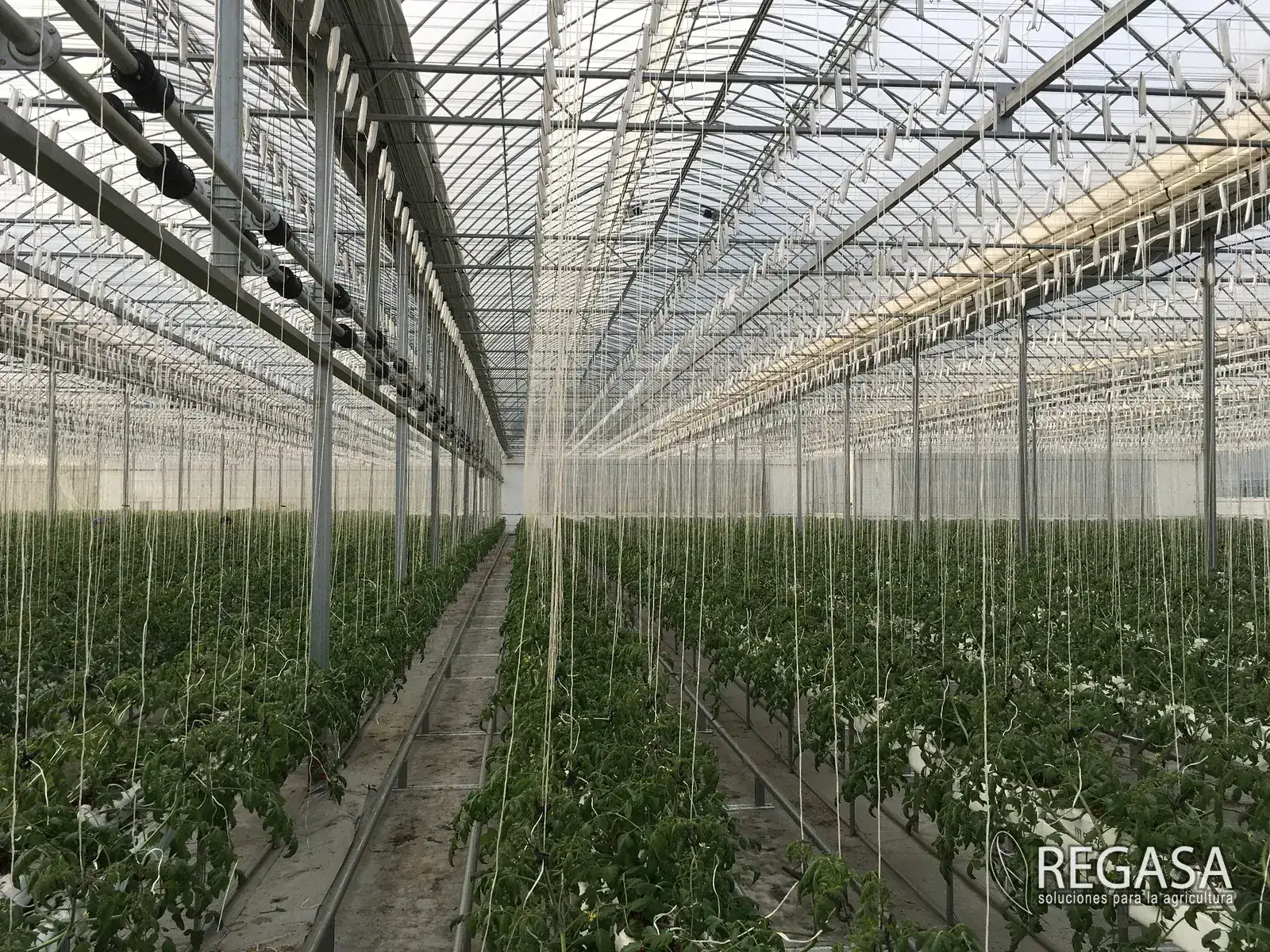
Cucumbers are among the most productive crops you can grow in a commercial greenhouse. They grow fast, produce heavily, and command strong prices in the right market channels. They’re also demanding in ways that catch growers off guard if they come to greenhouse cucumbers from field vegetable experience.
Here’s what commercial greenhouse cucumber production actually looks like, and what you need to plan for before you commit to it.
Why Cucumbers Work Well in Greenhouses
The greenhouse cucumber market in North America is dominated by three types: long English cucumbers, mini cucumbers (sometimes called snack cucumbers), and Persian cucumbers. All three types command significant premiums over field-grown cucumbers in retail and food service channels.
The premium exists for good reasons. Greenhouse cucumbers are typically harvested at peak quality and reach the market quickly, with a shelf life significantly better than field-grown fruit that’s spent time in transit. The consistent sizing, skin quality, and flavor that greenhouse production delivers is something that buyers in premium retail and high-end food service are willing to pay for.
The economics make sense for growers who can access those channels and can produce the consistent quality those buyers require.
The Production System
Commercial greenhouse cucumbers are almost always grown in soilless systems: typically rockwool or coir slabs in a drip-irrigated production setup. Plants are trained vertically on strings hung from overhead support wires, and as the plant grows, it’s lowered periodically to manage canopy height and maintain production at a reachable level.
This is different from field cucumber production in every way. The seed is seeded into propagation cubes, transplanted onto slabs, and trained from the start. Irrigation is precise and frequent. Nutrient solution management is ongoing. The plant is producing continuously rather than in a single concentrated harvest window.
A well-managed greenhouse cucumber crop in a commercial operation will produce over a long season. English cucumbers in particular can be maintained in production for six to nine months when plant health is managed well.
What Cucumbers Actually Need
Cucumbers are warm-season crops. They need temperatures in the 70s during the day and don’t do well with nighttime temperatures below the low 60s. This makes heating a consideration for year-round production in northern states, but it also means cucumbers are well-suited to the spring through fall season in most of the U.S.
Light is critical. Cucumbers produce poorly under low light, and in northern operations, supplemental lighting for winter production is often necessary to maintain acceptable yield. In southern states with adequate winter sun, year-round production without supplemental lighting is more feasible.
Water and nutrients need to be managed precisely. A cucumber plant at peak production is transpiring and absorbing nutrients rapidly. The irrigation system needs to deliver the right volume and the right nutrient balance consistently. The margin for error is tighter than in field production because the plant has no soil buffer to draw on.
Pest and Disease Management
This is where new greenhouse cucumber growers often have the steepest learning curve.
Cucumbers are susceptible to a specific set of pests and diseases in greenhouse conditions. Spider mites are the most significant ongoing pest pressure, thriving in the warm, often dry conditions inside a greenhouse. Whitefly and aphids are also common. Powdery mildew is the major disease challenge.
Biological control using beneficial insects is widely used in commercial greenhouse cucumber production and is often more effective than chemical management for spider mite and whitefly control. Setting up a biocontrol program from the start of a new crop is more effective than trying to introduce it after a pest population is established.
Good scouting practices, monitoring every week, catching problems early, and responding quickly, are essential. A spider mite population that’s manageable in week three becomes a crop-threatening problem by week six if it’s not addressed.
Variety Selection Matters More Than You Think
Commercial greenhouse cucumber varieties are specifically bred for greenhouse production. They’re not the same varieties used for field or garden production.
Parthenocarpic varieties, which set fruit without pollination, are standard in greenhouse cucumber production. This eliminates the need for pollinator management and produces the uniform, seedless fruit that buyers expect.
Variety selection affects disease resistance, plant vigor, fruit quality, and yield. Work with your seed supplier to identify varieties that perform well for your production system and target market. The difference between a well-matched variety and a poor choice for your conditions is measurable in yield and in the fruit quality your buyers will see.
Labor and Training
Greenhouse cucumbers are labor-intensive. The training, lowering, leaf removal, and harvest operations require consistent attention. In a commercial operation, the labor schedule for cucumber production is defined and regular.
If you’re transitioning from low-labor field crops, the labor requirement of greenhouse cucumber production is an adjustment. Budget for it accurately before you commit to the crop and the scale.
Harvest frequency in peak production can be daily or every other day, depending on temperature and growth rate. Missing a harvest window means oversized fruit that doesn’t meet market specifications. Consistency is the job.
Market Alignment First
Before you design a greenhouse cucumber operation, know your market. Who’s buying, what type of cucumber do they want (English, Persian, mini), what are their quality specifications, what volume can you commit to, and what price will they pay?
The greenhouse investment makes sense when the market is solid. Building the production capacity first and finding the market after is a harder path.
If you already have relationships with restaurant buyers or retail produce buyers who want consistent cucumber supply, that’s a much better starting position than excellent production without a committed customer.
If you’re thinking about commercial greenhouse cucumber production and want to talk through what the structure, growing system, and irrigation would look like for your operation, reach out to our team.
What we build
The products behind this article
Want this sized for your farm?
Tell us your crop, your acreage and your state. An advisor comes back with the structure that fits your climate, within one business day. No obligation.
Keep reading