
 Guatemala
  México
  Perú
Perú  Costa Rica
  USA
USA Commercial Greenhouse Tomatoes: An Honest Look at What to Expect in Year One
Greenhouse tomatoes are among the most profitable crops in controlled environment agriculture, and more demanding than most expect. Year one, honestly.
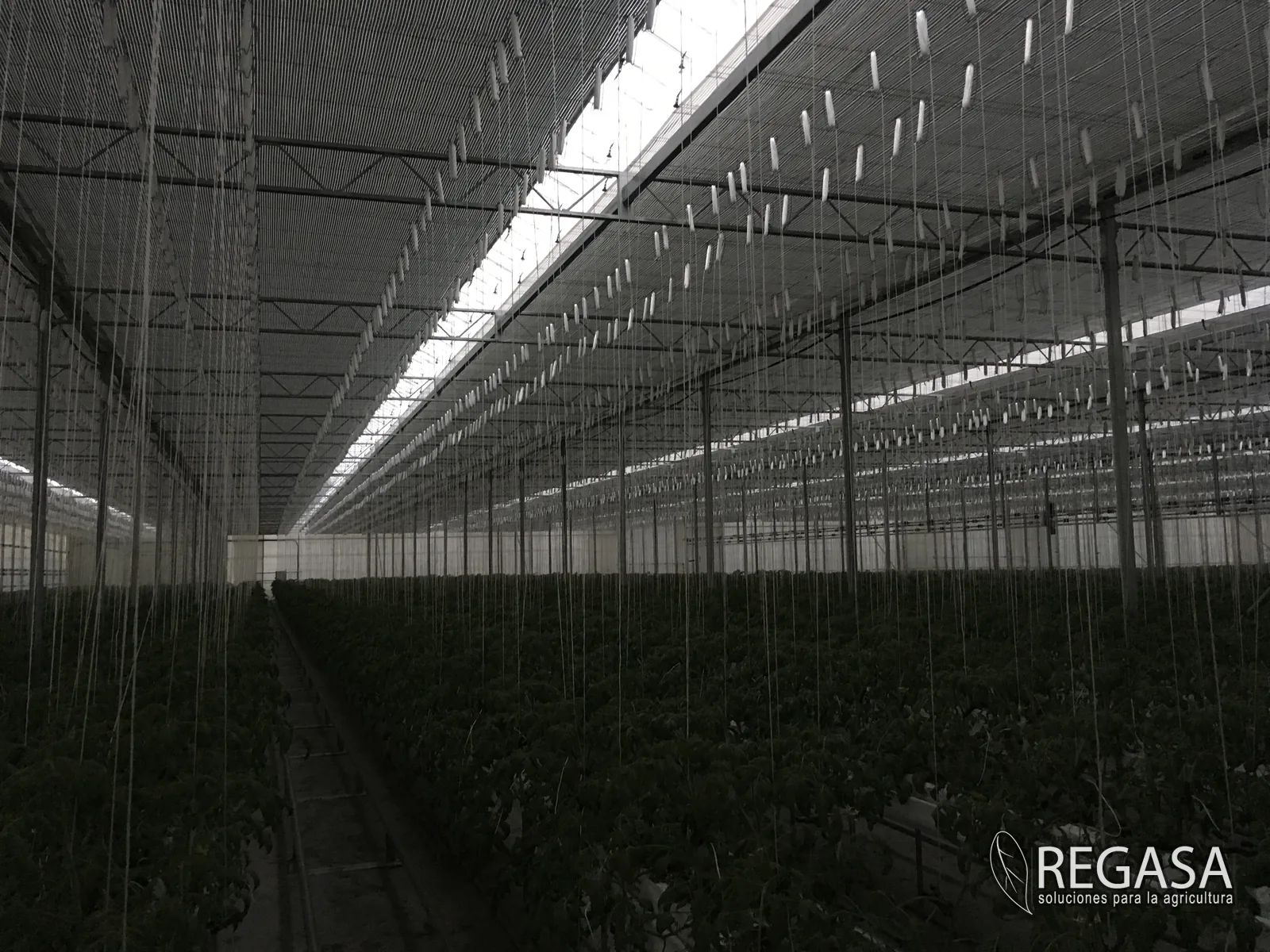
Greenhouse tomatoes are the crop that made controlled-environment agriculture a serious business in the United States. Walk into any major grocery retailer and the tomatoes on the shelf are overwhelmingly greenhouse-grown, year-round, from operations that figured out how to produce consistent quality at scale. That market exists because greenhouse tomatoes work.
They also take real commitment to get right. Growers who walk into year one with realistic expectations tend to come out of it with a functioning operation and a clear path forward. Growers who underestimate the management demands tend to have a harder time.
This is an honest picture of what year one with greenhouse tomatoes actually looks like.
The First Decision Is the Crop System
Before the structure goes up, you need to know which type of tomato production system you’re running. This affects everything from structure height to irrigation design to labor requirements.
Soil-based production grows tomatoes in prepared beds inside the greenhouse. It’s more familiar to field growers and requires less upfront investment in growing systems. The limitation is that soil-borne diseases build up over time, and you have less control over root zone conditions than in a soilless system.
Soilless production, typically in rockwool or coco coir growing media inside containers or bags, gives you more precise control over nutrition and water. It’s the dominant system in commercial operations worldwide and allows for the long-season vine production that drives the highest yields. The learning curve is steeper and the setup requires more infrastructure.
For a first greenhouse, many growers start with a soil-based system to reduce complexity and then transition to soilless as they build experience. Either way, commit to a plan before the structure is designed so the irrigation layout and benching or bed configuration can be built around it.
Planting and the First Cycle
Greenhouse tomatoes are typically seeded in a nursery area or purchased as transplants and set out in the main production space when they’re about four to six weeks old and 12 to 16 inches tall.
The first weeks after transplanting are about establishment. Plants are getting their root systems into the growing media, the stem is strengthening, and you’re managing temperature, humidity, and irrigation to support that process. This is not the moment to push for fast growth. Patience in the establishment phase pays off in the production phase.
Once the plants are established and beginning to set flowers, the management shifts to maintaining the balance between vegetative growth and fruit production. This is one of the trickier aspects of greenhouse tomato production, and it’s where the experience of your team matters a lot. Too much vegetative growth and you get lush plants with poor fruit set. Too much fruit load without sufficient vegetative support and the plants exhaust themselves early.
Pest and Disease Management
The controlled environment that makes a greenhouse productive also creates conditions that some pests and diseases thrive in. Whiteflies, spider mites, thrips, and fungal diseases like botrytis and powdery mildew are the most common challenges in commercial greenhouse tomato production.
Integrated pest management is the standard approach. That means scouting regularly, introducing beneficial insects (predatory mites, parasitic wasps, and others), and using chemical controls strategically rather than on a fixed calendar schedule.
The growers who struggle most with pests in year one are usually the ones who skip the scouting and wait until a problem is visible before responding. By the time you can see a whitefly population without looking for it, you’re already behind.
Build a scouting routine from day one. Walk the greenhouse at least twice a week with sticky traps and a hand lens. Know what you’re looking for and what the thresholds are before you have to make a decision under pressure.
Temperature and Ventilation Management
Tomatoes have a fairly specific temperature range where they perform well. Night temperatures below 60°F slow growth and can cause blossom drop. Day temperatures above 85-90°F, especially during flowering, can reduce fruit set and cause quality issues.
Managing this range requires active attention to your ventilation system. In spring and fall, the challenge is usually preventing overheating on sunny days. In winter, it’s maintaining minimum temperatures overnight. In summer in hot climates, it’s keeping the entire structure from becoming a furnace.
Many first-time greenhouse growers underestimate how quickly temperatures can swing inside a structure on a partly cloudy day. Clouds break, the sun hits the plastic, and temperatures can rise 20 degrees in 20 minutes. Your ventilation system needs to be able to respond to that, and so do you.
An automated controller that manages vents and fans based on temperature sensors is not a luxury for a commercial operation. It’s what protects your crop when you’re not physically in the building.
Water and Nutrition
Greenhouse tomatoes are heavy feeders and require consistent irrigation management. Drip systems deliver water and nutrients directly to the root zone, and the precise delivery is one of the advantages of greenhouse production. But it also means that problems in your irrigation system show up quickly and directly in the plants.
In the first season, calibrate your irrigation system carefully before you plant. Measure flow rates at multiple points along the lines, check your pressure regulation, and make sure your emitters are delivering consistently. Variation in irrigation delivery creates variation in plant performance, and troubleshooting it while the crop is already in the ground is harder than catching it beforehand.
Your nutrition program needs to be matched to your growing medium. Soilless media requires complete mineral nutrition through the irrigation water because there’s no natural soil nutrient reservoir. Soil-based systems have more buffering capacity but still benefit from precise fertigation management.
What Realistic Yield Looks Like
For a grower in their first season with greenhouse tomatoes, setting a realistic yield target matters more than chasing the theoretical maximums.
Experienced commercial operations running long-season vine tomato production in high-technology greenhouses can achieve yields that most field growers find hard to believe. Those numbers require experienced management, optimized inputs, and years of refinement. First-season yields are lower, and that’s normal.
A realistic first season should give you enough production to test your market relationships, work out the management challenges with your crew, and build the data you need to improve in year two. Measure everything you can: plant growth rate, fruit set percentage, harvest volume per plant, pack-out quality, and the correlation between your management decisions and the outcomes you see.
Year two is almost always significantly better than year one for growers who are paying attention.
Getting the Right Support
Greenhouse tomato production has a knowledge base built over decades of commercial operations worldwide. You don’t need to figure everything out from scratch. Connect with your state extension service’s commercial horticulture specialist, find grower networks in your region, and work with suppliers who have real production experience rather than just equipment sales.
We’ve worked with tomato producers across Latin America for over 30 years and bring that experience to growers in the United States. If you’re planning a greenhouse tomato operation and want to talk through the structure and system design, reach out. Getting the setup right before you plant is worth the conversation.
What we build
The products behind this article
Want this sized for your farm?
Tell us your crop, your acreage and your state. An advisor comes back with the structure that fits your climate, within one business day. No obligation.
Keep reading