 Guatemala
  México
  Perú
Perú  Costa Rica
  USA
USA Greenhouse vs. Open-Field Farming: A Straight Comparison for Growers Considering the Switch
Open field and greenhouse production are fundamentally different businesses. An honest side by side to help you figure out which direction fits.
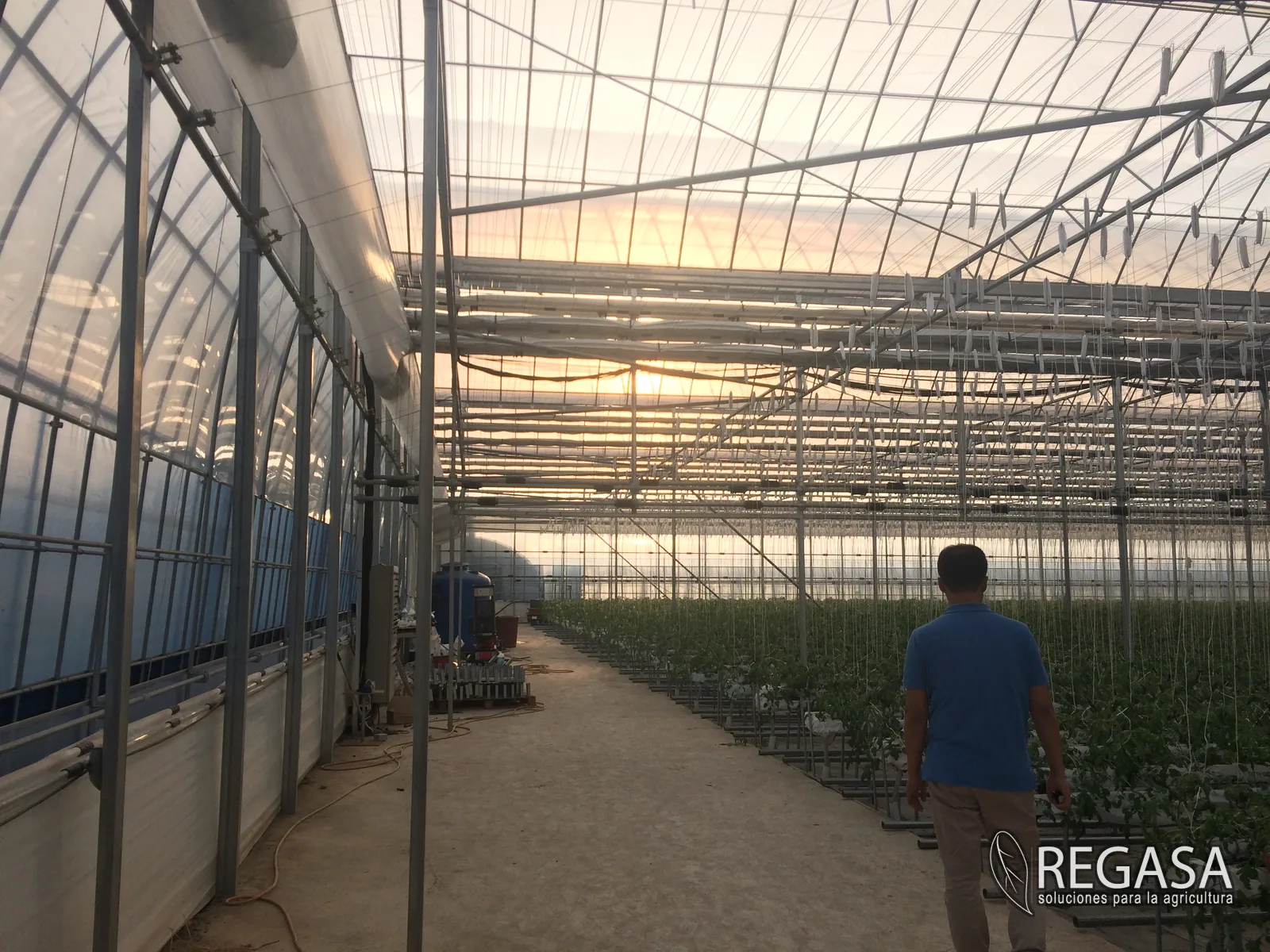
Most growers who ask about greenhouse farming are already doing something. They have land, equipment, market relationships, and years of experience in open-field production. They’re not starting from scratch. They’re asking whether adding protected agriculture makes sense for where their operation is going.
That’s a different question than “should I become a greenhouse farmer?” And it deserves a different kind of answer.
Here’s an honest comparison of what open-field and greenhouse production actually look like across the dimensions that matter most to a working farm operation.
Control Over Production
This is the most fundamental difference between the two systems.
In open-field farming, the weather decides a lot. You manage what you can and accept what you can’t. A late frost kills your transplants. A wet spring delays planting. A hailstorm in July takes out your peppers two weeks before harvest. You adapt, you replant, you carry crop insurance, and you live with the variability.
In a greenhouse, you’re inside the variability. You control temperature, humidity, light penetration, and the water your crop receives. The weather outside is largely irrelevant to what happens inside the structure. You still have equipment failures, pest problems, and disease outbreaks, but the randomness of outdoor climate is removed from the equation.
For growers whose biggest pain point is weather-related loss, this is the most compelling argument for protected agriculture. It doesn’t eliminate risk, but it changes the nature of the risk from uncontrollable to manageable.
Yield Per Acre
There’s no comparison here. Greenhouse production yields are dramatically higher than field production for the same crops.
A field tomato operation in good conditions might produce 15 to 25 tons per acre in a season. A commercial greenhouse running vine tomatoes in a soilless system, managed properly, can produce that in a fraction of the space, running multiple harvests over a longer season. Leafy greens and herbs see even more dramatic yield multiplication because of the ability to stack production cycles.
This yield advantage doesn’t make greenhouse farming automatically more profitable, because it also requires more management intensity and infrastructure investment. But it does mean that you can generate significant production from a smaller footprint, which matters when land is expensive or limited.
Seasonal Flexibility
Open-field farmers know their seasons. Planting windows, harvest windows, and dead periods are baked into the rhythm of the operation. For many crops and many markets, this seasonal structure works fine. For others, it leaves money on the table.
The premium prices for many fresh vegetables and fruits are highest when local supply is scarce, which is exactly when open-field production is offline. Greenhouse farmers harvest during those windows because they’re not dependent on outdoor growing conditions.
This isn’t just about getting higher prices in January, though that’s part of it. It’s about having product when your buyers need it most. A restaurant group or grocery retailer that wants consistent local supply year-round can’t build a relationship with an operation that goes dark for four months. Greenhouse producers can be that consistent supplier.
Labor Requirements
Open-field farming is labor intensive at specific moments: planting, cultivation, and harvest. Between those peaks, labor needs drop significantly.
Greenhouse operations require more consistent labor throughout the production cycle. Plants need attention, training, scouting, and harvesting on a regular schedule that doesn’t pause for weather. The labor requirement is less peak-intensive than field work but more continuous.
The labor that greenhouse operations need is also more skilled on average. Scouting for pests and disease, managing plant training systems, operating fertigation equipment, and making crop management decisions requires training and experience. Finding and keeping good greenhouse workers is a real challenge for many operations.
If you’re building a greenhouse operation, plan for your labor model from the beginning. The farms that struggle with this most are the ones that tried to run greenhouse production with the same seasonal crew they use for field work.
Market Access and Pricing
This one depends heavily on where you are and what you’re selling.
For commodity crops where price is set by national or international markets and volume is the main competitive advantage, open-field production in the right geography is usually the right model. A greenhouse doesn’t help you compete on price for a crop where the market price is already below what protected production can deliver economically.
For high-value crops with quality-sensitive buyers, the math often changes. Greenhouse tomatoes, specialty peppers, herbs, and cut flowers consistently command premium prices in retail, food service, and direct markets. The controlled environment produces the consistency those buyers pay for.
The growers who do best with greenhouse operations are the ones who already have a market relationship or a clear path to one. They’re not building the greenhouse and then looking for buyers. They’re responding to buyer demand they already know exists.
Investment and Operating Structure
Open-field farming requires land, equipment, and seasonal working capital. The infrastructure investment is substantial, but most of it is depreciable over long periods and has value outside of your specific operation.
Greenhouse infrastructure is a different kind of investment. The structure, covering, irrigation system, and heating and cooling equipment are specific to greenhouse production. That investment generates returns through the higher yields and better pricing that protected production enables, but it takes time to pay back.
Most greenhouse operations plan for a multi-year payback period and model their financials accordingly. The farms that run into trouble are the ones that expected greenhouse economics to look like field economics. They don’t. The capital structure, the operating model, and the financial timeline are all different.
Which Direction Makes Sense for You
The honest answer is that it depends on four things: your crop, your market, your management capacity, and your financial position.
If you’re growing high-value crops, you have buyers who want better quality or more consistent supply than open-field production can deliver, you have the management capacity to run a more intensive operation, and you have the financial runway to carry the investment through the payback period, greenhouse production is worth serious consideration.
If you’re growing commodity crops at scale, your market doesn’t pay a premium for controlled-environment quality, or you’re not ready to take on the management demands of protected agriculture, open-field farming remains the right model for your situation.
A lot of successful farms run both. They use greenhouse production for the crops and markets where it makes sense and keep field production for everything else. That’s often a more practical entry point than a full transition.
If you want to think through what protected agriculture could look like for your specific operation, we’re happy to have that conversation. No obligation, just an honest discussion about what makes sense.
What we build
The products behind this article
Want this sized for your farm?
Tell us your crop, your acreage and your state. An advisor comes back with the structure that fits your climate, within one business day. No obligation.
Keep reading