
 Guatemala
  México
  Perú
Perú  Costa Rica
  USA
USA Greenhouse vs. Vertical Farming: Which Is the Better Investment for Your Farm in 2026?
Vertical farming drew enormous capital and most of it collapsed. Why that happened, and why greenhouses are still the practical path for working farms.
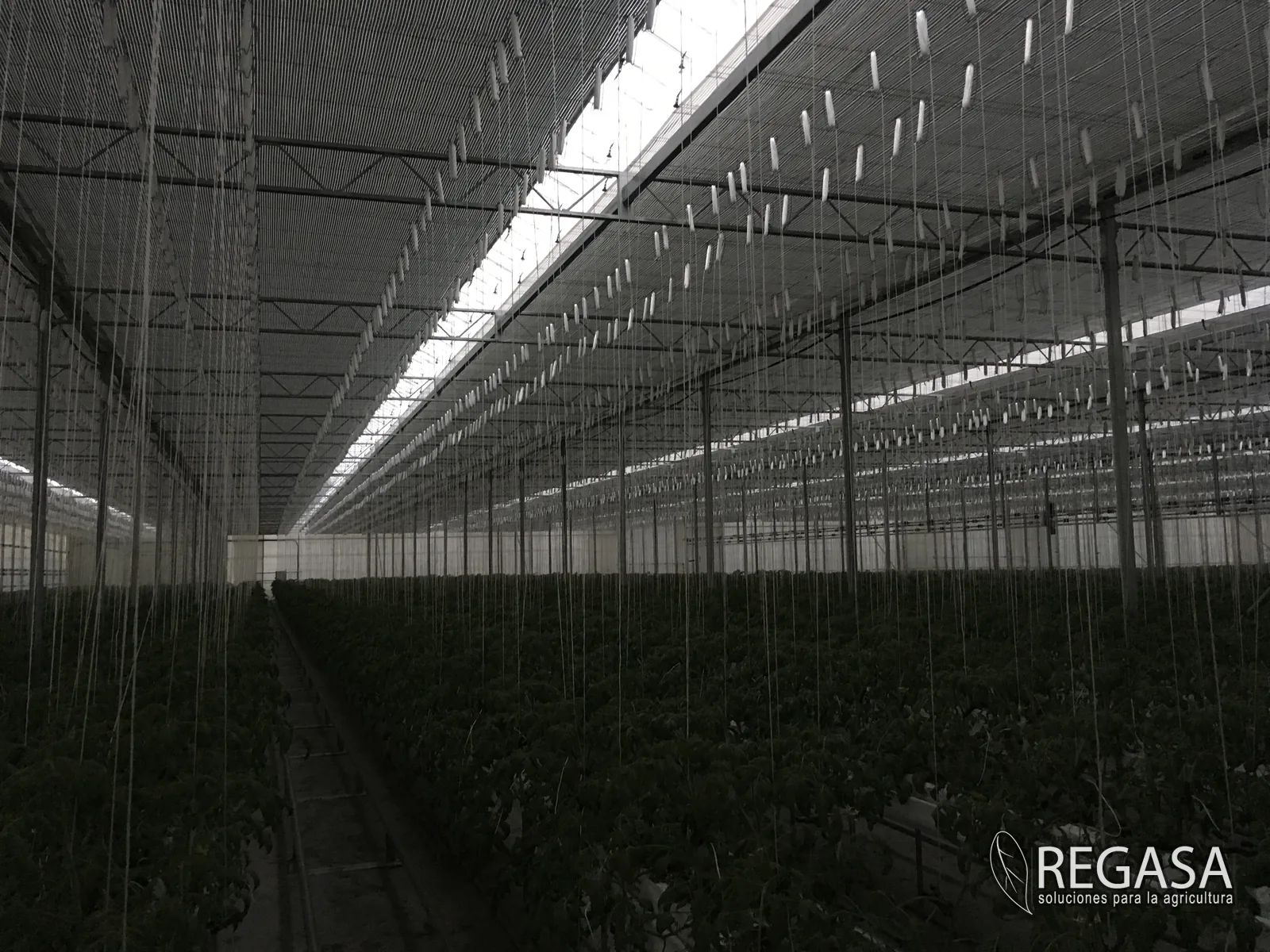
A few years ago, vertical farming was being called the future of food. Venture capital poured into indoor growing operations stacked floor to ceiling with LED-lit growing racks. The pitch was compelling: grow anywhere, eliminate weather, use less water, produce year-round. Some of the most prominent operations raised hundreds of millions of dollars.
Then most of them ran out of money.
AppHarvest, one of the most publicized greenhouse and indoor farming ventures, filed for bankruptcy in 2023. AeroFarms went bankrupt twice. Bowery Farming closed. Plenty, which raised over $400 million, shut down its domestic operations. The list goes on.
This isn’t a story about bad technology. The underlying science of vertical farming works. It’s a story about economics, and the economics of vertical farming have proven extremely difficult for nearly every operation that has tried to scale it commercially.
Understanding why matters if you’re making a decision about how to invest in controlled-environment agriculture for your own farm.
Where Vertical Farming’s Economics Break Down
The core problem with vertical farming is energy. Plants grown under artificial light require a lot of it. A lettuce head grown in a vertical farm under LED lights consumes roughly 20 to 40 times the energy of the same lettuce grown in a greenhouse with natural light supplemented modestly in winter.
At current electricity prices in the U.S., that energy cost is simply too high to compete on price for most crops. The vertical farms that have survived are mostly producing herbs and microgreens in high-density urban markets where premium prices and extreme freshness are the value proposition, and even those operations struggle with margins.
Crops like tomatoes, peppers, and cucumbers are essentially impossible to make work economically in a vertical farm because of the energy required to support their fruit production. Leafy greens can work in specific market conditions, but the window is narrow.
What Greenhouses Do Differently
A greenhouse uses sunlight. That sounds simple, but it’s the key difference. The sun delivers free energy to the crop, and the greenhouse structure captures and concentrates that energy through the covering material. You supplement with heating in winter and manage excess heat with ventilation in summer, but the primary energy input is free.
The operational cost structure of a greenhouse is fundamentally different from a vertical farm as a result. Labor, inputs, and infrastructure can all be challenging, but the energy bill that breaks vertical farm economics is a fraction of the equivalent in greenhouse production.
Greenhouses also don’t require the same density assumptions that vertical farming does. Vertical farms justify their energy and infrastructure costs by producing a lot in a small footprint. Greenhouses can scale more naturally because the marginal cost of additional area is relatively low once the core infrastructure is in place.
What Greenhouses Can’t Do That Vertical Farms Can
To be fair about this comparison, there are things vertical farms genuinely do better.
Location independence is real. A vertical farm can operate in a warehouse in the middle of a city, a basement, or any space with electrical capacity. If your market is specifically urban and proximity to population centers is a premium, that matters.
Total environmental control is also real. A vertical farm can specify exactly what light spectrum, temperature, CO2 level, and humidity every plant receives, down to the individual tray. This allows for very precise manipulation of plant characteristics, including nutritional content, flavor compounds, and harvest timing.
For research applications, seed production, and extremely high-value specialty crops, this level of control has genuine value. For most commercial food production, it’s more precision than you need and more cost than you can recover.
The Practical Reality for Working Farmers
If you’re a farmer evaluating controlled-environment agriculture as a business decision rather than a technology investment, the greenhouse case is much stronger than vertical farming for almost every crop category at almost every scale.
The infrastructure investment in a commercial greenhouse is significant. The operational learning curve is real. But the fundamental economics work. Growers who build well-designed greenhouse operations, grow the right crops for their market, and manage the production system well consistently produce profitable businesses.
The vertical farming model, at least at the scale and technology level that most farmers could access, hasn’t demonstrated that it can do the same thing for the major food crops. The energy economics are the limiting factor and they’re not changing fast enough to reverse the trend that took down most of the industry’s biggest bets.
What This Means for Your Decision
If you’re considering controlled-environment agriculture and you’ve been wondering whether vertical farming is the more sophisticated or forward-looking choice, the answer from the market in 2026 is fairly clear: greenhouses work, vertical farms at scale mostly don’t, at least not yet for mainstream crops.
The technology will continue to evolve. LED efficiency is improving. Growing system designs are getting better. At some future point, the economics may look different. But for a farm making a capital investment decision today, a commercial greenhouse is the proven path to controlled-environment production.
We’ve been building and installing greenhouse structures for over 30 years. If you want to talk through what a greenhouse operation would look like for your specific situation, reach out to our team.
What we build
The products behind this article
Want this sized for your farm?
Tell us your crop, your acreage and your state. An advisor comes back with the structure that fits your climate, within one business day. No obligation.
Keep reading