
 Guatemala
  México
  Perú
Perú  Costa Rica
  USA
USA Growing Peppers in a Commercial Greenhouse: A Practical Production Guide
Bell and specialty peppers are among the most profitable greenhouse crops in the U.S. What it takes to grow them well and what to expect.
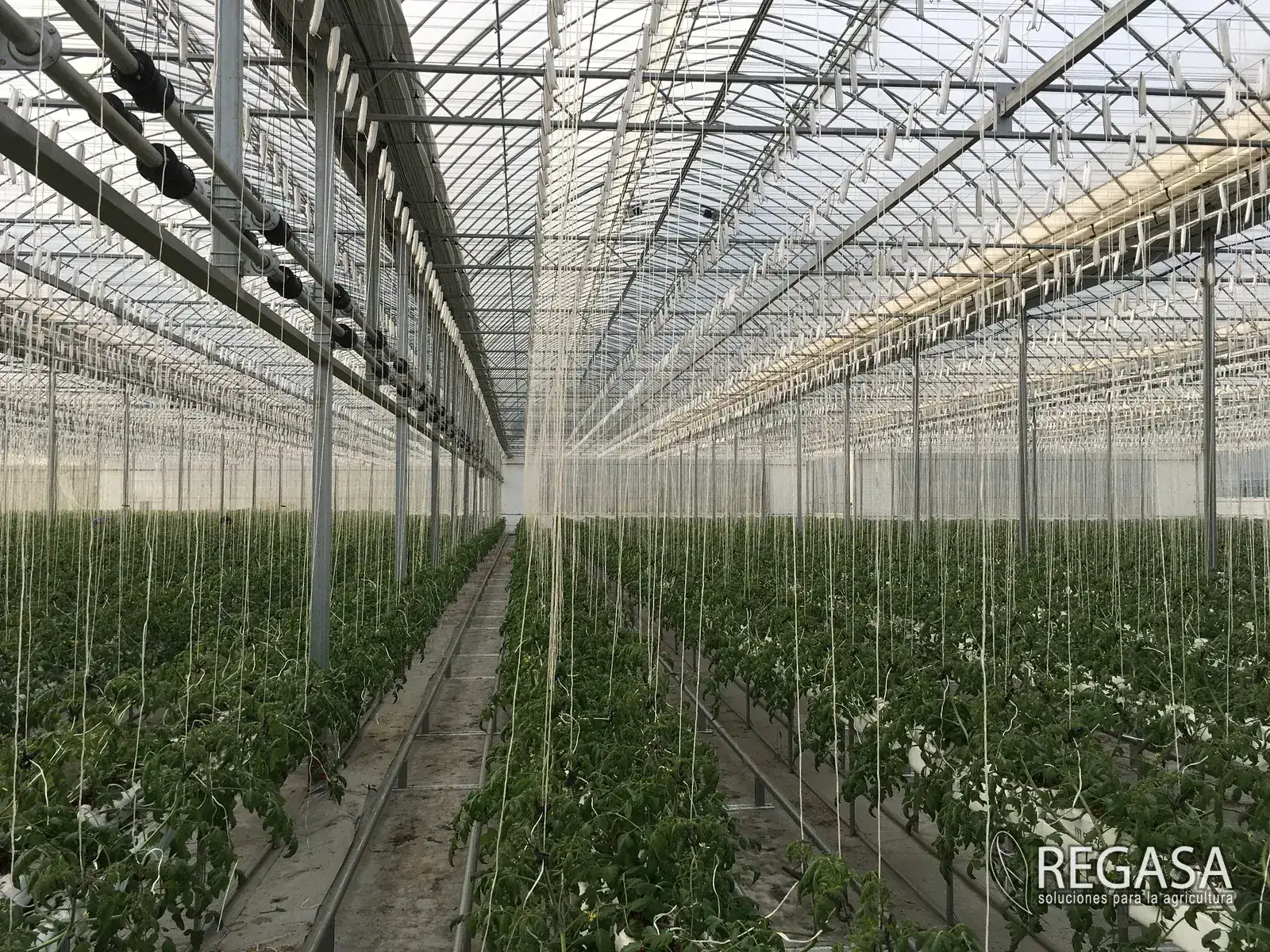
Peppers are one of those crops that behave completely differently inside a greenhouse than they do in the field. In the open, peppers are demanding: they need a long warm season, they’re sensitive to temperature swings, and they can be devastated by a single late-season cold snap. In a greenhouse, those constraints disappear. Peppers thrive in the controlled conditions, produce for extended periods, and deliver some of the most consistent quality you’ll find in any greenhouse crop.
It’s not an accident that commercial greenhouse peppers from operations in the U.S., Canada, and Mexico have taken over the bell pepper section at major grocery retailers. The controlled environment model works extremely well for this crop.
Why Peppers Work So Well Under Glass
The fundamental reason greenhouse peppers outperform field peppers so consistently comes down to the length of the production period. In field production, your pepper season is defined by your climate. You transplant when the soil is warm enough, you harvest through summer and fall, and you’re done when temperatures drop.
In a greenhouse, peppers can produce continuously for many months. A plant that’s well-managed and healthy doesn’t have a reason to stop producing until you decide to pull it. That’s why commercial greenhouse pepper operations run long-season production cycles, often keeping plants in production for nine months or more before the reset.
The yield difference that comes from that extended production window is significant. Field pepper yields are measured in a single season. Greenhouse yields accumulate over a much longer period from the same planting.
Choosing Your Pepper Type
Bell peppers are the highest-volume greenhouse pepper crop, but they’re not always the most profitable option for every operation.
Bell peppers have consistent demand from retail chains, food service, and wholesale distributors. Red, yellow, and orange bells command the highest prices, and color development in a controlled environment is more consistent than in the field. The tradeoff is that bells are grown widely, including by large operations in Mexico and Canada, so the market is competitive.
Specialty peppers, including mini sweet peppers, snack peppers, and specialty hot peppers, often carry higher per-unit margins and are less crowded from a competitive standpoint. Farmers markets, direct-to-consumer operations, and specialty food retailers often pay a meaningful premium for quality specialty peppers grown locally.
If you’re starting a greenhouse pepper operation, honestly assess your market access before you decide on your crop type. A smaller operation with direct market relationships might do better with specialty peppers than trying to compete on volume with bell peppers.
Structure and Environment Requirements
Peppers need warm temperatures to thrive. Day temperatures in the 70-80°F range and night temperatures above 60°F are the target range for good growth and fruit set. Below 55°F at night, you’ll see fruit set problems and slow growth. Above 90°F during the day, especially during flowering, pollination is affected and fruit set drops.
This temperature sensitivity means your heating and ventilation systems both need to be properly sized. In northern climates, the heating load for a pepper greenhouse is higher than for some other crops. In southern climates, summer ventilation management is the bigger challenge.
Height matters for long-season pepper production. Plants grown in vertical systems, where they’re trained up strings and the stem is lowered as the plant grows, can reach considerable height over a nine-month production cycle. Structure height needs to accommodate this.
Irrigation and Nutrition
Like tomatoes, commercial greenhouse peppers perform best in soilless growing systems with drip irrigation delivering a complete nutrient solution. The precision of drip delivery matches well with the pepper plant’s preference for consistent moisture, and the ability to adjust nutrition through fertigation gives you real control over how the crop develops.
Pepper nutrition has some specific requirements worth understanding. Calcium is critical for preventing blossom end rot, which is as problematic in greenhouse peppers as it is in tomatoes. Keeping calcium levels in the nutrient solution consistent and making sure irrigation is uniform enough to deliver it evenly across the crop matters a lot.
Phosphorus levels affect root development and fruit set. Early in the crop cycle, when you’re building the plant structure, nitrogen is more important. As the crop transitions to heavy production, the balance shifts. Managing this progression is one of the skills that separates high-performing greenhouse pepper operations from average ones.
Pollination in a Closed Environment
In the field, wind and insects handle pepper pollination. In a closed greenhouse, neither of those inputs is reliably present.
Commercial greenhouse pepper operations use several approaches. Bumblebee colonies are the most widely used because they’re effective pollinators and easy to manage inside a greenhouse environment. Mechanical pollinators, which vibrate the flowers to release pollen, are used in some operations. Some growers open their ventilation during the morning flowering period to allow some natural pollinator access.
Plan your pollination strategy before the crop flowers. Poor fruit set in the first production cycle is a common first-year mistake for growers who didn’t think through this step.
The Long-Season Production Model
Managing a pepper crop over nine or ten months looks different from anything most field growers have done. The plant goes through distinct phases: establishment, early production, peak production, and a mid-cycle adjustment period before the final push toward the end of the season.
One management practice that many growers find counterintuitive at first is removing some early fruits to let the plant build its structure before carrying a full load. If you let the plant set a heavy fruit load too early, the early fruits come at the expense of plant development, and you pay for it in the middle and end of the season. Patience with the crop in the first two months typically results in significantly better total production.
Leaf pruning, plant training, and the regular removal of old or diseased plant material are routine tasks in long-season pepper production. They’re also where your labor model gets stress-tested. These tasks require workers who know what they’re doing and are willing to work carefully in a repetitive environment.
Getting to Market
The growers who build successful greenhouse pepper businesses almost always have their market figured out before they build the structure. The production side is manageable once you’re up the learning curve. The market side is where the business actually gets made or broken.
If you’re targeting wholesale distribution, understand what your buyers require in terms of pack style, sizing standards, and delivery schedule. If you’re selling directly, think through how your production timing aligns with your market’s peak demand periods.
Peppers store well at proper temperatures (around 45-50°F for bell peppers), which gives you some flexibility in managing your harvest and delivery schedule. That storage buffer helps when you’re coordinating supply across a production cycle that doesn’t always align perfectly with market demand.
If you’re working through the decision on whether greenhouse peppers make sense for your farm, we’re happy to talk through what the infrastructure would look like for your scale and market situation. Reach out to our team.
What we build
The products behind this article
Want this sized for your farm?
Tell us your crop, your acreage and your state. An advisor comes back with the structure that fits your climate, within one business day. No obligation.
Keep reading