
 Guatemala
  México
  Perú
Perú  Costa Rica
  USA
USA Growing Leafy Greens and Herbs in a Commercial Greenhouse: A Beginner's Honest Guide
Short cycles, strong local demand and good margins make leafy greens and herbs the easiest place to start in a greenhouse. What production looks like.
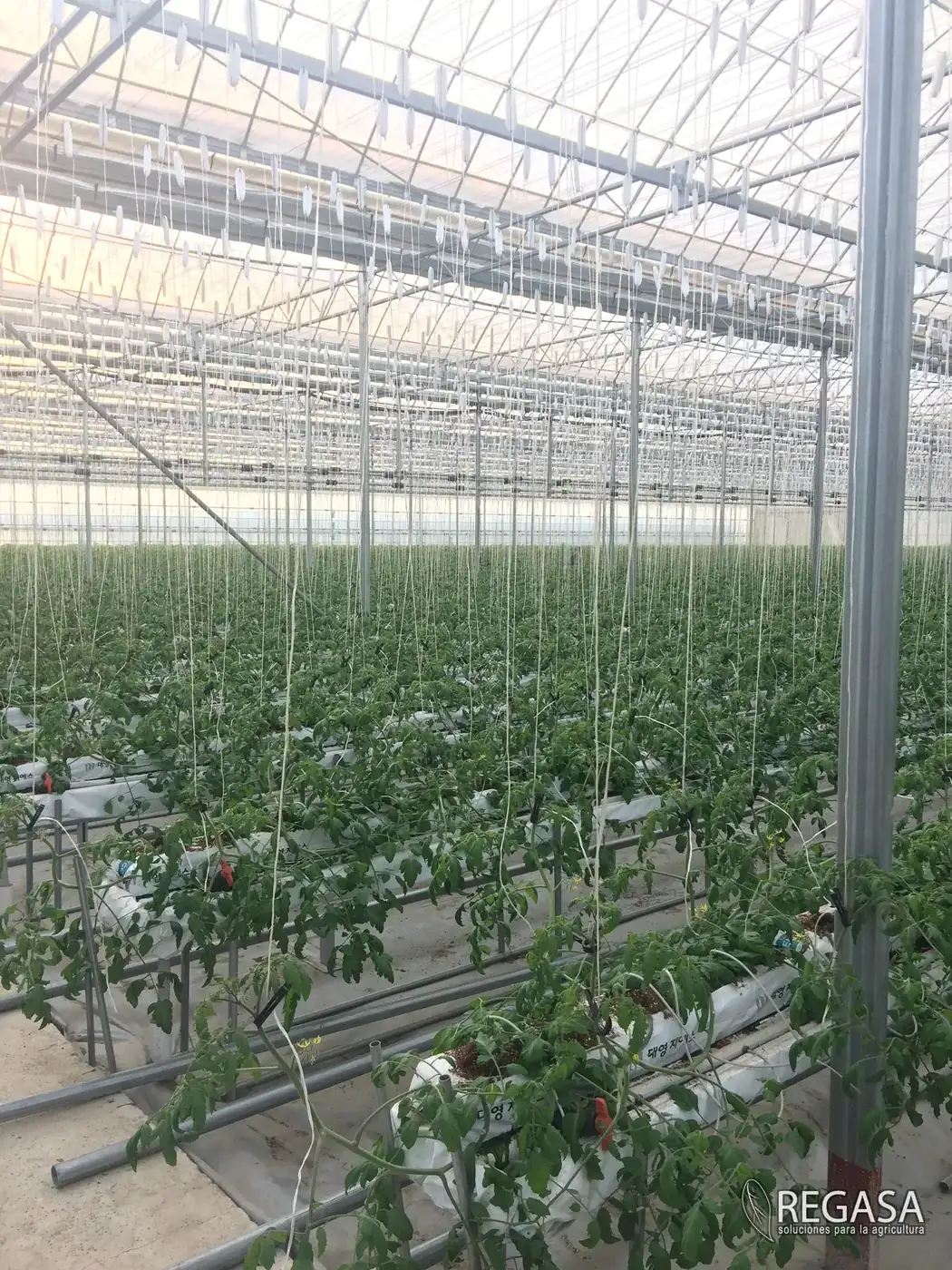
If you’re thinking about getting into greenhouse production and you’re not sure where to start, leafy greens and herbs deserve a serious look. They’re not glamorous in the way that year-round tomatoes or premium berry production can be, but they have a combination of characteristics that make them genuinely accessible for growers who are new to protected agriculture.
Short production cycles mean you get feedback fast. A lettuce crop cycle is five to seven weeks. If something goes wrong, you find out quickly and you fix it before the next cycle. That feedback loop is valuable when you’re learning a new production system.
Consistent year-round demand means you don’t have to time your harvest to a seasonal window. Restaurants use basil every week of the year. Grocery retailers stock mixed greens 52 weeks a year. The market doesn’t have an off-season for these products.
Strong local premiums exist in most markets because freshness matters enormously for leafy greens. A head of butter lettuce that traveled from Salinas has had two days in a refrigerated truck before it hits the shelf. A head grown locally and delivered the same day it’s cut is a different product, and buyers in restaurants and specialty grocery know it.
The Crops Worth Growing
Not all leafy greens and herbs are equally practical for commercial greenhouse production. Some are better suited to the controlled environment than others.
Lettuce is the anchor crop for most leafy green greenhouse operations. Butterhead varieties, romaine, and specialty cutting mixes are all well-suited to greenhouse growing. Butterhead lettuce in particular is one of the most popular living plant products in the market, sold with the roots intact for extended shelf life. It’s difficult to produce at scale outside a protected environment and commands significant premiums in the right channels.
Basil is the most commercially important herb for greenhouse production. It’s heat-loving, which means it performs well in the same temperature range as other warm-season crops, and the fresh market for basil, both cut and living plant formats, is large and consistent. The caveat is that basil is sensitive to cold and to rough handling, so your production and post-harvest systems need to be thoughtful.
Arugula, spinach, and Asian greens have strong demand in food service and specialty retail. They can be grown in multiple cycles per year and often command better prices than commodity salad greens.
Cilantro, parsley, and chives round out a herb mix that serves the restaurant market consistently. They’re less demanding than basil in terms of temperature management and can often be grown in the same space as cooler-season crops.
Production System Options
Greenhouse leafy greens are grown in several systems, and the right choice depends on your scale, your market, and how much infrastructure investment you want to make.
Soil or substrate beds are the simplest approach. You prepare growing beds inside the greenhouse, either in native soil or in raised beds with a potting mix, and transplant or direct-seed into them. This is accessible for growers who are transitioning from field production and already understand soil management.
NFT (Nutrient Film Technique) is a hydroponic system where a thin film of nutrient solution flows continuously through channels that hold the plants. It’s water-efficient and produces clean, fast-growing crops. The setup requires more infrastructure investment than soil beds but produces consistent, fast cycles.
Floating raft systems suspend plants in foam boards over shallow tanks of nutrient solution. They’re well-suited to butterhead lettuce production and are used by many commercial greenhouse operations. The system is straightforward to manage once it’s set up.
Vertical systems and grow towers maximize space by stacking production vertically. They require artificial lighting for the lower levels, which adds energy cost. For high-value herbs in locations where space is limited and electricity is affordable, they can make sense.
For a first greenhouse operation, starting with soil or substrate beds requires the lowest capital investment and the smallest operational learning curve. You can always add more sophisticated systems as your operation matures.
Light Is the Limiting Factor
In greenhouse leafy green production, light is what determines how fast you can grow and how many cycles you can run per year.
In most of the U.S., natural light is adequate for spring, summer, and fall production without supplemental lighting. In winter, especially in northern states, day length and light intensity drop enough to significantly slow growth. Whether you invest in supplemental lighting for winter production depends on your market and your heating costs.
For a grower who wants to run production year-round in a northern state, supplemental LED lighting during the four darkest months can maintain your cycle times and keep production consistent. The energy cost of LEDs is much lower than older supplemental lighting technology, but it still affects your operating cost structure.
For a grower in the South or on the West Coast where winter light is adequate, supplemental lighting may not be necessary for leafy greens.
The Restaurant and Food Service Market
If you’re producing leafy greens and herbs, the food service channel is worth building early. Restaurants have consistent weekly demand, pay premium prices for quality and freshness, and are willing to build supplier relationships when they find someone reliable.
The requirements are also more manageable than retail. You don’t need UPC codes, retail packaging, or distribution logistics. You deliver to the kitchen, build a relationship with the chef or purchasing manager, and keep them supplied consistently.
Start local. The chef at a restaurant two miles from your greenhouse who cares about sourcing is a better first customer than a regional distributor who will commoditize your product. Build the direct relationships first and scale from there.
Honest Limitations
Leafy greens and herbs are competitive in some markets. In areas with established local greenhouse operations or proximity to major growing regions, the price premium for local production can be narrower than you’d like. Know your market before you design your production around it.
They’re also perishable. Post-harvest handling, cold chain management, and delivery logistics matter more for leafy greens than for most other crops. If your market is 90 minutes away and you’re delivering in an uncooled vehicle in summer, you have a problem that isn’t fixed by better production.
And while short cycles mean fast feedback, they also mean constant activity. You’re always seeding, always transplanting, always harvesting. The labor rhythm of leafy green production is continuous in a way that fruit crops with long production cycles are not.
If you’re thinking through whether leafy greens and herbs fit your greenhouse plans, we’re happy to talk about what the structure and growing system would look like for your operation. Reach out to our team.
What we build
The products behind this article
Want this sized for your farm?
Tell us your crop, your acreage and your state. An advisor comes back with the structure that fits your climate, within one business day. No obligation.
Keep reading