
 Guatemala
  México
  Perú
Perú  Costa Rica
  USA
USA How Strawberry Growers Are Adding Months to Their Season with Macrotunnels
High tunnels are one of the most practical investments a strawberry operation can make. What they do to your harvest window, and why growers repeat.
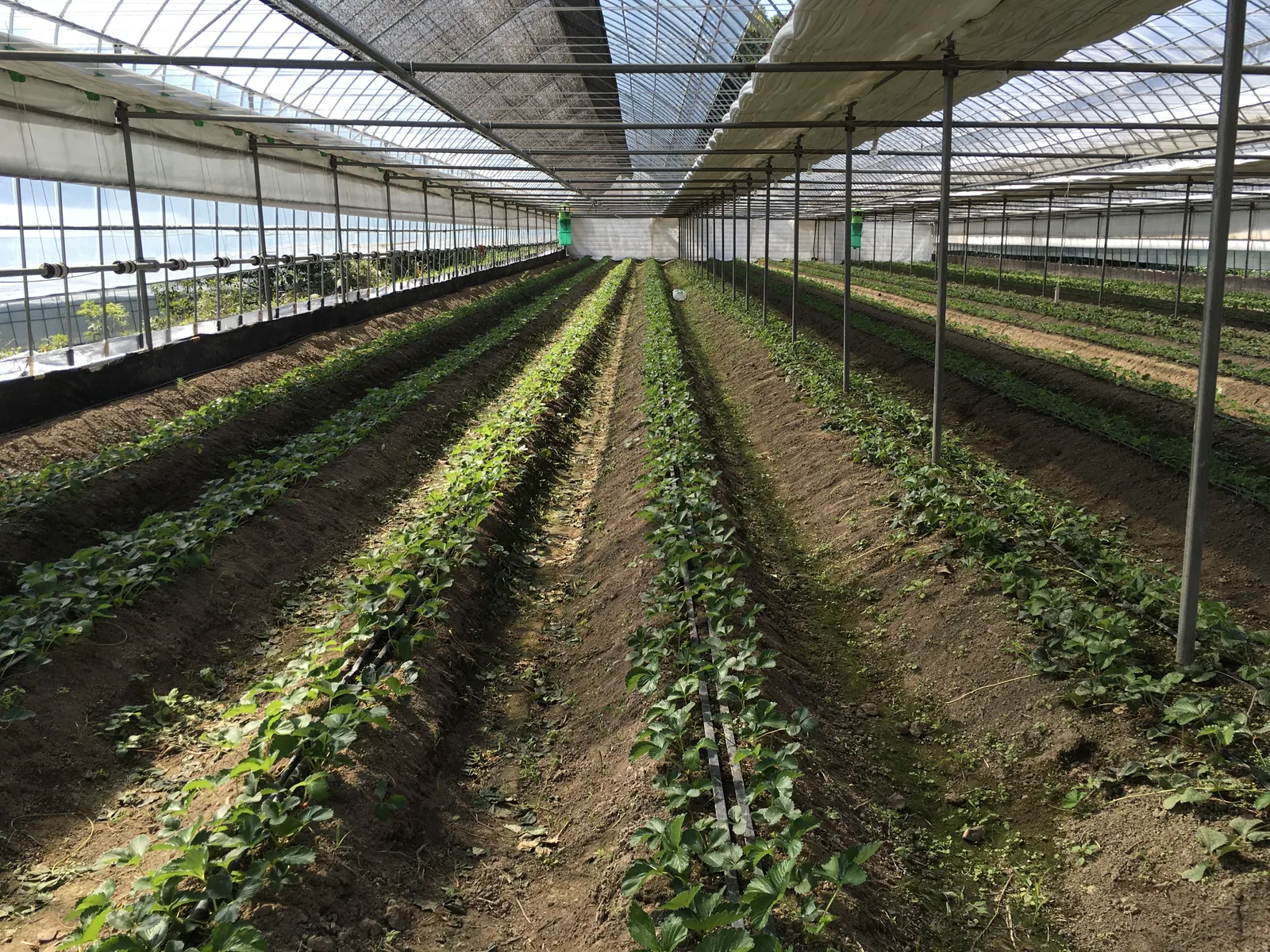
If you grow strawberries, you already know what the end of season feels like. Prices are good, demand is still there, but the plants are done and the window is closed. Customers who got used to buying your berries move on, and you’re left watching someone else’s California or Florida product fill the shelves until next year.
A lot of berry growers started using macrotunnels specifically to solve that problem. Not to reinvent their operation, not to become a greenhouse farmer, just to extend what they already had by several weeks on each end of the season.
The results have been consistent enough that macrotunnels are now standard equipment on serious strawberry operations across the country.
What a Macrotunnel Actually Does
The basic concept is simple. You put a low arched plastic structure over your strawberry rows. That covering changes the microclimate around the plants in ways that matter a lot to production timing.
In spring, the soil warms faster under the plastic because it traps solar heat. Your plants wake up earlier, flower earlier, and set fruit earlier than they would in the open field. In many growing regions, this translates to harvests starting two to four weeks ahead of your uncovered rows.
In fall, the covering protects the plants from the first frosts that would otherwise end the season. It also keeps rain off the fruit, which is a bigger deal than it sounds. Rain on ripe strawberries means botrytis. It means soft fruit that doesn’t hold up to handling. Macrotunnel-grown berries in wet fall weather often have dramatically better marketability than field-grown fruit.
The combination of earlier starts and later finish can realistically add six to ten weeks of productive harvest to a strawberry operation, depending on your location and variety selection.
The Quality Difference Is Real
Season extension gets most of the attention, but growers who use macrotunnels also consistently report better fruit quality throughout the season.
Rain exclusion is the biggest driver. Strawberries that don’t get rained on during ripening are firmer, have better shelf life, and are easier to grade and pack. If you’re selling to a farmers market, a restaurant, or anyone who cares about how the berry looks when they open the flat, this matters.
The diffuser plastic used in quality macrotunnel systems also softens the light that reaches the plants. Instead of direct harsh sun, the canopy gets a more even, diffused light. Growers who have run side-by-side comparisons often see more consistent color development and fewer sunburned berries under the tunnel.
What the Setup Looks Like
Macrotunnels for strawberries are designed to go over existing bed configurations. The arched metal hoops anchor into the ground at the edges of the bed or row, the plastic is stretched over the hoops and secured, and you’re ready to go. Ventilation is managed by rolling up the sides or opening the ends.
Installation is something most farm crews can handle. There’s no concrete, no electrical, no complex foundation work. For a well-organized crew, getting a meaningful acreage of macrotunnel installed in a day’s work is realistic.
At the end of the season, the plastic can be removed and replaced the following year. The structure itself lasts much longer than a single season and can be moved or reconfigured if your bed layout changes.
Planning Your Macrotunnel System
The most common question from growers considering macrotunnels is how many rows to cover. The honest answer is that it depends on your market.
If you have a strong early-season market, prioritize covering the varieties that push earliest. If your best opportunity is extending into fall, focus on your late-season varieties. Some growers cover their entire acreage. Others use macrotunnels strategically on a portion of their crop and leave the rest in the open field to stagger ripening and spread out their harvest labor.
Your drip irrigation system is also part of the equation. The plastic changes how rain and irrigation interact with the soil, so make sure your drip layout is set up to work with the tunnel configuration. If you’re setting up drip for the first time alongside your macrotunnel installation, we can help you think through the design.
A Few Honest Limitations
Macrotunnels aren’t a solution for every challenge in strawberry production. They don’t significantly affect winter temperatures in climates where strawberries can’t survive anyway. They don’t replace the need for good variety selection, soil preparation, or irrigation management.
They also require some adjustment in how you manage the crop. Temperature buildup under the plastic on warm days needs to be managed through ventilation. If you let the tunnel get too hot during fruit ripening, you can actually accelerate overripening and lose shelf life.
Most growers who run into problems in their first season with macrotunnels trace it back to ventilation management or not accounting for the change in disease pressure that comes with a covered canopy. Both are manageable once you know what to watch for.
Getting Started
If you’re thinking about macrotunnels for this season or next, the conversation starts with how much area you’re working with, what your bed configuration looks like, and what your main goal is. From there, we can put together a recommendation on structure and plastic specs that fits your specific situation.
We’ve been building macrotunnel systems for strawberry growers across Latin America for decades, and we bring that same approach to operations in the U.S. Reach out and let’s talk through what makes sense for your farm.
What we build
The products behind this article
Want this sized for your farm?
Tell us your crop, your acreage and your state. An advisor comes back with the structure that fits your climate, within one business day. No obligation.
Keep reading