
 Guatemala
  México
  Perú
Perú  Costa Rica
  USA
USA Greenhouse Farming for Small Farms: A Practical Starting Point
You do not need 10 acres under cover to make greenhouse production work. How to think about starting small and growing on purpose, not by accident.
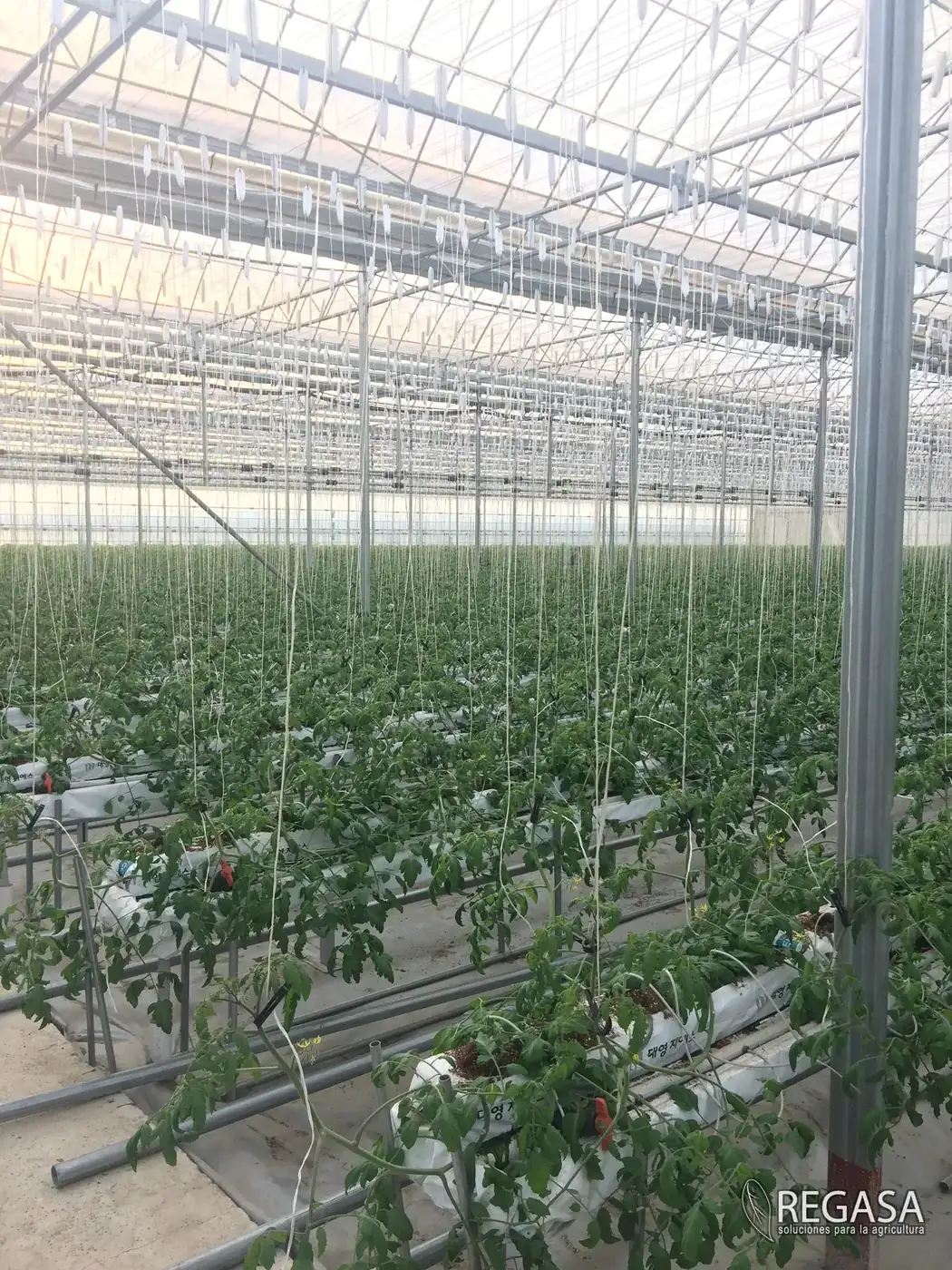
There’s a version of greenhouse farming that shows up in agricultural media that looks like a high-tech operation with acres of gutter-connected bays, automated environmental controls, and a team of agronomists running computer-optimized production schedules. That version exists, and it’s impressive. But it’s not the only version.
Smaller farming operations across the country are using greenhouse and tunnel structures to produce premium crops, extend their season, and build direct market relationships that support a profitable farm business. The starting point doesn’t have to be massive.
What “Starting Small” Actually Means
For most small farm greenhouse projects, the realistic starting point is somewhere between 2,000 and 10,000 square feet of covered growing area. That might be one or two Gothic arch greenhouses or a small gutter-connected starter system. It’s enough space to produce serious volume for local markets without requiring the capital commitment of a large commercial operation.
At that scale, the investment is manageable, the learning curve is real but not overwhelming, and the marketing requirements are within reach of a direct-market farm operation.
The question is less “how big should I start” and more “what does this size make possible, and is that enough to justify the investment?”
The Crops That Make Small-Scale Greenhouse Work
Not every crop works equally well at small greenhouse scale. Some crops require large volume to access good price points. Others command strong margins in relatively small quantities.
Herbs are among the best crops for small greenhouse operations. A 3,000 square foot greenhouse of basil, parsley, cilantro, and specialty herbs can supply a solid group of restaurant accounts at premium prices. The volume is manageable, the relationships are direct, and the premium for local, fresh herbs is real in most markets.
Lettuce and specialty greens in living plant format, sold with roots intact, are strong for small operations targeting high-end grocery, food co-ops, and farm stands. The premium for locally grown living lettuce over shipped product is significant, and the production system for living plant lettuce, raft hydroponics or substrate beds, is accessible without enormous infrastructure investment.
Tomatoes and peppers work at smaller scale when the market relationship is in place. A small greenhouse tomato operation supplying a consistent weekly volume to a restaurant group or a specialty grocer with a strong local sourcing story is viable. The key is the market relationship, not just the production capability.
Seedlings and transplants for other growers are a different business model that can make productive use of greenhouse space in early spring when direct-market crops aren’t in season yet.
What the Direct Market Looks Like
Small greenhouse farms almost always succeed through direct market channels: farmers markets, CSA programs, restaurant accounts, and direct sales to specialty retailers. These channels pay better margins than wholesale, and they reward the differentiation, freshness, local story, that greenhouse production creates.
The direct market requires more sales and delivery effort than selling to a distributor, but it puts the premium margin in the grower’s pocket rather than the middleman’s.
Farmers market sales provide consistent weekly revenue and direct customer relationships, but they’re time-intensive and weather-dependent. Restaurant accounts provide consistent weekly volume with less sales effort once the relationship is established. CSA programs create predictable cash flow but require production planning discipline to hit weekly box commitments.
Building a mix of direct market channels reduces risk. One strong restaurant account is great, but if that chef changes or the restaurant closes, you need somewhere for the product to go.
The Structure Question for Small Operations
For a starting greenhouse in the 3,000 to 8,000 square foot range, a Gothic arch structure or a single-bay commercial greenhouse is typically the right starting point. The cost is manageable, the structure is proven, and it gives you the covered space to run a real production operation.
A high tunnel, which is an unheated or minimally heated Gothic structure, is the most accessible entry point for season extension. It won’t give you year-round production in northern states, but it extends your season significantly and is the lowest-cost covered growing investment.
A commercial greenhouse with heating and more sophisticated environmental control is the right step when you need year-round production capability and your market can support the investment.
Don’t overbuild for your first structure. It’s better to fill a smaller greenhouse with profitable production and grow from there than to build more space than you can manage or sell into effectively.
Making the Economics Work
The economics of small-scale greenhouse production work when the margin per unit is high enough to justify the structure and operating cost. That means premium markets, not commodity channels.
A small greenhouse that’s selling basil at commodity herb prices to a regional distributor is going to struggle to cover its costs. A small greenhouse selling to restaurant accounts at a premium price, or at a farmers market where the local story is worth something, operates with very different economics.
Know your market before you design your production. The crops you grow and the systems you invest in should be driven by what buyers in your specific area will pay for, not by what seems most impressive in a trade publication.
Getting Started
The practical first steps for a small farm greenhouse project are: identify the market opportunity in your area, determine what crops serve that market, assess what structure and growing system those crops require, and match the investment to what the market can support.
It doesn’t have to be complicated. The farms that succeed with small greenhouse operations tend to be focused and clear about their market, not necessarily the most technically sophisticated.
If you’re thinking through what a small greenhouse operation would look like for your farm, reach out to our team. We work with growers at all scales and we’re happy to talk through what makes sense for where you are.
What we build
The products behind this article
Want this sized for your farm?
Tell us your crop, your acreage and your state. An advisor comes back with the structure that fits your climate, within one business day. No obligation.
Keep reading