
 Guatemala
  México
  Perú
Perú  Costa Rica
  USA
USA Snow Load and Wind Ratings for Greenhouses: What Growers in Cold and Windy States Need to Know
A greenhouse not engineered for your local weather is not a performance problem, it is a structural risk. How to read snow and wind load ratings.
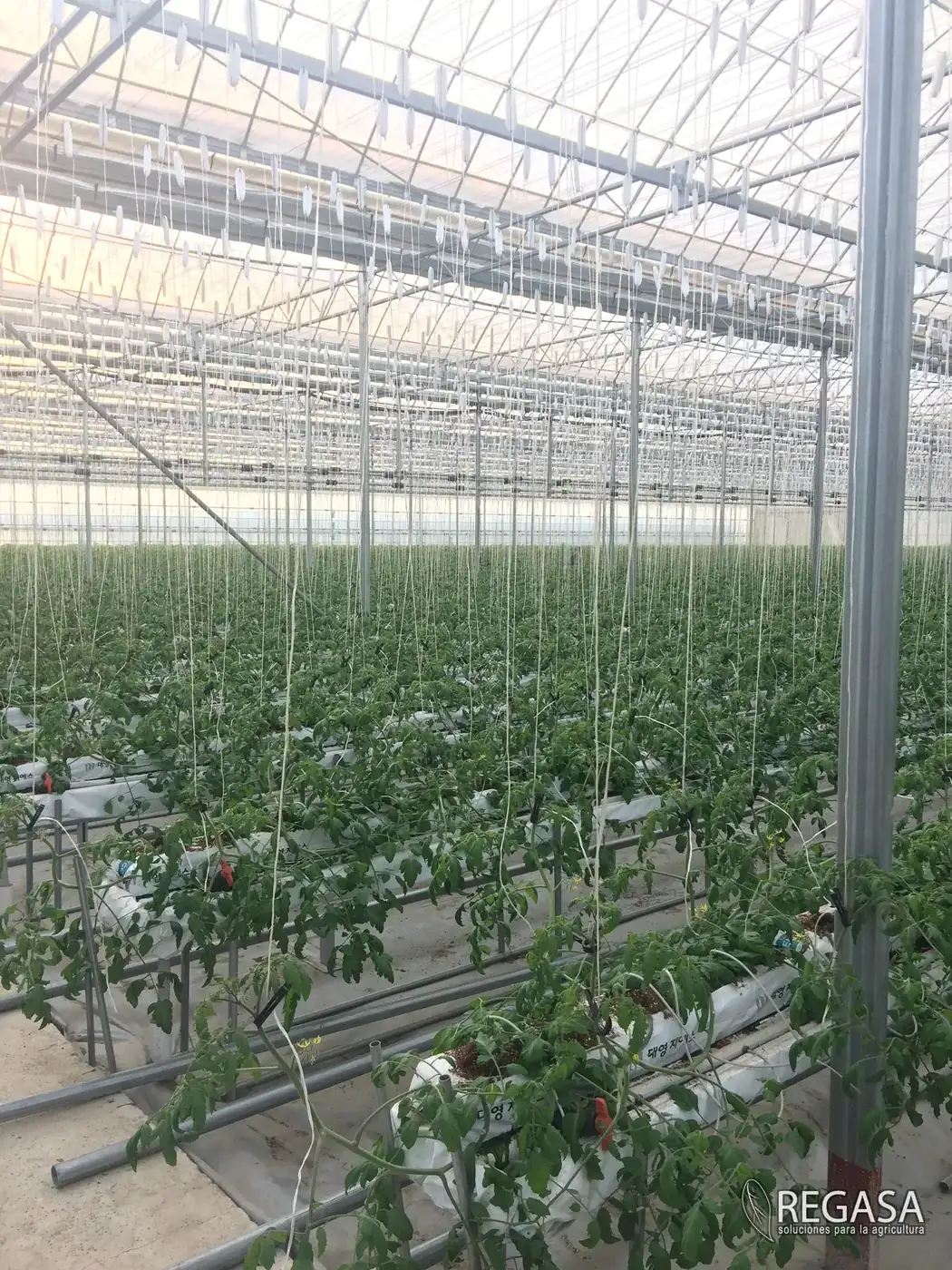
When growers in the upper Midwest, the Northeast, or the Mountain West start looking at greenhouse structures, they quickly run into terms like snow load rating, wind load rating, and design load. These aren’t marketing terms. They’re structural engineering specifications that determine whether your greenhouse is still standing after a February storm.
Getting this right before you buy is much easier than dealing with a collapsed structure or a building permit denial after the fact.
What Snow Load Rating Means
Snow load is expressed in pounds per square foot (psf) of roof area. It represents the weight of snow the structure is designed to support without failure.
In mild climates, a snow load of 5 to 10 psf may be adequate. In the upper Midwest, New England, or mountain states, design snow loads of 25, 35, or even 50 psf are not unusual. Some high-altitude locations in Colorado, Utah, or the northern Rocky Mountain states have design loads that are even higher.
The design snow load for your location isn’t something you estimate by looking at what your neighbors built. It’s determined by your county’s building code, which references data from the American Society of Civil Engineers (ASCE 7) ground snow load maps. These maps are based on historical snowfall records and set the minimum structural requirement for your location.
The design snow load is the minimum you’re supposed to meet. It’s not the maximum you should expect. It represents the load level that has a statistically small probability of being exceeded in a given year, based on historical data. Weather in the last decade has produced events that exceeded historical records in many parts of the country.
For critical infrastructure, some growers in heavy-snow regions choose to build to a load rating higher than the local minimum. That’s a judgment call based on risk tolerance and the cost of the structural upgrade, but it’s worth understanding you have the option.
What Wind Load Rating Means
Wind load is also expressed in pounds per square force per square foot, or alternatively in the design wind speed (miles per hour) the structure is engineered to resist.
Wind load calculations are more complex than snow load because wind creates both pressure and suction forces on a structure simultaneously. The roof feels downward pressure on the windward side and uplift suction on the leeward side. Sidewalls see lateral pressure. Corners and edges concentrate forces.
Building codes in hurricane-prone areas (Florida and the Gulf Coast), tornado-prone areas (the central U.S. plains), and high-wind mountain passes all set wind load requirements that reflect local conditions. Like snow load, the design wind speed is set by your county’s applicable code, which references ASCE 7 wind speed maps.
A greenhouse structure rated for 90 mph winds is not the same as one rated for 130 mph winds, and the structural elements, anchoring depth, and connection hardware are all different between the two. A supplier who doesn’t ask about your location’s wind zone before recommending a structure is not paying adequate attention.
How to Find Your Local Requirements
Your county’s building department is the starting point. For agricultural structures, some counties have simplified procedures, and some states have specific agricultural building exemptions. But most commercial greenhouse structures over a certain size and value require a building permit, which means they need to meet the applicable structural requirements.
Your state’s cooperative extension service often has resources on greenhouse structural requirements for your region. The USDA and various land-grant universities have published guides for specific states.
When you’re working with a greenhouse supplier, provide your county and ask specifically what snow load and wind load the structure is designed for. Get that in writing. A reputable supplier will have engineering documentation for their structures and should be able to tell you whether their standard design meets your local requirements or whether modifications are needed.
Regional Benchmarks Worth Knowing
These are rough benchmarks, not specifications. Your actual requirement depends on your specific county and location.
In the upper Midwest (Minnesota, Wisconsin, Michigan, parts of the Dakotas), ground snow loads of 30 to 50 psf are common. The January 2019 polar vortex event produced conditions that exceeded historical records in some areas.
In New England and upstate New York, snow loads vary significantly by elevation. Valley locations may have 25 to 35 psf requirements. Higher-elevation areas can be significantly more demanding.
In the Great Plains and central states, wind is often the dominant design load rather than snow. Structures in Kansas, Oklahoma, and Nebraska need to handle sustained high winds and conditions that come with severe storm systems.
In the Mountain West, both snow and wind loads are elevated, and the combination at high altitude makes greenhouse structure engineering more demanding than in most other regions.
Covering Material and Structural Load
The covering material you choose also affects how snow load behaves on the structure. Polycarbonate panels and polyethylene film have different relationships to snow accumulation.
Poly film on a Gothic arch or Quonset tends to shed snow when the structure’s interior is heated, because heat conducts through the film and melts snow at the surface. Polycarbonate panels are more insulating and can accumulate more snow before it slides. This is one reason why snow load design for polycarbonate structures often requires more conservative structural specs than for comparable poly-covered structures.
The Cost of Getting It Right
Specifying a structure that meets your local snow and wind load requirements is almost never the most expensive part of the greenhouse project. The engineering and structural steel that go into a properly rated structure typically add a modest percentage to the overall cost.
The cost of a structure that fails is much larger: crop losses, replacement costs, potential liability, and the interruption to your business. Structural adequacy is one of the places where cutting corners does not pay.
When you’re evaluating greenhouse structures for a region with significant weather demands, ask for the engineering documentation, confirm the design loads, and verify that the structure meets your county’s permit requirements before you buy.
Our team has supplied structures to growers across a range of climates and can help you identify the right specifications for your location. Reach out if you’re planning a project in a region with significant snow or wind considerations.
What we build
The products behind this article
Want this sized for your farm?
Tell us your crop, your acreage and your state. An advisor comes back with the structure that fits your climate, within one business day. No obligation.
Keep reading