 Guatemala
  México
  Perú
Perú  Costa Rica
  USA
USA Water-Saving Drip Irrigation During Drought: A Guide for US Farmers
How drip irrigation systems can cut water use by 50% during drought conditions. Practical strategies, system design and crop-specific tips for American farmers.
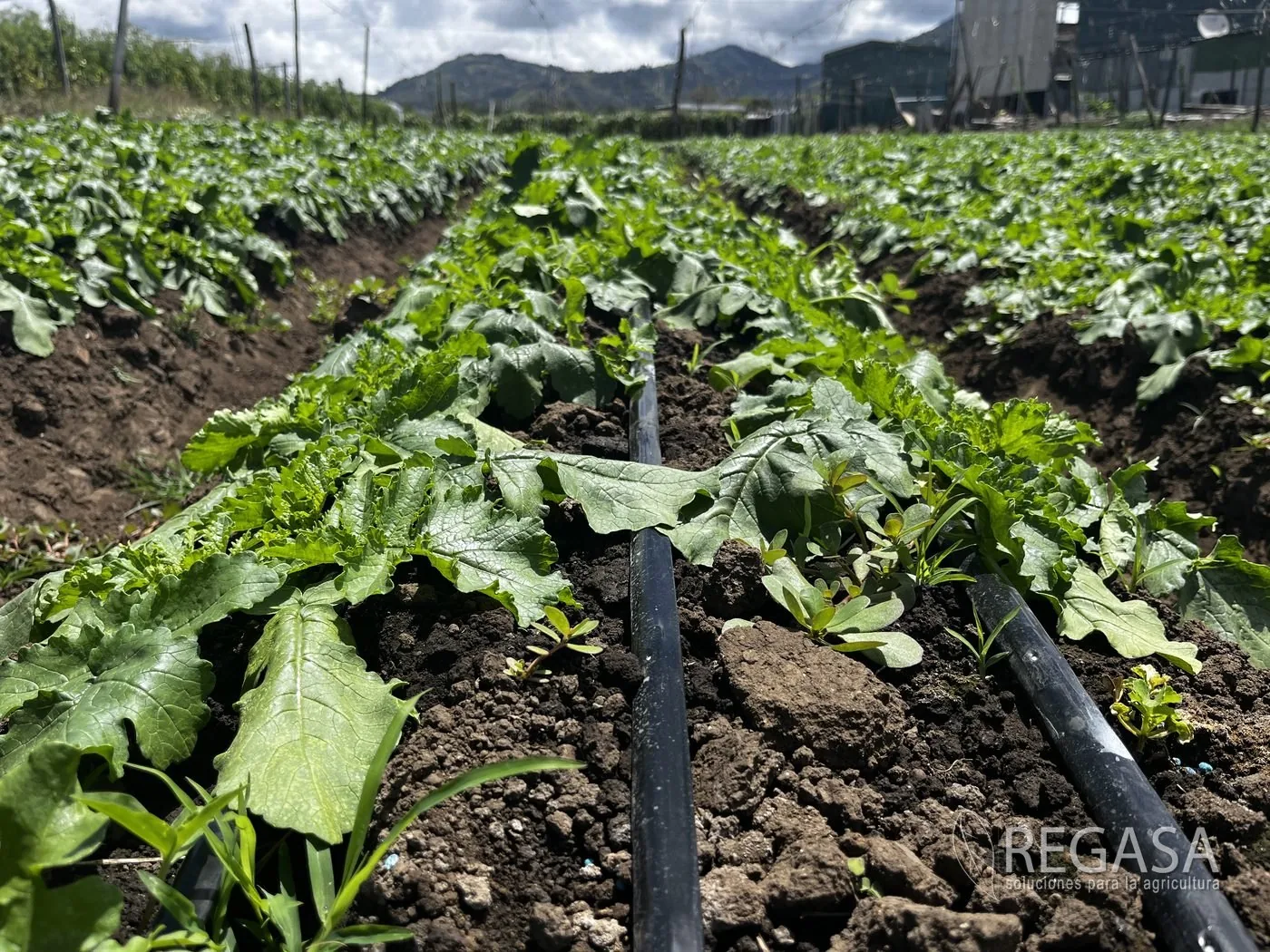
The American West is in a water crisis. The Colorado River is at historic lows. California’s aquifers are being depleted faster than they recharge. Water districts across Arizona, Nevada, and New Mexico are imposing strict use limits.
For farmers, water is increasingly the most critical input, more important than land or labor. Drip irrigation is the most effective tool available to dramatically reduce water consumption while maintaining or improving crop yields.
The Real Numbers: How Much Water Drip Irrigation Saves
The comparison between irrigation methods is stark:
| Irrigation method | Water efficiency | Water use (acre-inches/year) |
|---|---|---|
| Flood irrigation | 40-60% | 36-48 inches |
| Furrow irrigation | 50-70% | 28-40 inches |
| Overhead sprinkler | 70-80% | 22-30 inches |
| Drip irrigation | 85-95% | 12-20 inches |
A farm switching from flood to drip irrigation can reduce water consumption by 50-65% while producing the same, or more, crops.
Why Drip Irrigation Is More Efficient
The efficiency advantage comes from eliminating waste:
What drip eliminates:
- Surface evaporation: water applied at soil level, not broadcast over the surface
- Wind drift: no water suspended in the air
- Runoff: slow application rate matches soil infiltration
- Deep percolation: water applied at the root zone, not below it
- Inter-row wetting: dry areas between plants don’t get watered
What drip improves:
- Root zone water availability: consistent moisture for optimal growth
- Fertilizer efficiency: fertigation delivers nutrients exactly where roots can use them
- Yield consistency: no boom/bust cycles from uneven irrigation
Drip System Design for Drought Conditions
When water is scarce, system design becomes even more critical. Mistakes that are inconvenient in normal years become costly in drought years.
Pressure-compensating drippers: essential in drought
When water pressure drops during peak demand periods or when source pressure is variable, standard drippers under-deliver at lower pressure and over-deliver at higher pressure. Pressure-compensating (PC) drippers maintain consistent flow across a wide pressure range (7-45 PSI).
REGASA’s B1-PC tape uses compact self-balancing PC drippers that deliver precise flow regardless of pressure variation. This is particularly valuable when:
- Multiple zones are running simultaneously
- Your water source pressure varies seasonally
- Terrain creates elevation-based pressure differences
System zoning: maximize flexibility
Divide your field into irrigation zones that can be managed independently. Benefits:
- Apply different amounts of water to different crops or soil types
- Irrigate at night when evaporation is lowest
- Shut down zones quickly if you receive unexpected rainfall
Soil moisture monitoring: stop guessing
Pair your drip system with soil moisture sensors to know exactly when and how much to irrigate. Even simple tensiometers ($30-50 each) can reduce irrigation by an additional 20-30% beyond what the drip system alone saves.
Crop-Specific Drought Management with Drip Irrigation
Tomatoes under drought stress
Tomatoes are sensitive to inconsistent water, but they can tolerate deficit irrigation (deliberately under-watering by 10-20%) during certain growth stages without significant yield loss:
- Vegetative stage: maintain full irrigation, plant structure is being built
- Flowering/fruit set: never deficit irrigate, flower drop occurs with stress
- Fruit sizing: can tolerate 15-20% deficit, affects final fruit size but not count
- Maturation: slight deficit can improve flavor and lycopene content
Almonds and tree nuts in California
California almond growers are among the most sophisticated users of deficit irrigation. Research shows that regulated deficit irrigation (RDI) during hull split (July-August) with drip systems:
- Reduces water use 15-25%
- Maintains yield within 5-8% of full irrigation
- Improves nut quality and hull split timing
Corn and soybeans with drip subsurface tape
Subsurface drip irrigation (SDI) is gaining adoption in the Midwest and High Plains for corn and soybeans. Buried drip tape at 12-18” depth:
- Eliminates surface evaporation entirely
- Can last 15-20 years without replacement
- Works with standard farm equipment overhead
- Reduces water use 30-40% versus center pivot
Regulatory Landscape: Water Credits for Drip Users
Many western states now offer incentives for converting to drip irrigation:
California: CDFA Healthy Soils Program, EQIP funding through NRCS Arizona: Arizona Water Bank Authority credits Colorado: Colorado Water Conservation Board grants Texas: Various regional groundwater district incentives
USDA’s EQIP (Environmental Quality Incentives Program) provides cost-share assistance for irrigation efficiency improvements in all states. In 2024-2025, drip irrigation conversions qualified for 50-75% cost-share in many states.
Starting Your Drip System: What You Need
For a 50-acre conversion from flood to drip:
- System design (we provide this free with purchase)
- Pump and filtration station: $8,000 to $25,000
- Mainline and submain pipe: $4,000 to $12,000
- Drip tape (REGASA R1, Q1, or B1-PC): $15,000 to $35,000
- Fittings, valves, and automation: $3,000 to $10,000
- Installation labor: $5,000 to $15,000
Total system cost for 50 acres: $35,000 to $97,000
Payback through water savings alone (at $100-300/acre-foot): typically 3-6 years. Add yield improvement and the payback accelerates to 2-4 years.
REGASA: Your Partner in Water Efficiency
We’ve been providing drip irrigation technology to farmers worldwide since 1995. Our drip tapes are manufactured to the highest standards with consistent flow rates, verified wall thickness, and long-term durability.
We ship complete drip irrigation systems to all 50 states. Our technical team can design your system, calculate your water savings, and help you access available incentive programs.
Contact us for a free water efficiency assessment for your operation.
What we build
The products behind this article
Want this sized for your farm?
Tell us your crop, your acreage and your state. An advisor comes back with the structure that fits your climate, within one business day. No obligation.
Keep reading