
 Guatemala
  México
  Perú
Perú  Costa Rica
  USA
USA Year-Round Greenhouse Farming in the U.S.: What It Really Takes and Where It Makes Sense
Twelve months of production is possible in almost every U.S. state with the right structure. What it requires and how to know if you are ready.
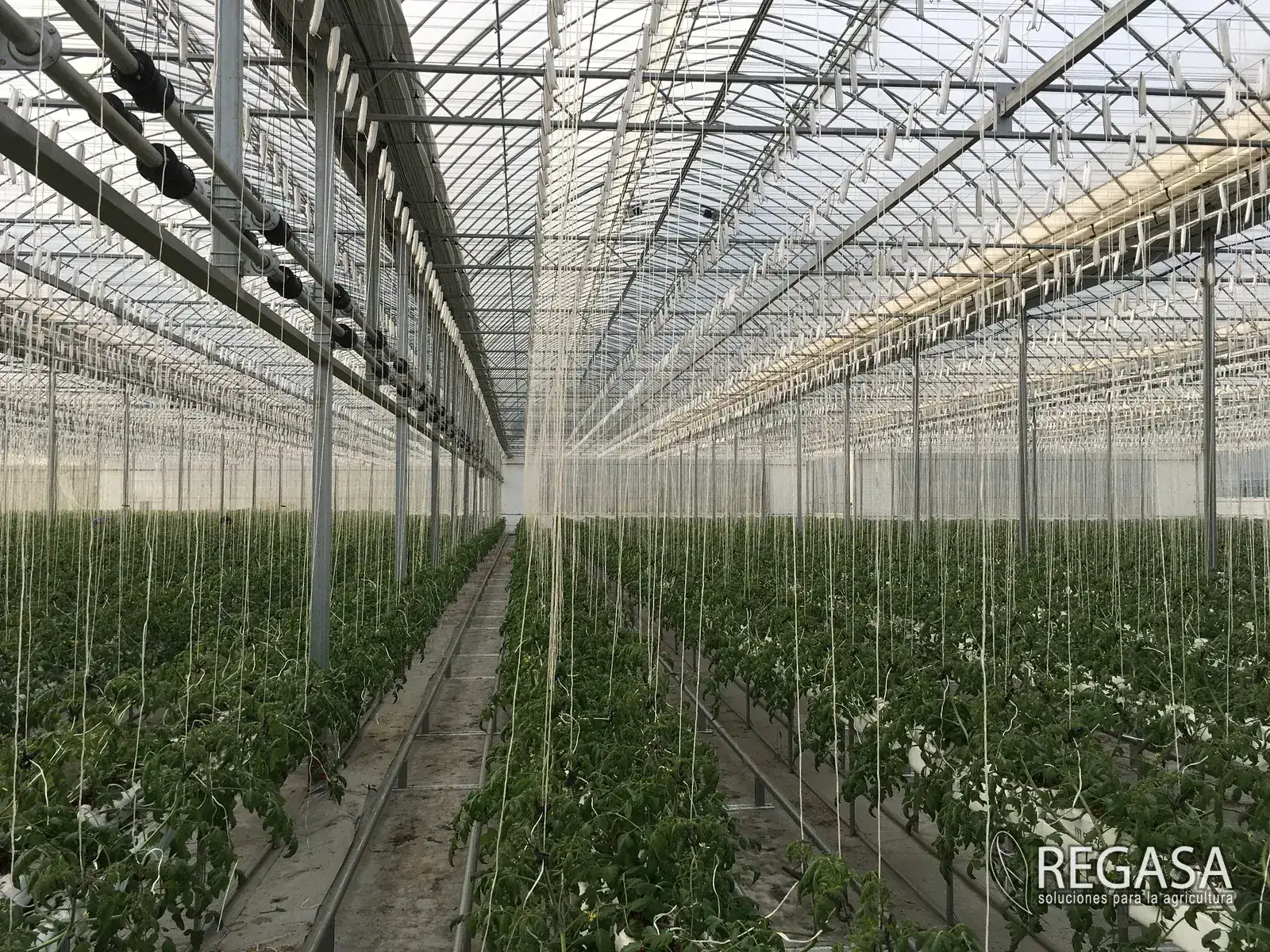
The idea of harvesting tomatoes in February or selling fresh peppers when the snow is two feet deep sounds appealing on paper. Year-round greenhouse farming is real, it’s profitable in the right circumstances, and it’s happening all over the country right now. It’s also more demanding than most growers realize going in.
This article is an honest look at what year-round production actually requires, where it makes the most sense, and how to figure out whether your operation is ready to commit to it.
The Core Premise
A commercial greenhouse can produce crops in any season because it separates the growing environment from the outdoor climate. In winter, the structure retains heat and can supplement it. In summer, ventilation and shade systems keep temperatures in range. The crops inside never know what month it is.
What that sounds like in practice is a more controlled, more intensive form of farming than most field growers are accustomed to. You’re not just managing soil and weather anymore. You’re managing a full system: structure, covering, ventilation, heating, irrigation, nutrition, pest management, and harvest scheduling, all simultaneously.
Operations that thrive with year-round greenhouses treat them like manufacturing facilities. Inputs in, outputs out, on a schedule. That mindset shift is as important as the infrastructure.
Climate Doesn’t Disqualify You
This is worth saying clearly because a lot of growers in northern states assume they can’t do year-round greenhouse farming economically. Cold winters do raise your heating costs. But they also put you in markets that have almost no local competition for fresh produce from November through April. The premium prices you can charge in those windows often more than offset the energy costs.
In states like Minnesota, Michigan, Wisconsin, and the Northeast, some of the most successful commercial greenhouse operations in the country are running year-round. The winter isolation that makes open-field farming impossible is exactly what makes greenhouse produce valuable.
In southern states, the challenge is different. Florida, Texas, and California have mild winters but brutal summers. Year-round production in those climates means managing summer heat, not winter cold, and good ventilation design matters more than heating capacity.
What Your Crop Choice Determines
Not every crop makes sense for year-round greenhouse production. The ones that consistently perform well share a few traits: they’re high-value, they have consistent year-round demand, and they’re manageable in a controlled environment.
Tomatoes are the most proven year-round greenhouse crop in the U.S. The numbers support it. Year-round demand exists from retail, food service, and direct markets. Greenhouse yields are dramatically higher than field production. And the quality consistency that a controlled environment produces translates directly to marketability.
Cucumbers follow a similar logic. So do bell peppers and specialty peppers. Leafy greens like lettuce and arugula work particularly well in greenhouse systems because they’re fast-turn crops with strong year-round retail demand.
What doesn’t work as well for year-round production is field crops that are inherently seasonal in their market demand. If you’re producing a crop that people only want in summer, running it through winter in a greenhouse doesn’t solve a market problem.
The Market Question Comes First
Before you spend a dollar on infrastructure, you need an honest answer to one question: who is going to buy your product in January?
Year-round greenhouse farming is only profitable if you have consistent access to a market that wants what you’re growing twelve months a year. That might be a retail chain with a local sourcing program. It might be restaurants or institutional food service. It might be a strong farmers market community that continues through winter. It might be direct-to-consumer through a CSA or online store.
The growers who struggle with year-round greenhouses are almost always struggling with a market problem, not a production problem. They built the infrastructure before they secured the buyers.
If you already have consistent buyers and the primary constraint is that you run out of product at the end of your growing season, that’s a strong signal that year-round production would work. If you’re hoping to find buyers once the greenhouse is running, that’s a riskier bet.
Infrastructure That Actually Supports Year-Round Production
A year-round greenhouse is a different structure than a season-extension tunnel. The engineering needs to account for year-round load conditions, including snow loads in northern states, high wind events, and summer ventilation requirements.
It needs a proper heating system. Passive solar can carry you through mild dips in temperature, but if you’re in a state that gets hard freezes, you need backup heat that the structure’s design can accommodate.
Ventilation matters just as much as heating. Greenhouses that overheat in summer are just as problematic as ones that freeze in winter. Roof vents, side vents, and in some cases shade systems need to be part of the design from the beginning.
Drip irrigation inside a year-round greenhouse needs to be designed for intensive production. That means pressure regulation, filtration, and fertigation compatibility. The irrigation system in a year-round operation is running constantly, and it needs to be built for that.
A Realistic Timeline
Most growers who transition to year-round greenhouse production don’t get there in year one. They start with a structure that gives them season extension, build their market relationships through the extended season, and then make the case for year-round production based on actual buyer demand.
That’s a smarter path than jumping straight to year-round if you haven’t done protected agriculture before. The management learning curve is real, and it’s better to climb it with a less demanding system before you’re running a full year-round operation.
If you’re already doing protected agriculture and thinking about year-round expansion, or if you’re planning from scratch with year-round in mind, we’d be glad to talk through what the infrastructure needs to look like for your specific situation. Reach out to our team.
What we build
The products behind this article
Want this sized for your farm?
Tell us your crop, your acreage and your state. An advisor comes back with the structure that fits your climate, within one business day. No obligation.
Keep reading