
 Guatemala
  México
  Perú
Perú  Costa Rica
  USA
USA Insect Netting Mesh Sizes: Matching the Screen to the Pest
Finer mesh is not better mesh. Every step tighter blocks a smaller insect and costs you airflow, so the right screen is the loosest one that stops your problem.
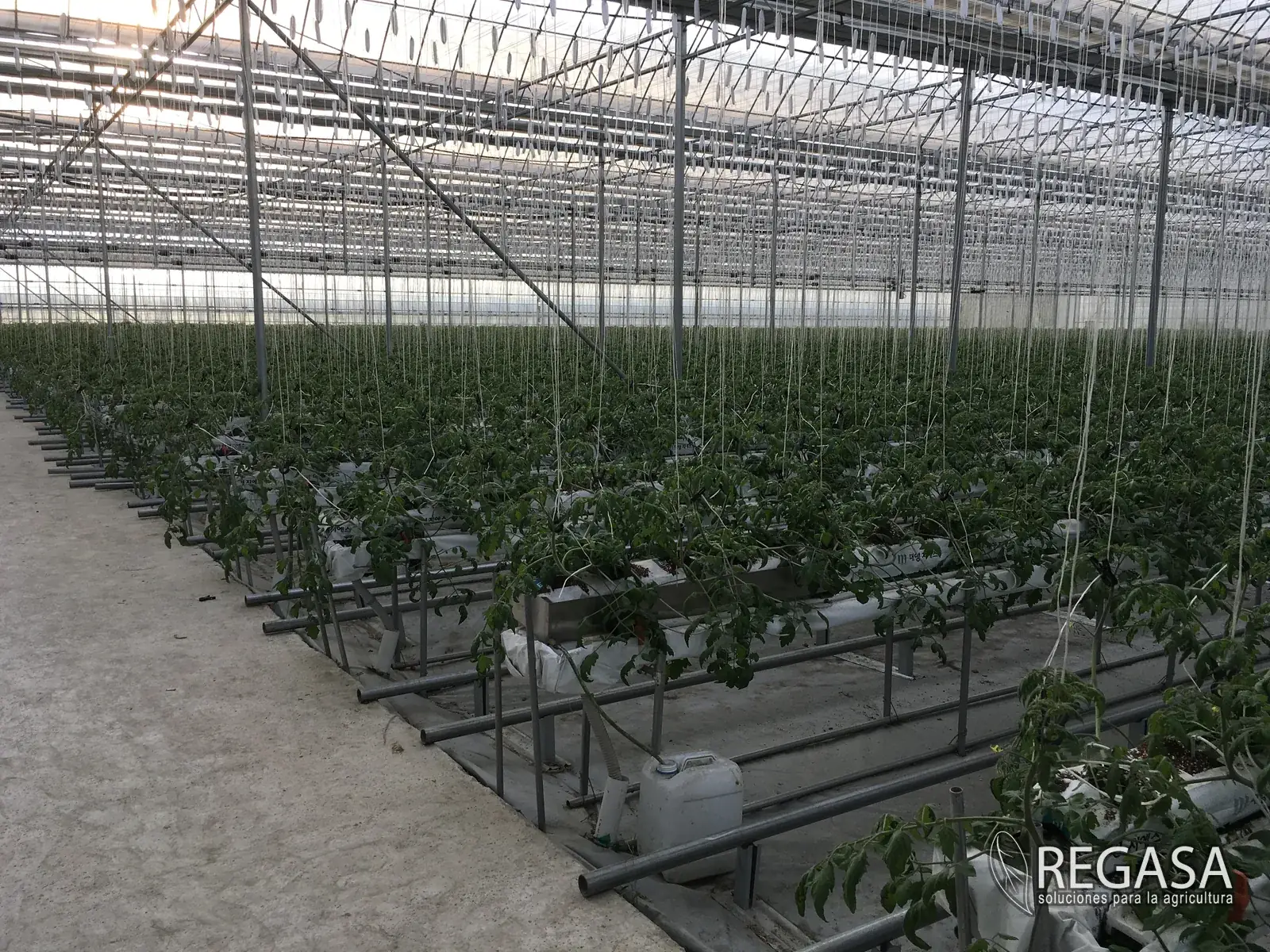
There is a reflex with insect screening: if some is good, finer must be better.
It is not. Every step tighter blocks a smaller insect and costs you airflow, and airflow is the thing keeping your crop from cooking and your humidity from turning into disease.
The right screen is the loosest one that stops the pest you actually have.
What mesh numbers mean
Mesh is counted as threads per inch. Higher number, tighter weave, smaller opening.
A 25 mesh screen has larger holes than a 50 mesh screen. The number that matters biologically is the size of the opening relative to the width of the insect’s body, and manufacturers publish hole dimensions alongside the mesh count. Ask for the hole dimension, not just the count, because weave and thread thickness vary between products.
The pests, roughly from largest to smallest
Moths, beetles, larger flies. The easiest to exclude. A relatively open screen stops them, and the airflow penalty is small.
Leafminers. Need a tighter screen than the group above.
Aphids. The common threshold in commercial protected agriculture, and important out of proportion to the damage they do directly. Aphids transmit virus, and virus is not treatable once the plant has it. Excluding the vector is the whole strategy.
Whitefly. Tighter still, and a serious virus vector in tomato and pepper.
Thrips. The hardest of the common pests to screen out. They are very small and they carry tospoviruses that destroy a crop. A screen tight enough to reliably exclude thrips is tight enough to seriously restrict airflow, which is the central trade-off in this decision.
The trade you are actually making
Every tighter screen reduces air passing through the same opening. That is unavoidable physics, not a product defect.
The consequences show up as higher inside temperature, higher humidity and less air exchange, which is to say the exact conditions that cause fungal disease. It is entirely possible to screen so aggressively against insects that you create a disease problem worse than the one you prevented.
The fix is not looser screen. It is more opening. If your site needs thrips-level screening, the vent area has to be enlarged to compensate, or forced ventilation has to make up the difference. That is a design decision, and it belongs at design time, not after you have already built the house.
We covered how the openings get sized in greenhouse ventilation: passive, forced and when you need which.
How to choose for your operation
Start from the pest that actually threatens your crop in your region, not from the full list.
What is your real problem? If you are growing tomato or pepper where tospovirus is present, thrips exclusion is not optional and you design the ventilation around it. If you are growing leafy greens where the pressure is mostly aphids, you do not need thrips-level screen and you should not pay the airflow cost for it.
What does your extension service say is present locally? Pest pressure is regional and seasonal. Your state extension pathology program is a far better source than any supplier, including us.
What is your climate? In a cool climate the airflow penalty of a tight screen is more affordable. In a hot, humid climate it is expensive, and the calculation shifts toward more opening area rather than tighter mesh.
Where screening goes
Roll-up side vents and roof vents. The main pathway in, and the main place screening belongs.
Intake openings on forced systems. Same logic.
Doorways. The most commonly ignored entry point in any greenhouse. A perfectly screened house with a door propped open in July is an unscreened house. A double-door entry or a screened vestibule solves it.
Two things screening also does
Reduces spraying. The whole point. Fewer insects entering means fewer applications, which means less chemical, fewer hours, and fewer days where the crew’s schedule bends around a re-entry interval. In a year when labor is up nearly 50% since 2020, that arithmetic matters more than it used to.
Provides some hail and debris protection. Secondary, real, and worth noting in regions where summer hail is a fact of life.
What it does not do
Screening keeps insects out. It does not remove the ones already inside, and it does not help with anything soil-borne or already present on transplants.
Which leads to the practical order: screen the house, then bring in clean plant material. A tight screen around an infested transplant crop is a very effective way to protect the pest from its predators.
Where to start
Tell us your crop, your county and what pest pressure your extension service reports locally, and we specify the mesh from the pest rather than from a default. Then we size the vent area to match, so the screening does not cost you the ventilation.
See insect netting for the material, and ventilation and cooling systems for the openings it goes on.
Labor cost changes come from American Farm Bureau Federation market analysis of 2020 to 2025. Pest pressure and virus vector presence vary by region; confirm with your state extension service.
What we build
The products behind this article
Want this sized for your farm?
Tell us your crop, your acreage and your state. An advisor comes back with the structure that fits your climate, within one business day. No obligation.
Keep reading