
 Guatemala
  México
  Perú
Perú  Costa Rica
  USA
USA The Greenhouse Technology Stack, From Structure to Controller
A commercial greenhouse is five layers, and each one constrains the next. Here is the full stack, what each layer decides, and the order to build it in.
Software people talk about a stack: layers that sit on each other, where the bottom one limits everything above it. A greenhouse works the same way, and thinking about it that way prevents the single most common and most expensive mistake in protected agriculture.
That mistake is buying a top layer to fix a bottom layer problem.
Here is the whole stack, bottom up, and what each layer actually decides.
Layer 1: The site
Before anything gets built, the ground decides several things you cannot change later.
Slope determines drainage, and standing water inside a greenhouse is a disease problem you will fight for years. Orientation determines light distribution through the day. Prevailing wind determines where the openings should face, and in some sites determines whether a windbreak is needed before the structure goes up. Water source and quality determine whether your irrigation plan is even possible, because water that is too hard or too saline will change your entire fertigation approach.
Nobody sells you this layer, which is exactly why it gets skipped. It costs a soil test, a water test and an afternoon.
Layer 2: The structure
The frame decides the three numbers that constrain everything above it: span, height, and load rating.
Span decides row layout and equipment access. A structure too narrow wastes area on edges where the crop underperforms. Too wide without proper trussing and you have a load problem.
Height decides air volume, and air volume is thermal buffer. Tall structures ride through temperature swings that flatten short ones. This is why gutter height is not a cosmetic spec.
Load rating is snow and wind at your specific site. Engineered per project, not per catalog. A frame rated for 67 mph wind and a frame rated for a heavy northern snow load are different frames.
Galvanized steel, no welds. Welds corrode, and a greenhouse is a permanently humid environment.
Once this layer is in the ground, it is in the ground. Everything else can be replaced. See our greenhouse structures and the high tunnel option for where each fits.
Layer 3: The covering
This layer decides how much light and heat reach the crop, and it is the layer with the fastest feedback.
Multi layer, UV stabilized polyethylene film is the working standard for commercial production. The three properties that matter are diffusion, which spreads light so it reaches the lower canopy instead of scorching the top; thermicity, which holds heat into the night and cuts your heating bill; and anti drip, which keeps condensation from falling on the crop and starting fungal problems.
The film is the only layer with a replacement cycle measured in seasons rather than decades. Budget for that from the start rather than being surprised by it.
Details on greenhouse film.
Layer 4: Climate
Now the structure and cover are set, and they determine what climate control you need.
Passive first. Roll up sidewalls and ridge vents, sized to your climate, handle most of the year across most of the country. The physics is free: hot air rises out the top, cooler air comes in low.
Active second. Fans, wet walls, forced circulation, heating. What you need here is largely determined by how well layers 2 and 3 were specified. A tall structure with generous openings and a thermic film needs far less active equipment than a short one with minimal venting.
Screening on the openings sits in this layer too, because mesh size trades directly against airflow. You cannot size the vents without deciding the screen. See ventilation systems.
Layer 5: Water and nutrition
This is the layer that runs every single day, and the one where small errors compound quietly.
Drip delivery puts water at the root. Filtration protects the emitters and is the part people skip until their first clogged block. Then injection, which turns the water line into a feeding line.
Fertigation is where a greenhouse stops being a building and becomes a system. It is also the layer where automation earns its keep first, before any climate computer, because irrigation runs daily and the consequences of getting it slightly wrong accumulate over a whole cycle.
Drip tape and fertigation control.
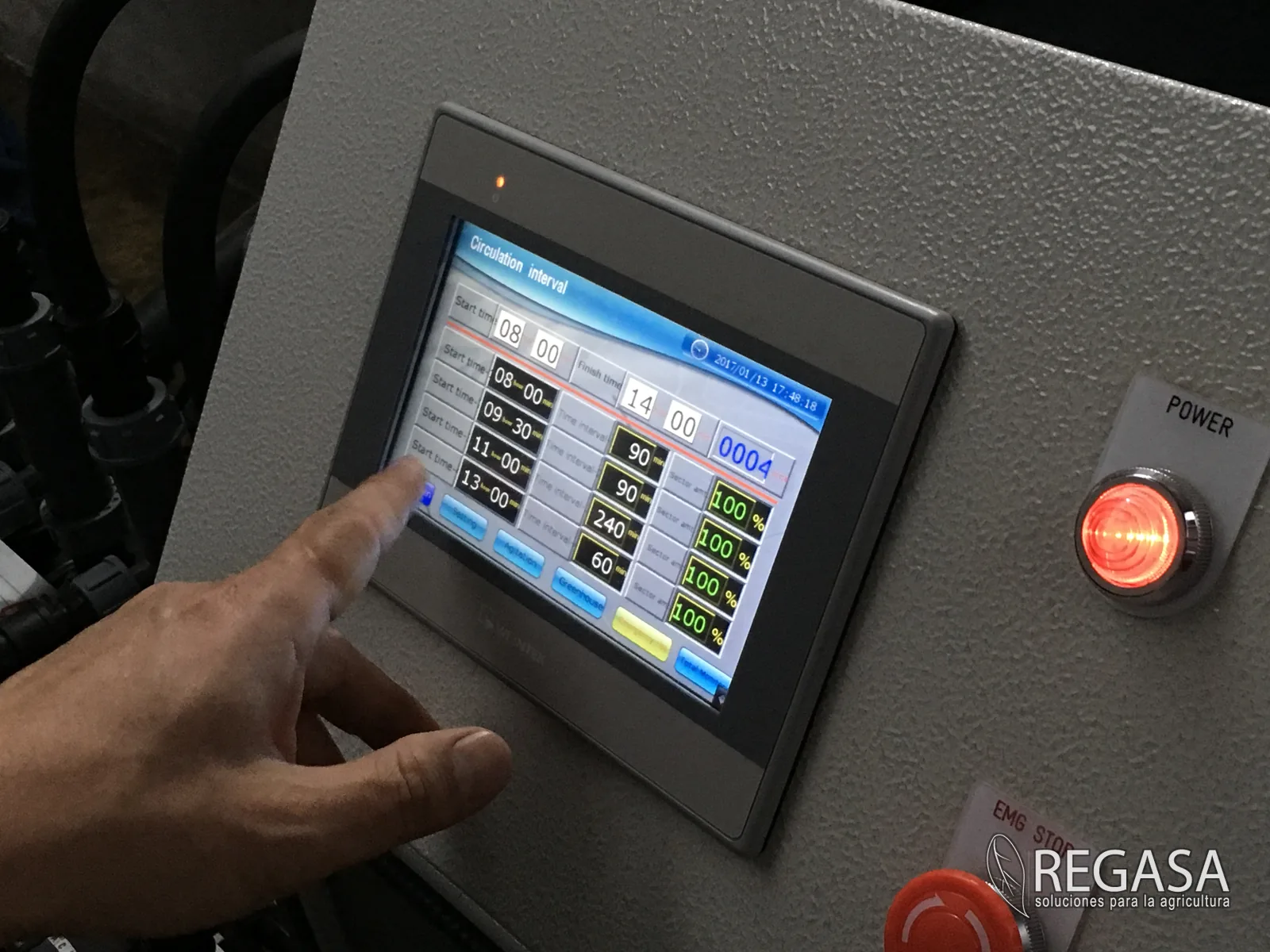
Layer 6: Monitoring and control
Sensors, controllers, logging, alerts.
This layer is genuinely valuable and genuinely last. It observes and adjusts what the layers below already do. It cannot create ventilation that does not exist or fix a film that was the wrong choice.
The order to automate, in our experience: irrigation first, then heating, then ventilation, then everything else. Irrigation first because it is daily, unforgiving and easy to get wrong by a small margin every day.
Why the order is the point
Each layer constrains the one above it. A controller can only manage vents that exist. Vents can only move air the structure has room for. The structure can only sit on the site you prepared.
Money spent out of order buys less than the same money spent in order. When we see a first year operation struggling, the cause is almost always a top layer purchased to compensate for a bottom layer that was value engineered.
The good news is that the bottom layers are the cheap ones to get right. A soil test, an honest load calculation and the correct film specification cost almost nothing compared to what they save.
Tell us about your site and your crop through the project form and we will size the stack from the bottom up. Or start with the structure recommended for your state.
What we build
The products behind this article
Want this sized for your farm?
Tell us your crop, your acreage and your state. An advisor comes back with the structure that fits your climate, within one business day. No obligation.
Keep reading