 Guatemala
  México
  Perú
Perú  Costa Rica
  USA
USA What NRCS Will Not Pay For
The high tunnel program covers less than most growers assume. Here is what falls outside it, so the gaps land in your budget on purpose instead of by surprise.
Every article about the NRCS high tunnel program tells you what it covers. Almost none tell you what it does not, which is the half that decides whether your budget survives contact with reality.
So here is the other side.
It does not cover the whole project
The payment is for the practice: the high tunnel system itself, at the rate on your state’s cost list for that fiscal year.
A high tunnel project is more than the tunnel. What sits outside the practice generally includes:
Site preparation. Grading, leveling, drainage work. If your site needs any of it, that is yours.
Getting water to the site. The well, the pump, the main line from wherever your water is to wherever the tunnel is going.
Getting power to the site. If you need electricity for anything, that trench is yours.
Permits and any local requirements. These vary enormously by county and some places treat a high tunnel as a structure requiring review.
Your labor, or a crew’s. Depending on how the practice is written in your state, installation labor may or may not be reflected in the rate.
None of this is NRCS being difficult. The program funds a conservation practice, not a turnkey farm project. But growers who budget only for the tunnel get an unpleasant surprise, and the surprise usually arrives at the worst moment.
It does not cover the way most people want to grow
This is the one that ends applications.
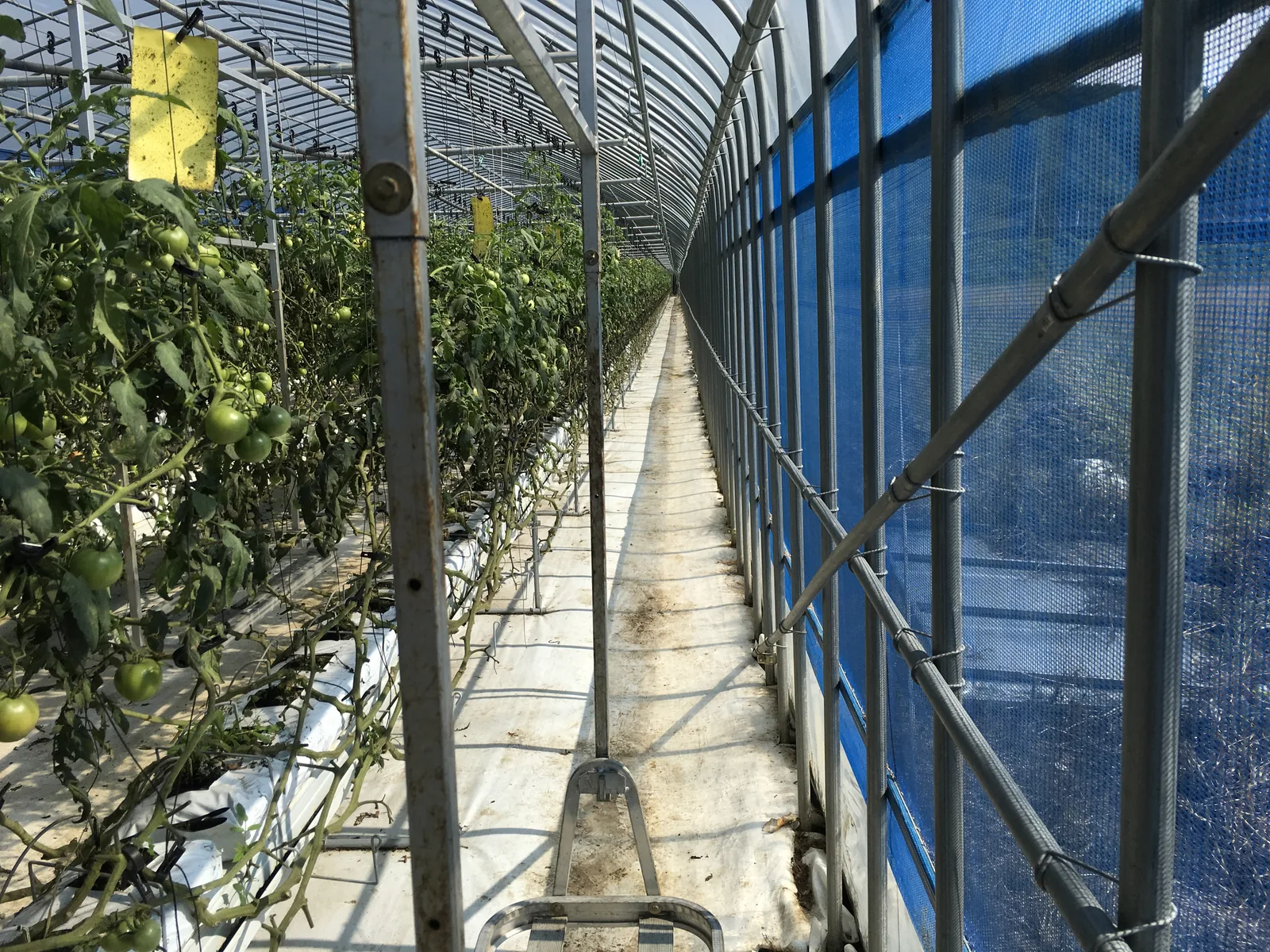
Crops must be in the natural soil profile, or in raised beds no more than 12 inches high. That means no benches, no containers, no grow bags, no hydroponics, no NFT, no rafts.
If your plan is a bench operation or anything soilless, this program is not for you, and finding that out early saves you months. We covered the full rule set in what CPS 325 actually requires.
It does not cover greenhouses
The practice does not include greenhouses. Add heating and climate control and you have left the definition behind.
It also does not include low tunnel systems, the small structures you cannot walk into.
If what your operation actually needs is a climate-controlled greenhouse, the NRCS route is the wrong door. There are others, and we listed them in financing a greenhouse beyond NRCS.
It does not cover a building you already put up
The practice has to be installed after the contract, to the standard.
A tunnel already standing in your field is not eligible retroactively, no matter how well it was built or how recently. Growers who put one up and then apply for the next one are fine; growers who build first and apply hoping it counts are not.
It does not cover storage or livestock
The structure has to house a crop. It cannot be used to shelter animals or to store supplies and equipment.
That sounds obvious until you consider how a tunnel actually gets used on a working farm in the off season. The practice has an expectation about what is inside it.
It does not reimburse what you spent
This one is not a restriction so much as a misunderstanding, and it cuts both ways.
The payment is a fixed amount per unit from your state’s cost list, paid when the practice is complete, regardless of your actual cost. It is not a reimbursement of receipts and it is not a percentage of your invoice.
Build efficiently and you may come out ahead of the listed rate. Build an expensive version with every option and you absorb the difference.
It does not guarantee funding just because you qualify
Meeting every requirement makes you eligible. It does not make you funded.
Applications are accepted year round but evaluated in batches at cutoff dates, and when demand exceeds available funds they are ranked. If your application scores below the cutoff for that batch, it waits for the next one.
Knowing the current ranking criteria before you write matters more than most growers realize. Your local field office will tell you what they are.
How to use this
None of the above is a reason not to apply. For a grower who wants an unheated tunnel over crops in the ground, this program is genuinely good and it exists precisely for that.
The point is to budget for the whole project instead of just the funded part, and to find out on day one whether your growing method qualifies.
Two questions settle most of it. Will the crop be in the ground? And what will site prep actually cost me on this piece of land?
Answer those honestly and the rest is paperwork.
For the calendar and how the batches work, see NRCS deadlines by state. If you want a real quote to attach to an application, the high tunnel specifications are the place to start.
Program details reflect what NRCS published as of July 2026. Rules and rates are set per state and change annually. Confirm with your state office.
What we build
The products behind this article
Want this sized for your farm?
Tell us your crop, your acreage and your state. An advisor comes back with the structure that fits your climate, within one business day. No obligation.
Keep reading