 Guatemala
  México
  Perú
Perú  Costa Rica
  USA
USA What CPS 325 Actually Requires, And What Disqualifies You
The NRCS high tunnel practice has firm rules about how you grow, not just what you build. Here is what qualifies, what does not, and where applications fail.
Most growers find out about the NRCS high tunnel program from another grower, apply with a rough idea of what it covers, and discover the actual rules somewhere in the middle of the process.
That is an expensive way to learn them, because a couple of the requirements are absolute. If your operation does not meet them, no amount of paperwork changes the answer.
The practice is Conservation Practice Standard 325, High Tunnel System. Here is what it actually says.
The requirement that disqualifies the most people
Crops must be grown in the natural soil profile, or in raised beds no more than 12 inches high.
Read that twice, because it rules out a lot of what growers assume a high tunnel is for.
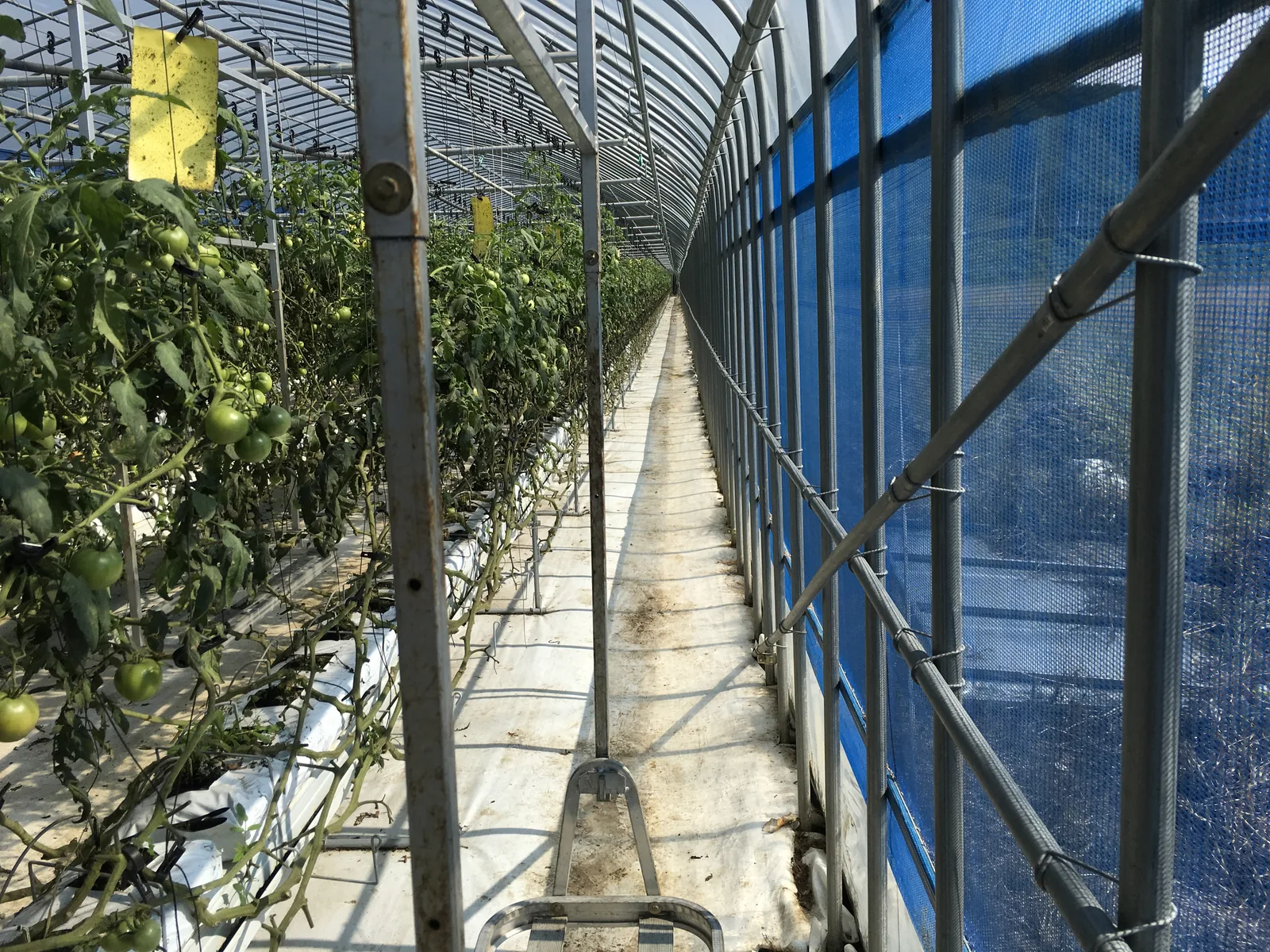
Growing on benches does not qualify. Growing in containers or grow bags does not qualify. Hydroponics, NFT channels, raft systems, none of it qualifies. Raised beds are allowed, but only up to 12 inches. A 24-inch bed on legs is not a raised bed under this standard.
The reason is that this is a conservation practice, not an agriculture subsidy. NRCS is funding it because the structure protects soil and improves how water and nutrients behave in that soil. Take the soil out of the equation and there is nothing left for the program to conserve.
If your plan involves benches or hydroponics, this is not your program. Better to know that now than after three months.
The second one: it is not a greenhouse program
The practice does not include greenhouses. It also does not include low tunnel systems.
A high tunnel under this standard is an unheated structure over crops in the ground. Once you add climate control, heating and a controlled environment, you have a greenhouse, and greenhouses are not what CPS 325 funds.
This trips up a lot of growers because in casual conversation people use “greenhouse” and “high tunnel” interchangeably. NRCS does not.
We wrote a longer piece on where the line actually falls in high tunnel vs multi-bay vs commercial greenhouse.
The structural requirements
These are easier to meet and rarely a problem, but worth confirming before you buy.
The frame must be metal, wood or durable plastic. Most commercial structures qualify without trying.
The structure must be at least 6 feet high at the peak. This is a low bar and any walk-in tunnel clears it.
It has to house a crop. The practice cannot be used to shelter livestock or to store supplies. A tunnel that ends up full of equipment instead of plants is not what was funded.
How the payment actually works
This part surprises growers and it works in your favor if you plan well.
NRCS publishes a cost list per state, per fiscal year. The payment for practice 325 is a fixed amount per unit from that list. You receive that amount when the practice is complete, regardless of what you actually spent installing it.
Two consequences follow. If you build efficiently, you may come out ahead of the listed rate. If you build an elaborate version, you absorb the difference yourself.
The other consequence is about information: any article, including ones that look official, quoting a percentage or a dollar figure is describing one state in one year. The FY2026 cost list was published in October 2025, and the FY2027 list will carry different numbers. Go to your state’s current list or ask your local office.
Where applications actually fail
In our experience, the failures cluster in four places.
The growing method. Covered above, and it is the big one.
Not being an eligible producer. You have to be engaged in agricultural production, and you have to be in compliance with the highly erodible land and wetland conservation provisions, the payment limitation rules, and the adjusted gross income requirements from the Farm Bill. Most working farms clear this; some hobby operations do not.
Building before the contract. Do not install the structure and then apply. The practice has to be installed after the contract, to the standard. A tunnel already in the ground is not eligible retroactively.
Missing the ranking. Applications get scored when demand exceeds funds. Knowing the current ranking criteria before you write the application is the difference between funded and waiting another cycle. Your local field office will tell you what they are if you ask.
Before you spend time on it
Ask yourself three questions.
Will the crop grow in the ground, or in beds under 12 inches? Is the structure unheated? Am I an eligible producer in compliance with the Farm Bill provisions?
Three yeses and this program is worth your time. Any no, and you should look at the other financing routes instead, because they exist and some of them fit better.
For the calendar and how the batches work, see NRCS high tunnel deadlines by state. The specifications of what we build are on the high tunnel page.
Requirements described here reflect what NRCS published as of July 2026. Confirm with your state office before making decisions.
What we build
The products behind this article
Want this sized for your farm?
Tell us your crop, your acreage and your state. An advisor comes back with the structure that fits your climate, within one business day. No obligation.
Keep reading