
 Guatemala
  México
  Perú
Perú  Costa Rica
  USA
USA Greenhouse Technology
It gets sold as one thing. It is five, and they stack. Here is what each layer does, the order they have to be bought in, and where the money actually comes back.
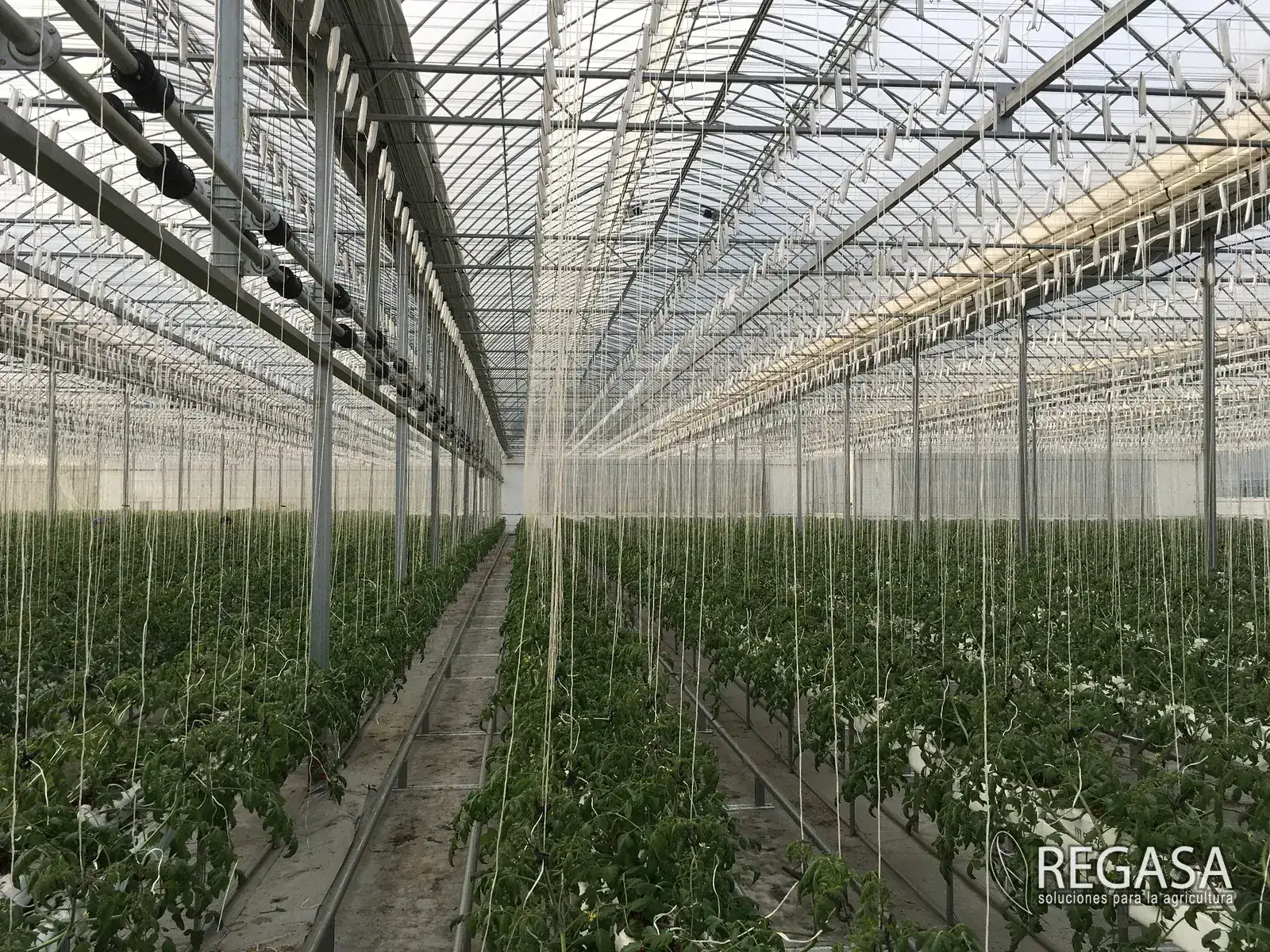
Five things sold as one
Ask three suppliers what greenhouse technology is and you get three answers, because each one means their own product. One means the frame. One means the climate computer. One means the sensors.
All three are right and all three are incomplete. Greenhouse technology is the whole stack: the structure, the covering, the climate system, the water and feeding system, and the monitoring on top of it. They are not alternatives to each other. They are layers, and each one depends on the layer underneath.
That dependency is the practical point. It is why the single most expensive mistake in protected agriculture is not buying the wrong technology, it is buying the right technology in the wrong order.
The rule underneath all of it
Technology multiplies whatever it manages. Point it at a well specified system and you get more of a good thing. Point it at an undersized one and you get a faster, more expensive version of the same problem.
Which means
High-tech is not automatically better. The right level of technology is the one your crop, your climate and your scale actually justify, and that answer is different in Vermont than it is in Florida.
The stack, bottom to top
Read it in order. Each layer assumes the one before it is right.
The structure
Everything else bolts to this.
Frame geometry, steel gauge, post spacing and the snow and wind load it is engineered for. Nothing you add later fixes a structure that was undersized for your county. This is the only layer that is genuinely permanent.
Commercial greenhouses and high tunnelsThe covering
Light in, heat kept, water off the leaves.
Film or rigid panel decides light transmission, diffusion, thermal retention and how often you replace it. Anti-drip matters more than growers expect, because water falling on foliage is where a lot of disease starts.
Greenhouse film, 8 mil UV-stabilizedClimate control
Moving air is the first climate technology, not the last.
Roll-up curtains, roof vents, exhaust and circulation fans, evaporative cooling. Automation only helps once the openings are correctly sized, so get the ventilation right before you put a controller on it.
Ventilation and cooling systemsWater and feeding
The layer that runs 300 days a year.
Drip delivers water to the root zone and keeps foliage dry. Fertigation puts the nutrients in the same line, at the growth stage that needs them, instead of broadcasting and hoping. This is where automation pays back first.
GreenDrip and BlueDrip drip tapeMonitoring and control
Last, and for a reason.
Sensors and controllers tell you what is happening; they do not change what is happening. On a well specified structure they are worth a lot. On an undersized one they faithfully report a problem you cannot fix.
Koasis 5000 fertigation controllerWhat to buy first
The order is not about importance. It is about dependency: what you cannot fix later comes first.
Permanent
The structure and its load rating. You will replace the film four or five times before you touch the frame, and no amount of equipment compensates for a frame that was undersized for your snow and wind.
Recurring
Covering, ventilation, irrigation. These get replaced or upgraded on a cycle, so a decision here is reversible. It still costs you a season to get it wrong, which is reason enough to size them properly the first time.
Additive
Controllers, sensors, automation. Add these when the layers below are working. The one exception worth buying early is a failure alarm: the cheapest technology in a greenhouse is the one that calls you before the crop dies.
Go deeper on any layer
Each of these takes one piece of the stack and works it out properly.
What Greenhouse Technology Actually Means
The term covers five different things that get sold as one. Start here.
The Greenhouse Technology Stack
What sits on what, and why buying out of order wastes money.
Sustainable Greenhouse Technology That Pays Back
Which green technologies earn their cost commercially and which are still marketing.
Where Automation Actually Pays
Growers rank harvest first. The returns run the other way around.
What Separates a Frame That Lasts
What to ask a supplier before you buy the structure everything else bolts to.
Why Fertigation Pays for Itself Faster Now
Fertilizer is up roughly 37% since 2020, which changed the arithmetic.
Snow Load and Wind Ratings
The one specification that is a structural risk, not a performance preference.
Polycarbonate vs Polyethylene
Light, heat, durability and operating cost for the life of the house.
Frequently Asked Questions
What is greenhouse technology?
Which greenhouse technology should I buy first?
Do I need automation to run a commercial greenhouse?
Is high-tech always better than low-tech?
What technology qualifies for USDA NRCS funding?
How do I know what level of technology fits my operation?
Two minutes, three fields
Tell us what you grow and where
That is enough for an advisor to come back with something useful: the structure that fits your climate, what it involves, and what to plan for. No obligation.