
 Guatemala
  México
  Perú
Perú  Costa Rica
  USA
USA H-2A and the Greenhouse Operation
H-2A use has grown 185% in a decade. Protected growing changes what you need from the program by removing what it punishes: unpredictability.
H-2A certified positions have grown roughly 185% over the last decade, and the second quarter of 2026 carried about 30,000 more certified positions than the same quarter the year before.
That growth is not enthusiasm. It is growers running out of alternatives.
If you already use H-2A, or are close to needing it, protected growing changes your relationship with the program in a way that rarely gets discussed. Not because it reduces headcount, though sometimes it does, but because it fixes the mismatch that makes H-2A expensive to run.
The mismatch
H-2A commits you to a defined period at a defined wage for a defined number of workers. You file months ahead, you name the dates, and you are on the hook for the contract.
Open field production does not cooperate with any of that.
Rain pushes the harvest window. A heat event pulls it forward. A storm compresses three days of picking into one. You end up with workers on the clock and nothing ready, or a window that opens early and a crew that has not arrived.
Every one of those is money. You are paying for a fixed commitment against a variable schedule, and the variance is the weather’s, not yours.
What a structure actually does about it
Protected growing does not eliminate variability. It compresses it enormously.
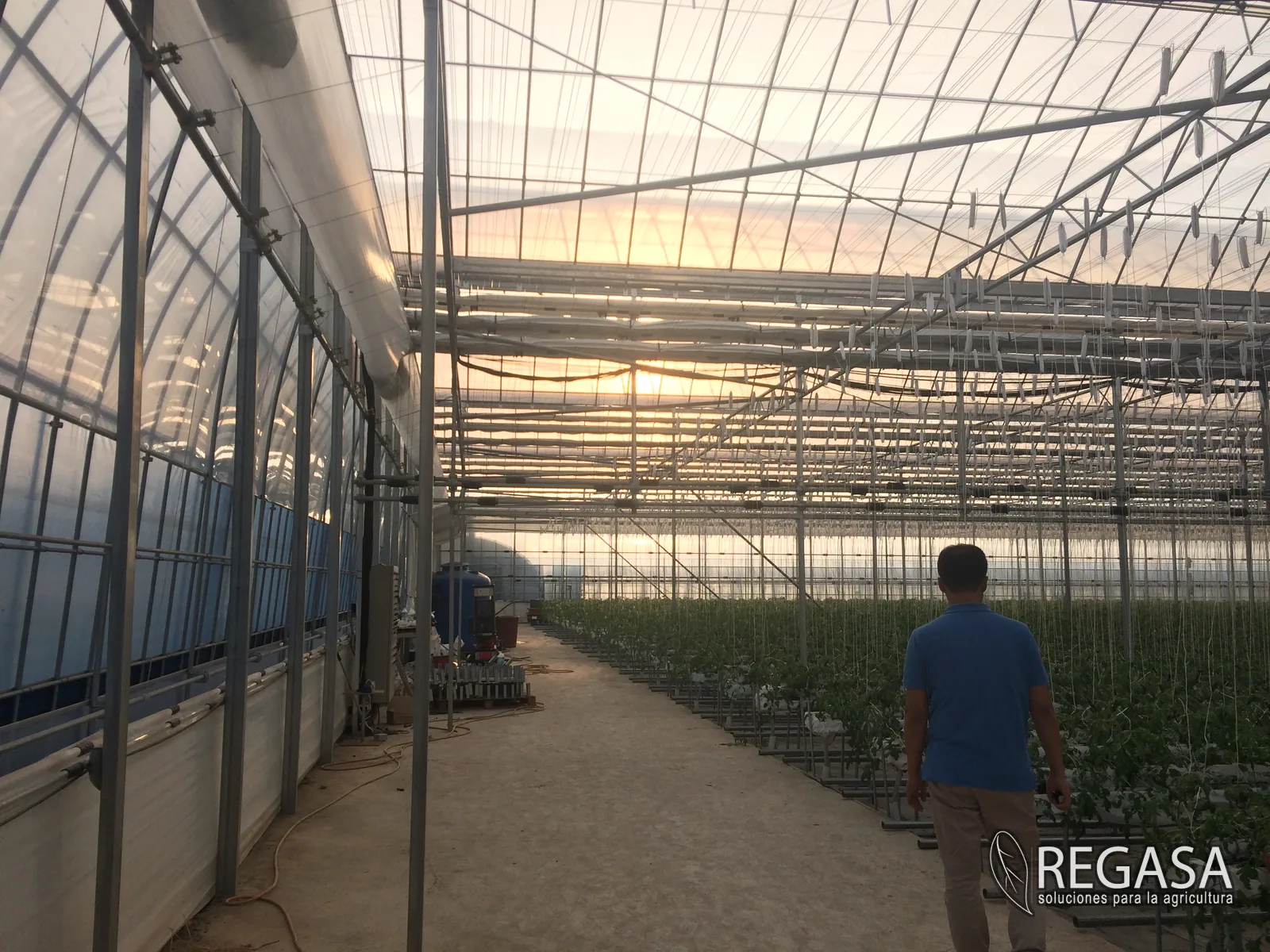
Harvest arrives when you planned. Temperature inside a structure moves within a band you influence. Maturity follows a curve you can predict weeks out instead of guessing at from the forecast.
Rain stops rewriting the week. Work continues. That alone removes the single most common cause of paying a crew to wait.
The season is longer, which changes the contract shape. A longer, flatter demand curve is easier to staff than a short violent peak, and it may let you use one contract period where you were juggling two.
The work is more consistent day to day, which matters for retention, and retention matters because the administrative cost of H-2A is mostly fixed per cycle rather than per worker.
Where it does not help
Two things worth saying plainly.
The wage rate does not change. The Adverse Effect Wage Rate is what it is, set by region, and no structure affects it.
Housing and transportation obligations do not change. Those are the same whether the crop is under cover or not.
So the gain is not on the cost per worker. It is on how many worker hours you pay for that produce nothing, and on whether you can run one well planned contract instead of two ragged ones.
Where headcount genuinely falls
The tasks that disappear under cover are the ones that were hardest to staff anyway.
Weeding collapses under plastic mulch. Irrigation labor collapses under drip on a controller. Spray applications drop because drip keeps foliage dry and screening keeps out the insects that carry virus.
Those are unskilled, recurring, season-long lines. Removing them reduces the number of people you need for the least rewarding work, which is exactly where shortages bite hardest. Roughly 48% of growers reported labor shortages in 2026, and it is not the skilled positions going unfilled.
What goes the other way
Trellised production needs skilled hands. High-wire tomato or cucumber is more labor intensive than the field version, and it needs people who know what they are doing.
That is a different labor problem than the one you had. Arguably a better one, since skilled workers who like the conditions stay, and the conditions inside a structure are genuinely better than a field in August.
How to think about the decision
If you are already filing H-2A, you have the data nobody else does: exactly what you paid last season, and exactly how many of those hours produced nothing because the weather moved.
That second number is the one. It is the cost that protected growing attacks most directly, and it is sitting in your own records.
Most growers have never separated it out. It is worth an afternoon, because it converts a vague argument about predictability into a figure you can put next to the cost of a structure.
Where to start
Attack the recurring unskilled lines first, because they are the cheapest to fix and the hardest to staff: plastic mulch for weeding, drip tape for irrigation.
Then the structure, which is what makes the calendar predictable. A high tunnel is the lowest-capital entry, and if you are scaling covered acreage the Hybrid R multi-bay lets you expand by adding bays.
We went through the task-by-task picture in labor hours per acre.
Program figures come from published H-2A certification data and the 2026 Fruit Growers News labor survey. Program rules and wage rates are set federally and by region; confirm current requirements with the Department of Labor.
What we build
The products behind this article
Want this sized for your farm?
Tell us your crop, your acreage and your state. An advisor comes back with the structure that fits your climate, within one business day. No obligation.
Keep reading