 Guatemala
  México
  Perú
Perú  Costa Rica
  USA
USA Greenhouse Lettuce: Soil, NFT, or Raft
Three production systems, three different businesses. Which one fits depends on your capital, your water, your labor and whether you need NRCS eligibility.
Lettuce is where most growers start under cover, and for good reasons: short cycles, strong local demand nearly everywhere, and fast feedback when you get something wrong.
What is less obvious is that there are three production systems, and choosing between them is choosing between three fairly different businesses.
Soil
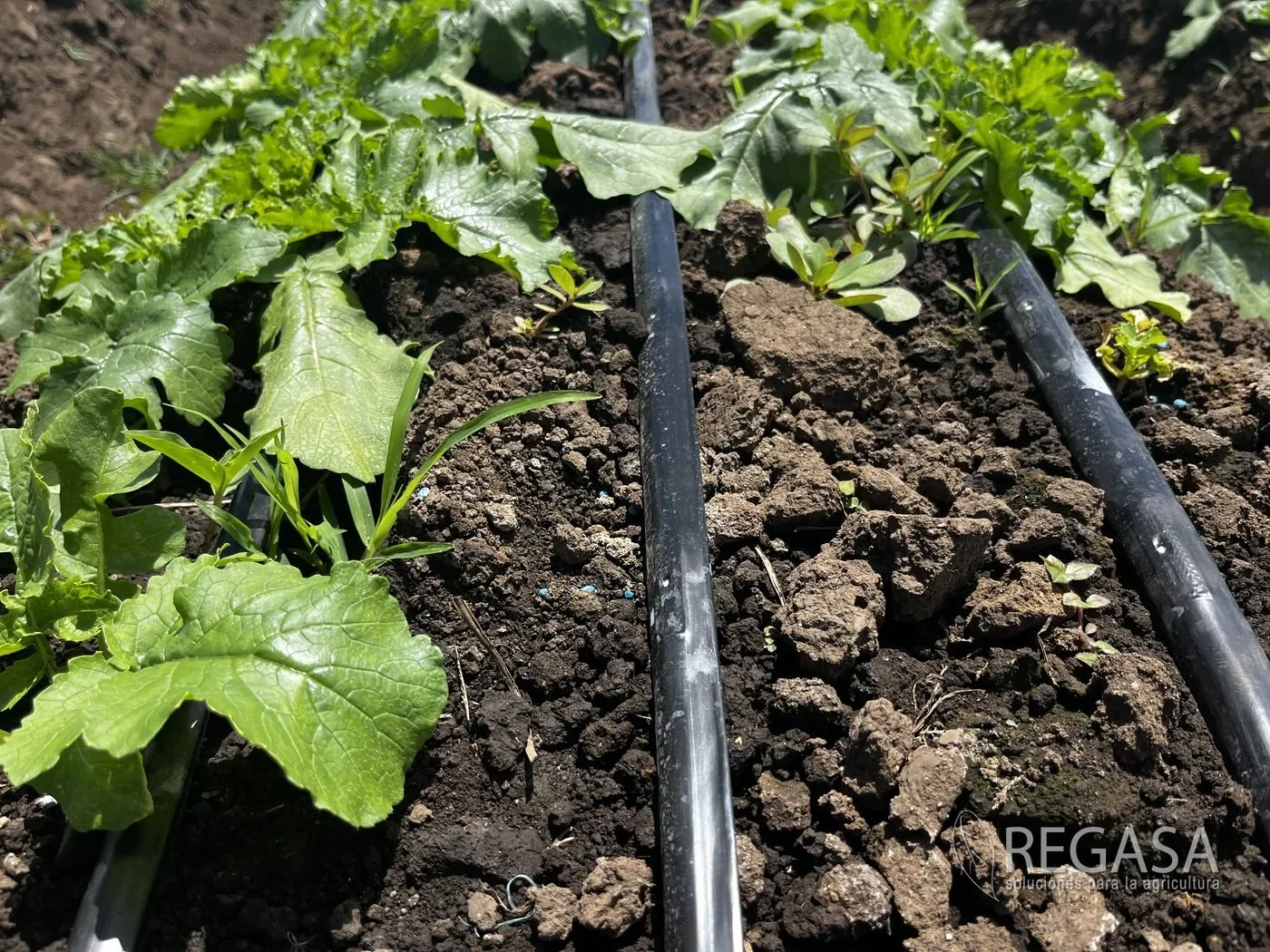
The crop grows in the ground, or in raised beds, under the structure. Drip irrigation, plastic mulch if you want it, and everything else you already know how to do.
What it is good at. Lowest capital by a wide margin. Uses skills you already have. Very forgiving of a power outage, because soil holds water and a stalled pump is not a crisis. Works in a high tunnel with no heating, no plumbing and no tanks.
What it is not good at. Lower density than the water-based systems. Slower cycles in cool soil. Soil-borne disease accumulates with repeated plantings of the same crop, so you rotate or you eventually have a problem.
The one that matters if you are applying for NRCS. Conservation practice standard 325 requires crops grown in the natural soil profile or in raised beds no more than 12 inches high. Hydroponic systems are not eligible. If federal cost-share is part of your plan, soil is not a preference, it is the requirement. See what CPS 325 actually requires.
NFT
Nutrient film technique. Plants sit in channels with a shallow, continuously flowing film of nutrient solution over their roots.
What it is good at. High density, fast cycles, clean product with no soil to wash off, and very efficient water use because the solution recirculates.
What it is not good at. Capital, complexity, and fragility. NFT has almost no buffer: the film is shallow, so if the pump stops, roots dry out in a short time rather than a long one. That means backup power is not optional, it is part of the system.
It also demands real understanding of nutrient solution management. The plants are eating exactly what you mix, with nothing in the soil to correct your mistakes.
Who it fits. Growers producing continuously for a buyer who wants consistent weekly volume, at a scale that justifies the plumbing and the monitoring.
Raft
Also called deep water culture or floating raft. Plants sit in boards floating on a pond of aerated nutrient solution.
What it is good at. The largest buffer of the three water-based options. A big volume of solution changes temperature and chemistry slowly, which makes the system stable and forgiving. A pump failure is a problem measured in hours rather than minutes, because the roots are sitting in water.
Very high density, very uniform crop, and harvest is fast because you pull a whole board.
What it is not good at. It needs a substantial volume of water, which means weight, which means a floor that can carry it. Aeration has to run continuously, and root disease can move through a shared pond quickly if it gets in.
Who it fits. Continuous production at scale where the stability is worth the infrastructure.
How to actually choose
Four questions, in this order.
Do you need NRCS eligibility? If yes, soil. The decision is made.
What is your capital position? Soil is by far the lowest. If capital is the constraint, start in soil and prove the market before you plumb anything.
What is your water like? Water-based systems concentrate whatever is in your water, because the solution recirculates. High salt or high iron water is manageable in soil and a persistent problem in hydroponics. Get a test before you decide, not after.
Who is running it? Soil rewards a good grower. NFT and raft reward a good grower who is also comfortable managing solution chemistry and reacting to equipment. That is a different person, or at least a trained one.
What all three need from the structure
Temperature control. Lettuce bolts when it gets hot, and bolted lettuce is unsellable. In most of the country the binding constraint is summer, not winter, which makes ventilation the system to get right. See greenhouse ventilation: passive, forced, and when you need which.
Air movement at crop level. Dense lettuce holds humidity in the canopy, and that is where rot starts. Circulation fans are cheap and they solve a problem people spend much more money on.
Screened openings. Aphids are the main pest and they are a virus vector. See insect netting mesh sizes.
Consistent feeding. True in all three systems. In soil, that means fertigation through the drip line rather than broadcasting. See Koasis 5000 fertigation control.
The honest recommendation
Unless you already have a buyer contracted for continuous weekly volume, start in soil.
Cheapest to build, uses skills you have, keeps NRCS on the table, and one season tells you whether the market you assumed actually exists. If it does, you will know a great deal more about what to plumb and how big than you know now.
A high tunnel with drip tape is the entire capital requirement for that first season.
NRCS practice requirements come from conservation practice standard 325; confirm current specifications with your local NRCS office.
What we build
The products behind this article
Want this sized for your farm?
Tell us your crop, your acreage and your state. An advisor comes back with the structure that fits your climate, within one business day. No obligation.
Keep reading