
 Guatemala
  México
  Perú
Perú  Costa Rica
  USA
USA Labor Hours per Acre: Open Field vs Under Cover
The strongest case for protected growing is not yield, it is hours. Where the labor actually goes, task by task, and which lines change under cover.
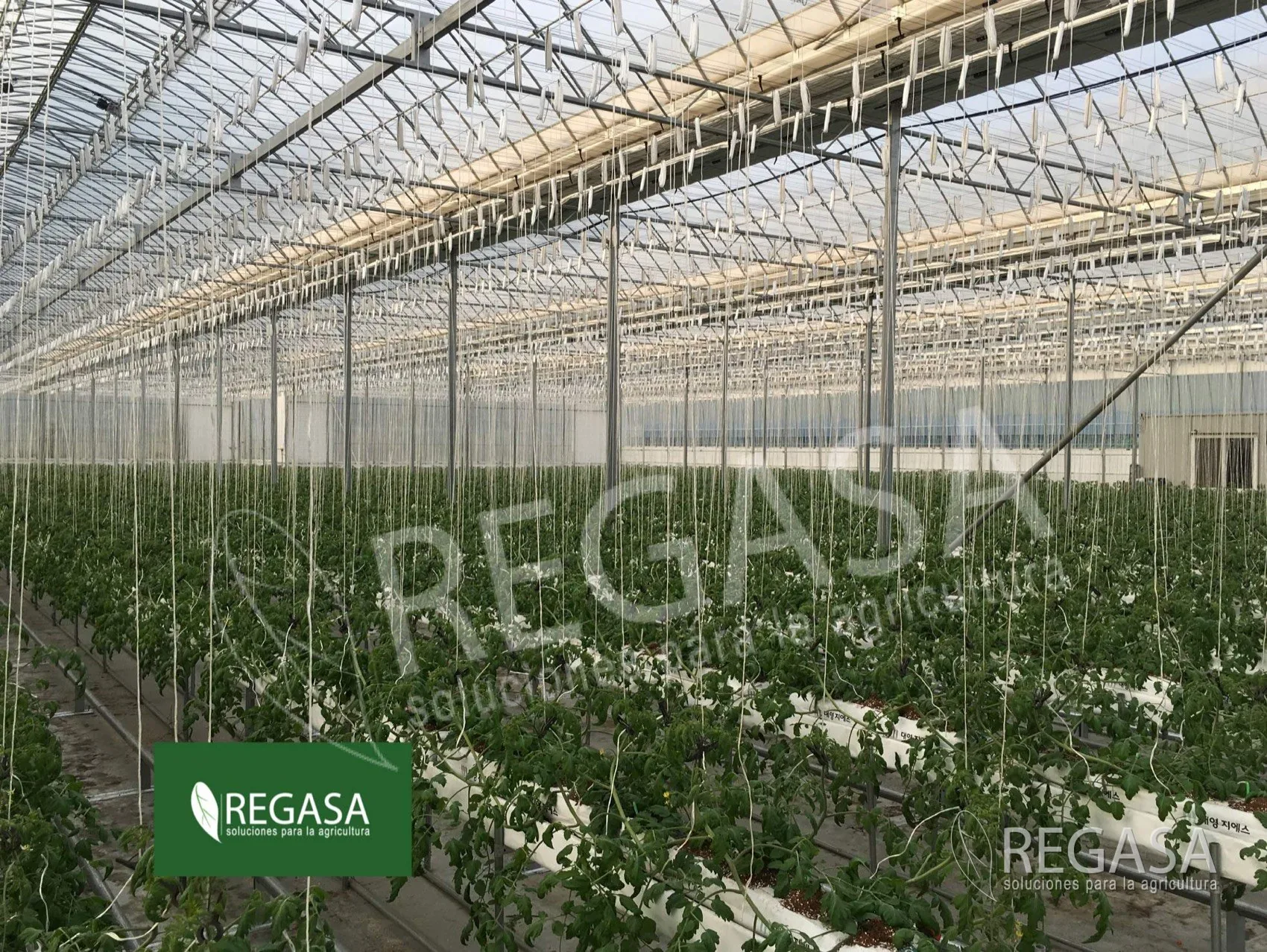
Yield per acre is the number everyone quotes. Hours per acre is the number that decides whether a specialty crop operation survives, and almost nobody puts it on a slide.
We are not going to give you a figure, because an honest one does not exist. Hours per acre swing enormously by crop, by region, by how mechanized you already are and by what you are comparing against. Anyone quoting a single number is quoting one farm.
What we can do is walk the tasks, because the shape of the change is consistent even when the magnitude is not.
Weed control
Open field: recurring through the entire season. Cultivation passes, hand weeding, herbicide applications, and the labor is unskilled, hard to staff and impossible to skip.
Under cover with plastic mulch: collapses. The film blocks light to the row middles and the covered bed is essentially weed free. What remains is edges and paths.
This is the largest single labor line that protected growing eliminates, and the one growers consistently underestimate, because it is spread thin across the whole calendar rather than concentrated in a visible peak. Nobody remembers weeding as a big cost the way they remember harvest.
Irrigation
Open field: moving pipe, setting and resetting sprinklers, managing furrows, monitoring. Someone’s job, repeatedly.
Under drip on a controller: checking a screen and walking lines periodically to find clogs.
The savings here are unglamorous and steady, which is why they add up more than expected over a season.
Spraying
Open field: the full program, on the weather’s schedule.
Under cover: meaningfully fewer applications, because drip keeps foliage dry and screening keeps out the insects that carry virus. Fewer sprays means fewer hours, less chemical, less re-entry interval disruption, and fewer days where the crew’s whole schedule bends around a window.
Harvest
Here it gets interesting, because the honest answer is not “fewer hours.”
Total harvest hours usually go up, because you are harvesting more. That is the point.
What changes is hours per pound, which usually improves: better fruit set, less rejected fruit, cleaner product, less time sorting out weather damage.
And critically, the schedule becomes predictable. Open field harvest bends to weather. Rain delays picking, heat accelerates ripening, a storm compresses three days into one. Under cover you can plan crew around a calendar.
If you use H-2A and pay by the week, predictability is worth as much as the hours.
Crop protection and loss
Open field: hail, wind, an unexpected frost. When it hits, the labor cost of the cleanup is real and the crop is gone anyway.
Under cover: most of that disappears. This is not a labor line in any budget, but a season that does not get destroyed is hours you do not spend twice.
Where the hours increase
Being straight about this matters, because a grower who is surprised later stops trusting the whole argument.
Trellising and training. High-wire tomato or cucumber production is genuinely labor intensive, more than the field version. If you are moving to a trellised system you are adding skilled hours.
Climate management. Vents, temperature, response when something is off. Automation reduces it, does not remove it.
A different skill mix. Protected growing needs someone who can run a system, not just perform a task. Fewer hours, but at a higher rate per hour.
How to actually work this out for your farm
Do not look for a benchmark. Do this instead.
Write down your last season’s hours by task. Weeding, irrigation, spraying, harvest, everything else. Most growers have never done this and the exercise itself is worth the afternoon.
Mark which lines protected growing changes, using the shape above. Weeding down hard, irrigation down, spraying down, harvest up in total but better per pound, trellising up if you are adding it.
Price the change at what you actually pay, including the loaded cost of contracted labor if you use it.
That number is yours and it is the only one that matters. It will also be a lot more convincing to a lender than anything from a brochure.
Where to start
The two lines that fall the hardest are weeding and irrigation, and they are also the cheapest to attack. Plastic mulch and drip tape address both without a structure.
The structure is what makes the schedule predictable and the conditions workable. A high tunnel is the lowest-capital entry.
We covered why this matters now specifically in what rising labor costs mean for protected agriculture.
What we build
The products behind this article
Want this sized for your farm?
Tell us your crop, your acreage and your state. An advisor comes back with the structure that fits your climate, within one business day. No obligation.
Keep reading