
 Guatemala
  México
  Perú
Perú  Costa Rica
  USA
USA What Rising Labor Costs Mean for Protected Agriculture
Labor is up nearly 50% since 2020 and it is the largest cost in specialty crops. Growing under cover changes that math in ways most cost comparisons miss.
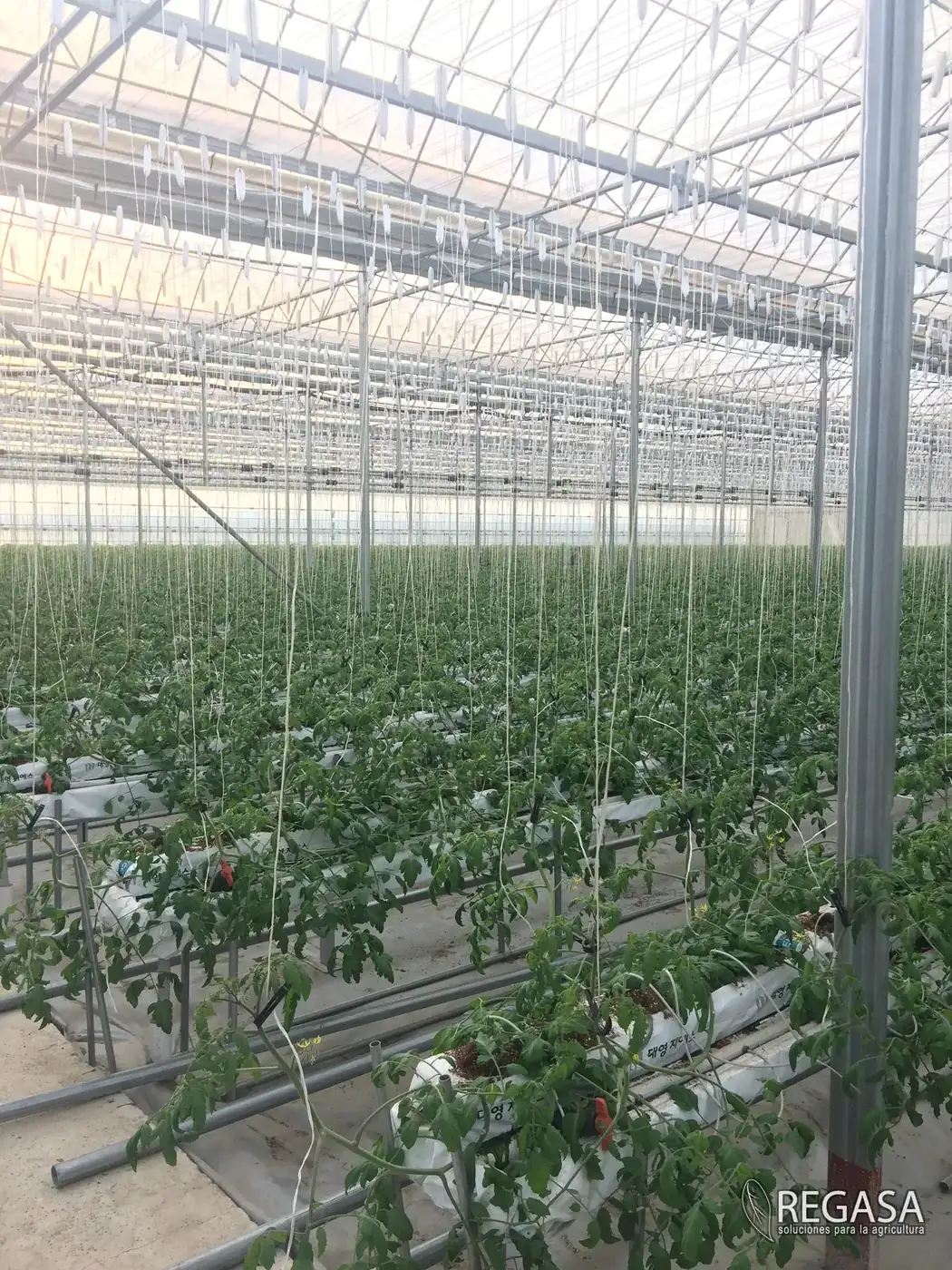
Between 2020 and 2025, US growers paid roughly 25% more for pesticides, 31% more for fuel, 37% more for fertilizer and nearly 50% more for labor.
Labor is the highest cost in specialty crops by a wide margin, and roughly 48% of growers reported shortages in 2026. This is the pressure that decides which operations are still farming in five years, and it is almost absent from how protected agriculture gets sold.
Most greenhouse conversations lead with yield and season extension. Both are real. But for a grower staring at a labor bill that went up by half in five years, there is a more immediate argument, and nobody is making it.
The comparison everyone runs is the wrong one
The standard pitch compares yield per acre: so many pounds in the open field, so many more under cover.
That framing assumes labor is a constant. It has not been a constant for years.
The right comparison is labor hours per unit of production, and protected growing changes that number through several mechanisms at once, most of which never show up in a yield chart.
Where the hours actually go away
Weeding stops being a season-long job
Under plastic mulch inside a structure, weed pressure collapses. What was a recurring, unskilled, hard-to-staff task through the whole season becomes a fraction of it.
This is the single largest labor line that protected growing eliminates, and it is the one growers underestimate most because it is spread thin across the calendar instead of concentrated in a visible peak.
Spray programs shrink
Two effects compound. Drip keeps water off the foliage, which is where a lot of fungal disease starts. Screened openings keep out the insects that carry virus.
Fewer applications means fewer hours, less chemical, and fewer of the compliance headaches that come with spraying. It also means fewer days where the whole crew’s schedule bends around a spray window.
Irrigation stops being someone’s day
Moving pipe, setting sprinklers, checking furrows. Under a fixed drip system on a controller, that becomes checking a screen.
The hours saved here are steady rather than dramatic, which is exactly why they add up.
Harvest gets more predictable
This one is about scheduling rather than raw hours, and for anyone using H-2A it may be the most valuable of all.
Open field harvest bends to the weather. Rain delays picking, a heat event accelerates ripening, a storm compresses three days of work into one. Under cover, the crop matures on a schedule you can actually plan crew around.
When you are paying for contracted labor by the week, predictability is money.
The work happens in better conditions
Harder to quantify, real anyway. Crews that work inside a structure instead of in mud or full sun are easier to keep, and turnover is expensive in ways that never make it onto a spreadsheet.
Where the hours go up
Honesty matters more than the pitch here.
Trellising and training. High-wire tomato or cucumber production is labor intensive, more so than the field version. If you move to a trellised system under cover you are adding skilled hours, not removing them.
Climate management. Someone has to open and close vents, watch temperatures, respond when something is off. Automation reduces this but does not eliminate it.
A different skill mix. Protected growing needs people who can manage a system, not just do a task. That labor costs more per hour even when it is fewer hours.
The net is usually favorable, but it is a net, not a pure reduction, and any supplier who tells you otherwise is selling.
What this means if you are deciding right now
Cost pressure has not eased and demand has held steady. Margins are tight and getting tighter. In that environment the question is not “can I afford to invest” but “which costs can I stop paying every single season.”
Structure is capital: you pay once and amortize it. Labor, chemical, water and fertilizer are operating costs: you pay them every year, and they have all gone up.
Anything that converts a recurring cost into a one-time one gets more attractive as the recurring cost rises. That is the actual argument for protected growing in 2026, and it has nothing to do with yield charts.
Where to start if labor is your bottleneck
Mulch and drip first. They kill the two largest recurring unskilled labor lines, weeding and irrigation, and they are the cheapest entry point by far. See plastic mulch and drip tape.
Then the structure, which is what makes the schedule predictable and the conditions workable. A high tunnel is the lowest-capital way in.
Automate irrigation before anything else. It runs every day and small errors compound quietly. That is why fertigation control earns its place before a climate computer does.
We looked at the numbers behind this in labor hours per acre, open field vs under cover.
Cost figures come from American Farm Bureau Federation market analysis and the 2026 Fruit Growers News labor survey.
What we build
The products behind this article
Want this sized for your farm?
Tell us your crop, your acreage and your state. An advisor comes back with the structure that fits your climate, within one business day. No obligation.
Keep reading