
 Guatemala
  México
  Perú
Perú  Costa Rica
  USA
USA Site Preparation: What to Do Before the Structure Arrives
Nobody covers this and nearly everybody gets some of it wrong. The decisions you make before the steel shows up are the ones you cannot undo cheaply.
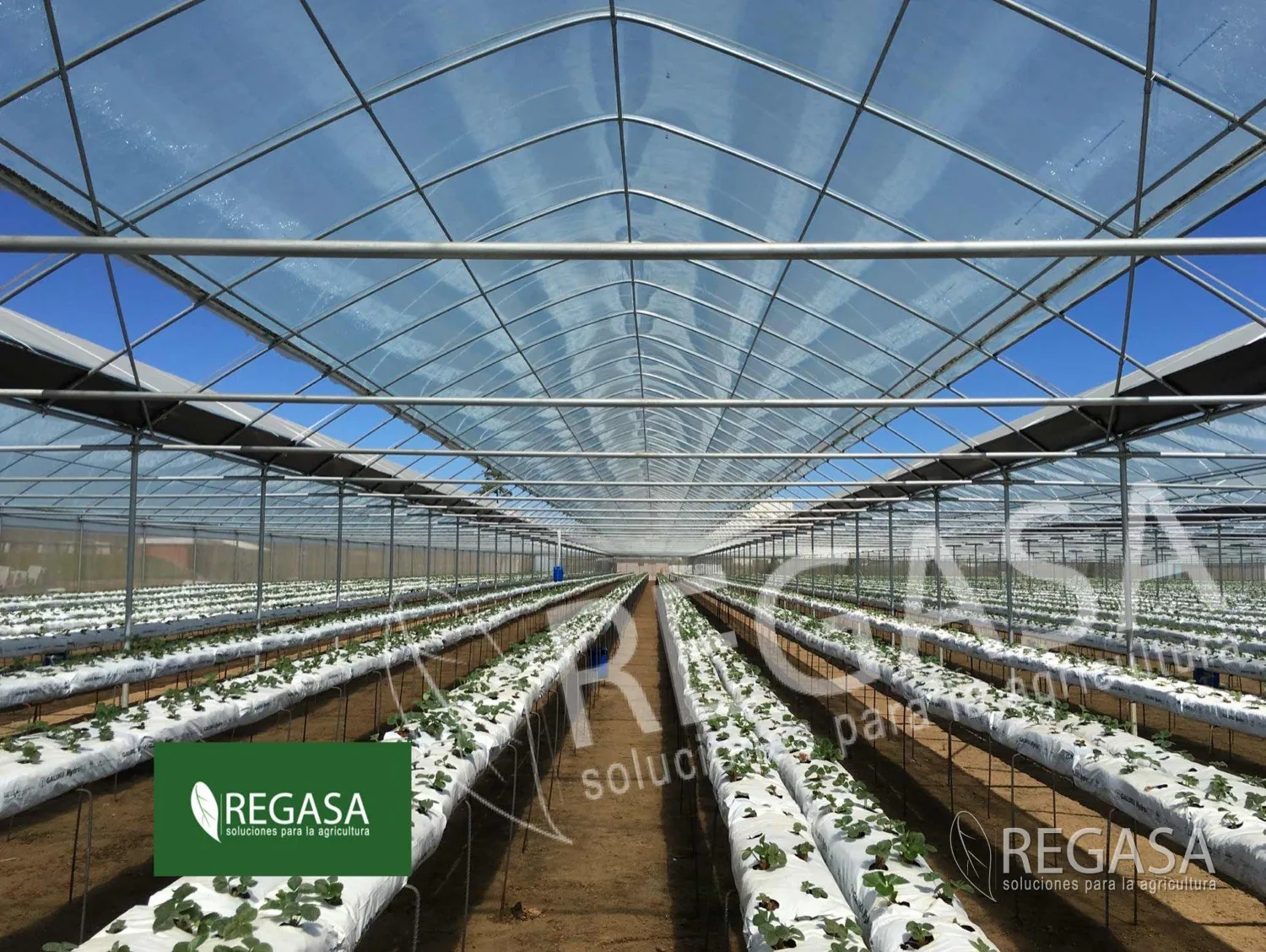
The structure gets all the attention. The site gets none, right up until the day the truck arrives and something is not ready.
Site preparation is the least discussed part of a greenhouse project and one of the most consequential, because almost every decision here is permanent. You can change your film in four years. You cannot move the building because you put it in the wrong place.
Here is the list, roughly in the order it matters.
Drainage comes first
Before orientation, before utilities, before anything: where does the water go when it rains hard?
A greenhouse is a large impermeable surface. Every inch of rain that falls on the roof runs off the sides, concentrated. On flat or low ground that water has nowhere to go, and you get standing water at the base of the structure, saturated soil inside, and a root zone that never dries out.
Walk the site during a real storm if you can. If you cannot, look for where the ground is still soft two days after rain, where the grass grows differently, where debris collects. Those are your low spots.
Fixing drainage after the structure is up means working around posts and under a roof. Fixing it before means a machine and an afternoon.
Then orientation
There are two schools and both are right, depending on where you are.
North to south gives more even light across the crop through the day, which matters for uniformity in tall crops like trellised tomato.
East to west captures more light in winter at northern latitudes, which matters when winter light is the limiting factor.
The practical rule: the further north you are and the more you care about winter production, the more east to west makes sense. In the South, where summer heat is the constraint and winter light is not, north to south is usually the better default.
Prevailing wind matters too. If you are relying on natural ventilation, orienting so the roll-up sides face the prevailing summer wind does real work for free.
Level, but not perfectly flat
The pad needs to be level enough that the structure sits true and the doors close. It does not need to be a slab.
What matters more is that it is compacted and stable. Soft fill settles unevenly, and a frame that settles unevenly binds at the doors and stresses the covering at the corners.
Give yourself a working margin around the footprint. You need room to walk the perimeter, room to roll the film out, and room for a vehicle to get close during construction. Building right up to a fence line is a decision you regret for the life of the structure.
Water, and the part everyone skips
You need water at the site. That much is obvious.
Two things that are not obvious:
Volume and pressure, not just presence. Drip systems have a flow requirement and a pressure range. A well that supplies the house fine may not supply an irrigated acre at the rate the system needs. Find out the actual gallons per minute before you design the irrigation, not after.
Water quality. Get a test. Hard water plugs emitters, high iron plugs emitters, high salt affects the crop directly, and high pH changes how your fertilizer behaves. All of these are manageable if you know about them at design time and expensive to discover mid-season.
Filtration is not optional on any drip system. What kind depends entirely on that test. See GreenDrip and BlueDrip drip tape for what the lines require.
Power, if you need it
Ventilation fans, a controller, a pump and lights all need electricity. Running power to a remote site is one of the larger surprise costs in a greenhouse project.
If power is expensive to bring in, that argues for a design that leans on natural ventilation: roll-up sides and roof vents move air without a motor. See ventilation and cooling systems for how far passive gets you.
Access
The delivery truck has to get to the site. So does whatever you use to move product out during harvest.
Check the turning radius, the gate width, the ground condition after rain and any overhead lines. A site that is fine in August and impassable in March is a site with a problem, because harvest does not wait for the road to dry.
Anchoring, which depends on your structure
How the structure attaches to the ground varies, and it changes what you need to prepare.
High tunnels typically use self-drilling ground anchors, which need no concrete and no cure time. That is a large part of why they go up fast and why they are the usual entry point. See high tunnels and hoop houses.
Larger commercial greenhouses generally need footings, which means concrete, which means a schedule, a weather window and a cure period before anything else happens.
Know which one you have before you plan the calendar.
One thing worth checking early
Permits and setbacks. Requirements vary by county and sometimes by parcel. Some jurisdictions treat a greenhouse as an agricultural structure with light requirements; others treat it as a building. Setback rules can move your footprint several feet and it is much easier to move it on paper.
If you are applying for USDA NRCS assistance, note that the practice has its own site conditions on top of local rules. We went through those in what CPS 325 actually requires.
The short version
Drainage, orientation, a compacted level pad with a working margin, water tested for volume and quality, power if you need it, access that works in the mud, the right anchoring, and permits checked before you commit the footprint.
None of it is difficult. All of it is much harder after the structure is standing.
Next up is the calendar. See from order to first harvest for what the timeline really looks like.
What we build
The products behind this article
Want this sized for your farm?
Tell us your crop, your acreage and your state. An advisor comes back with the structure that fits your climate, within one business day. No obligation.
Keep reading