
 Guatemala
  México
  Perú
Perú  Costa Rica
  USA
USA Is a Greenhouse a Good Investment? A Framework, Not a Number
Anyone who answers this with a percentage is quoting one farm. Here is the arithmetic to run on your own operation, and the three things that decide the answer.
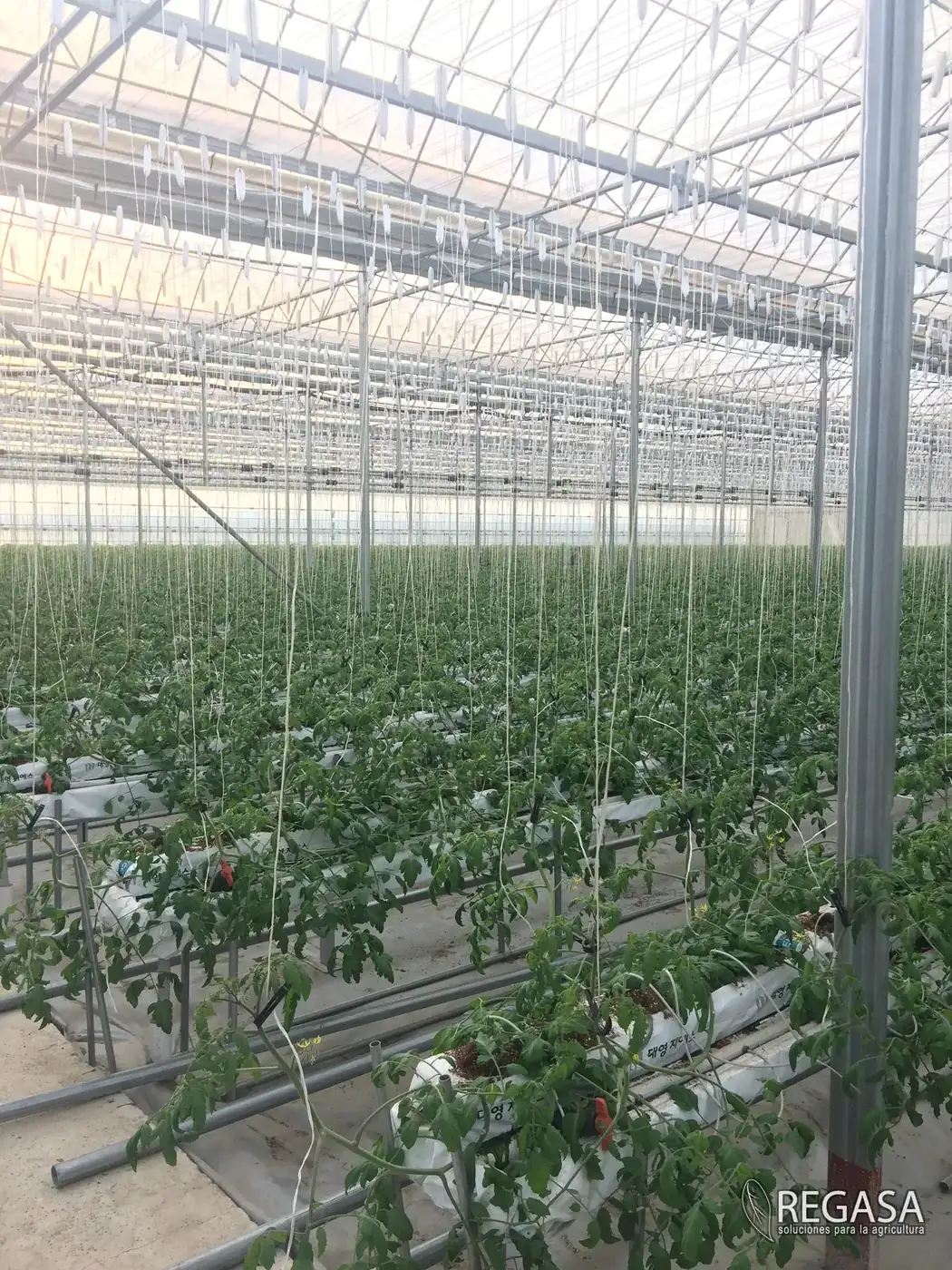
Anybody who answers this question with a number is quoting one farm.
Returns on protected agriculture swing enormously by crop, by region, by market access and by the operator. A figure that is true in coastal California is fiction in central Ohio, and the grower matters as much as the geography.
So instead of a number, here is the arithmetic. Run it on your own operation and the answer will be worth something.
The three things that decide it
Before any calculation, understand that a greenhouse pays back through three mechanisms and only three.
More production from the same ground. Higher yield per square foot, and more cycles per year because the season is longer.
Better price for the same product. Off-season supply, more consistent quality, and access to buyers who require both.
Fewer costs that recur every season. Less weeding, less spraying, less irrigation labor, less crop lost to weather.
If you cannot see how a structure would move at least two of these on your farm, the answer is probably no, and finding that out on paper is much cheaper than finding it out with steel in the ground.
The calculation
Five inputs. All of them come from your own operation, not from a supplier.
1. What do you currently earn per square foot?
Take a block of ground you farm now. Annual revenue from it, divided by its area. This is your baseline, and most growers have never calculated it.
2. What would you earn per square foot under cover?
Two changes: yield per cycle, and cycles per year. Your extension service publishes protected-culture yield ranges for your state and crop. Use the low end of the range. First-year numbers run below the published figures while you learn the system, and that is normal.
Multiply by the price you can actually get, not the best price you have ever seen.
3. What changes in operating cost?
Down: weeding, spraying, irrigation labor, weather losses.
Up: heating if you are north, ventilation electricity if you are running fans, trellising labor if you are moving to a trellised crop, and film replacement on a cycle.
Net these against each other honestly. It is usually favorable and it is a net, not a pure reduction.
4. What does the structure cost, delivered and installed on your site?
A real quote for your county and your span. Not an estimate from an article, including this one. Include site preparation, which growers routinely leave out and which is not small.
5. How long will it last?
The frame and the film are on different clocks. You will replace the covering several times over the life of a well built galvanized frame, so film is an operating cost and the frame is the capital.
Then: annual gain, divided by total cost, gives you the years to payback. Anyone can check that arithmetic, including a lender.
The four inputs that swing the answer most
Crop value. The same structure over a high-value crop pays back far faster than over a commodity one. This is the single biggest variable.
Market access. A structure lets you produce off-season. If you have no buyer for off-season product, half the return disappears. Sort the buyer out before the building.
Your climate. Season extension is worth much more where the season is short. A structure in Vermont changes what is possible; the same structure in south Florida changes less, because the open-field season was already long.
Your labor situation. With labor up nearly 50% between 2020 and 2025 and roughly 48% of growers reporting shortages, the labor savings line has grown from a footnote into a main argument. See what rising labor costs mean for protected agriculture.
What makes the answer no
Be as willing to reach this conclusion as the other one.
No market for the extra production. Growing what you cannot sell is worse than not growing it.
A crop that does not justify the structure. Low value per square foot, and no premium available for quality or timing.
Too small to be economic. Below a certain area the fixed costs are spread across too little production.
No labor to run it. Protected growing needs someone who can manage a system. If that person does not exist on your farm, the structure will underperform regardless of how well it was built.
What tilts it toward yes
Cost pressure on everything recurring. Structure is capital: you pay once and amortize. Labor, chemical, water and fertilizer are operating costs you pay every year, and all of them have risen. Anything that converts a recurring cost into a one-time one gets more attractive as the recurring cost rises.
A buyer who wants consistency. Wholesale and retail buyers pay for reliable volume and reliable quality, and consistency is exactly what a controlled environment produces.
A short open-field season. The shorter it is, the more the extension is worth.
The cheapest way to test the assumption
If the calculation depends on assumptions you are not sure about, and it usually does on the market side, do not resolve it with a spreadsheet.
Start with a high tunnel. Lowest capital, fastest to put up, no concrete, and it may qualify for the USDA NRCS High Tunnel Initiative. One season tells you whether the off-season market you assumed actually exists, and everything you learn transfers to the larger structure.
That is not a compromise. It is how most of the successful operations we work with started.
Where to go from here
Run the five inputs. If the arithmetic works, how to size your first greenhouse is the next step, and the greenhouse project form gets you a real number for input four.
Cost changes come from American Farm Bureau Federation market analysis of 2020 to 2025 and the 2026 Fruit Growers News labor survey. Yield ranges vary by state; use your extension service.
What we build
The products behind this article
Want this sized for your farm?
Tell us your crop, your acreage and your state. An advisor comes back with the structure that fits your climate, within one business day. No obligation.
Keep reading