
 Guatemala
  México
  Perú
Perú  Costa Rica
  USA
USA Microgreens at Commercial Scale
The highest revenue per square foot of any protected crop, and the one where the constraint is almost never growing. It is selling, consistently, every week.
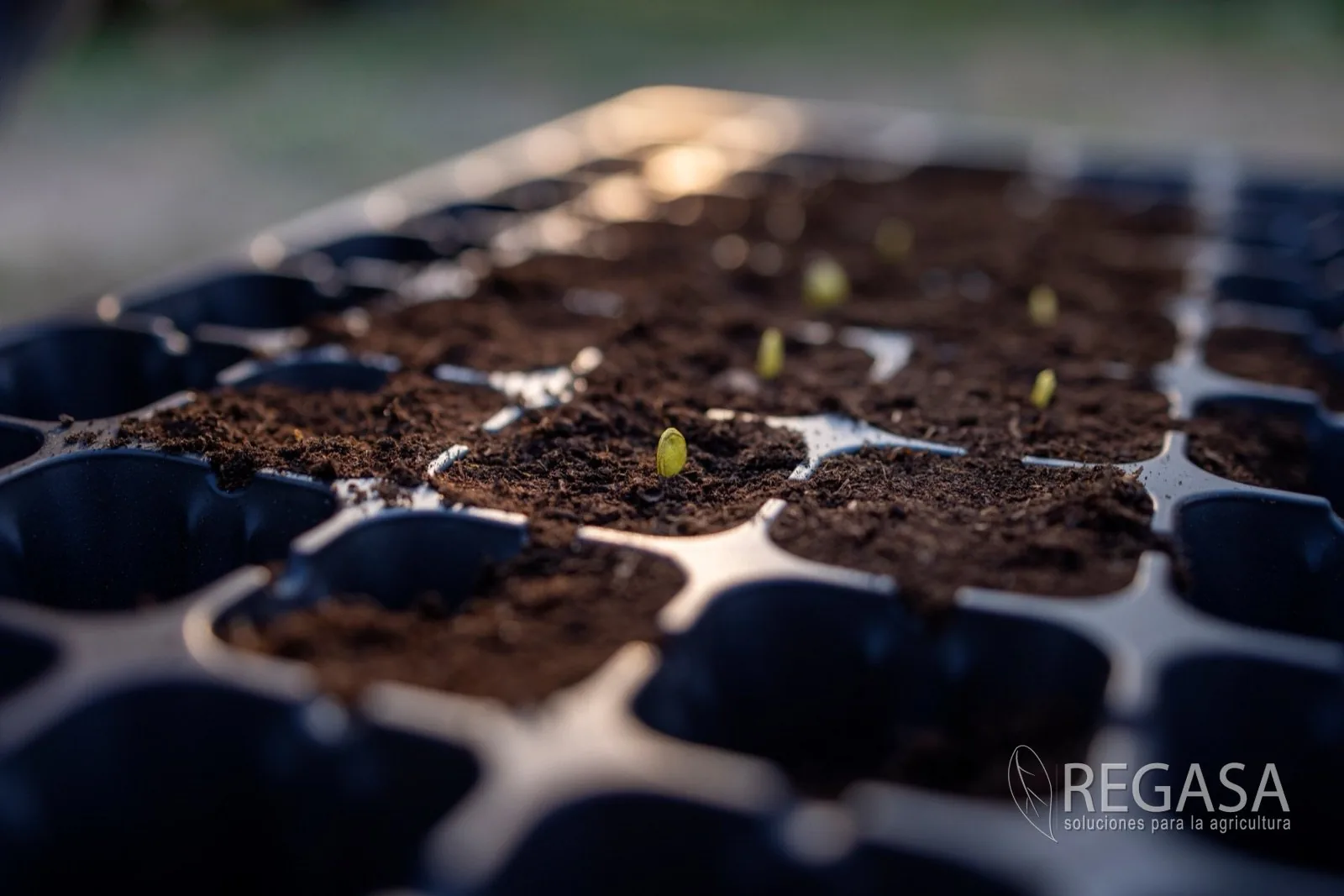
Microgreens produce more revenue per square foot than any other protected crop, and that number is why people start.
It is also misleading, because in microgreens the constraint is almost never production. Cycles run in days rather than months, so a small area produces a remarkable amount of product very quickly. The constraint is selling it, every single week, forever.
Anyone considering this crop should understand that before they build anything.
Why the numbers look so good
Cycles measured in days. Depending on the variety, you seed and harvest within one to three weeks. That is many turns per year on the same square foot.
High density. Trays sit at a spacing no field crop approaches.
High price per pound. The buyer is paying for a specialty product, not a commodity.
Multiply those three and the per-square-foot figure is genuinely large. It is also genuinely achievable, which is what separates this crop from the ones where the published numbers are theoretical.
Why it is harder than it looks
The market has a ceiling and it is closer than you think. Microgreens go to restaurants, specialty retail and direct sales. Those buyers take small volumes. Serving them well means many accounts, each ordering modestly, so the selling effort scales with the revenue rather than with the growing.
Delivery is continuous. Restaurants want product this week and next week and the week after. Miss deliveries and the account goes elsewhere, because there is usually another grower nearby.
Shelf life is short. You harvest to order. Overproduce and you compost it. There is no storing your way out of a bad week.
Labor per pound is high. Seeding, watering, monitoring, harvesting, weighing, packing, delivering. The individual tasks are simple and there are a great many of them, on a cycle that never rests.
What the operation actually needs
Temperature stability more than anything else. Microgreens are a controlled germination followed by a fast grow-out. Temperature swings produce uneven stands, and an uneven stand is a partial harvest.
Air movement, constantly. Dense trays at high humidity are exactly where damping-off starts. Circulation fans are not an upgrade in this crop, they are core infrastructure.
Clean water and clean surfaces. Sanitation matters more here than in almost any other protected crop, because the cycle is short enough that a contamination problem repeats every ten days.
Consistent irrigation. Trays dry out fast, and the difference between a good tray and a lost one is a few hours. This is a crop where automated irrigation stops being a convenience.
Light. In northern winters natural light may not carry the crop, and supplemental lighting becomes part of the system rather than an option.
Where a structure fits
Microgreens are often grown indoors on racks under lights, and that is a legitimate model with its own economics.
The greenhouse model works differently: natural light does most of the work and the structure provides temperature control and protection. Lower energy cost, more seasonal variability, generally lower capital.
Which one fits depends on your latitude and your power cost. Where winter light is scarce and electricity is expensive, indoor stacked production has a hard time. Where light is adequate most of the year, a greenhouse is much cheaper to run.
For the greenhouse model you need a structure that holds temperature reliably and vents well. See commercial greenhouses and ventilation and cooling systems.
The NRCS question
Microgreens grown in trays are not growing in the natural soil profile, which means they do not meet conservation practice standard 325. If federal cost-share is part of your plan, this crop does not qualify inside a funded high tunnel.
You can build the tunnel for a qualifying crop, and then that is what it has to be used for. See what NRCS will not pay for.
How to start without overbuilding
The mistake is building capacity for the production you can achieve rather than the sales you can prove.
Start with a handful of accounts and grow into them. Talk to chefs before you buy trays. Find out what varieties they want, what volume, and what day they want it.
Then size the growing area to that number, plus a little. Not to the square footage you can afford.
Expand when accounts are waiting, which in this crop is a specific and knowable condition rather than a feeling.
Growers who do this in the other order end up with a very productive system and a compost pile.
Where a structure earns its place
Once the accounts exist and the weekly volume is real, the structure is what makes delivery reliable. A crop that fails because a July heat event cooked a week of trays costs you accounts, and accounts are much harder to replace than trays.
A high tunnel with good ventilation is the low-capital version. A commercial greenhouse with real climate control is what year-round continuity looks like.
For sizing it against a real weekly number rather than a hoped-for one, see how to size your first greenhouse.
What we build
The products behind this article
Want this sized for your farm?
Tell us your crop, your acreage and your state. An advisor comes back with the structure that fits your climate, within one business day. No obligation.
Keep reading