
 Guatemala
  México
  Perú
Perú  Costa Rica
  USA
USA Greenhouse Farming in the United States: Who Is Actually Doing It
US greenhouse operations roughly doubled in a decade, and greenhouses are about 72% of controlled-environment area. Here is who is growing and what they grow.
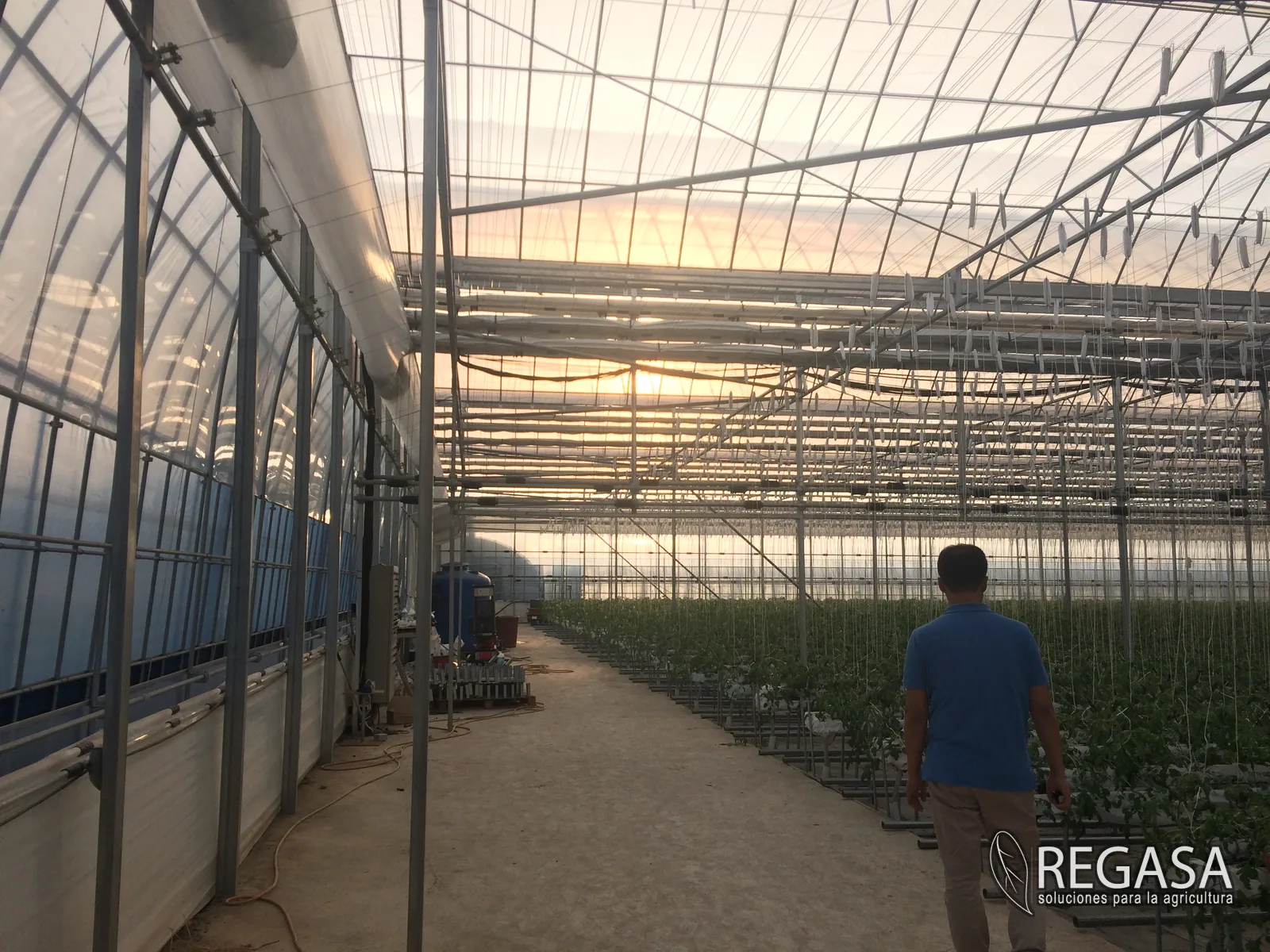
Greenhouse farming in the US gets discussed either as futuristic technology or as a hobby scaled up. It is mostly neither.
The number of US greenhouse operations roughly doubled over a decade, from about 1,476 in 2009 to about 2,994 in 2019. Greenhouses account for roughly 72% of controlled-environment agriculture area in the country. This is a real, working, unglamorous sector, and it is worth knowing who is actually in it before you decide whether you belong.
The four groups
Small diversified farms adding a structure
The largest group by count and the smallest by area.
Typically one high tunnel or a small greenhouse added to an existing open-field operation. The goal is season extension and a better price at the shoulders of the year, not year-round production.
The economics work because the structure is incremental. The land, the equipment, the market and the labor already exist. The tunnel adds weeks at each end of the season, and those weeks are when the price is best.
This is where most growers start, and the USDA NRCS High Tunnel Initiative is a large part of why. See NRCS deadlines by state.
Mid-size specialty producers
The group with the most interesting economics and the least attention.
Several structures, often gutter-connected, growing tomato, pepper, cucumber, leafy greens or cut flowers for regional wholesale, retail or foodservice accounts. Year-round or nearly year-round.
These operations compete on freshness and reliability rather than price. Their buyer wants a consistent volume every week from someone close enough to deliver, and that is exactly what a controlled environment provides and an open field does not.
This is the segment growing most steadily and the one nobody writes about.
Ornamental and nursery
Frequently forgotten in conversations about greenhouse farming, and one of the largest uses of greenhouse area in the country.
Bedding plants, potted flowering plants, nursery stock and propagation. The production model is different from food crops: shorter, tightly scheduled cycles aimed at a narrow retail window, with enormous consequences for being late.
Propagation in particular is a segment where controlled environment is not a preference, it is a requirement.
Large controlled-environment operations
The ones that get the press coverage.
Acres under glass or film, high levels of automation, capital from outside agriculture, supplying national retail. A small number of operations holding a large share of the area.
Worth understanding for one reason: their economics do not transfer down. The automation that pays back across many acres does not pay back across one. Growers who model a small operation on what a large one does usually overbuy technology.
What they grow
Tomato dominates by volume among protected food crops. High yield per square foot, long cycle, a market that pays for quality.
Leafy greens and herbs are the most common entry crop. Short cycles mean fast feedback and fast recovery from mistakes, and local demand is strong nearly everywhere.
Cucumber and pepper follow tomato in the same production system.
Strawberry and cane fruit under high tunnels, usually as season extension rather than year-round production.
Ornamentals and nursery stock, which is a larger share of total greenhouse area than most food-focused conversations suggest.
Where they are
Concentrated where three things overlap: a difficult open-field season, dense nearby population, and buyers who pay for local.
That describes the Northeast, the Great Lakes, the Pacific Northwest and pockets of the Mountain West well. It describes California and Florida differently, since both have long open-field seasons, so protected growing there is about quality, timing and specific crops rather than about extending a short season.
Each state page on this site covers the frost-free window, the main climate constraint and the crops that fit. See greenhouse guidance for all 50 states.
What the successful ones have in common
Across all four groups, the operations that work share three things.
They sold before they built. The buyer relationship came first. Growers who build and then look for a market are the ones who struggle.
They started smaller than they wanted to. Almost universally. One structure, learn the system, expand into demand you can prove.
They matched the technology to the scale. Not the most automation available, the amount their crop and area justified. We laid out that order in where automation actually pays.
What is pushing growth now
The sector is not expanding because the technology got interesting. It is expanding because the costs of not using it got worse.
Between 2020 and 2025 labor rose nearly 50%, fertilizer 37% and fuel 31%, and roughly 48% of growers report labor shortages. Protected growing attacks several of those lines at once: weeding collapses under plastic mulch, spraying drops with drip and screening, irrigation labor drops with a controller. See labor hours per acre, open field vs under cover.
Where you might fit
If you already farm and have a market, you are the first group, and a high tunnel is the normal entry.
If you have a buyer wanting consistent weekly volume, you are the second group, and a gutter-connected system is what that segment runs on.
If you are propagating or growing ornamentals, controlled environment is the requirement rather than the upgrade. See commercial greenhouses.
Operation counts and controlled-environment area shares come from USDA census data; cost changes from American Farm Bureau Federation market analysis and the 2026 Fruit Growers News labor survey.
What we build
The products behind this article
Want this sized for your farm?
Tell us your crop, your acreage and your state. An advisor comes back with the structure that fits your climate, within one business day. No obligation.
Keep reading